Dr. Angel Herrera: Championing Marine Conservation Across Latin America
Interview by Jillian Surdilla
Jillian Surdilla is currently an intern with IMMP and is also a student at UC Berkeley. In her third year of university, she joined IMMP to play a hands-on role in cetacean advocacy. As a Psychology major, she intends to use her academic background and focus on marketing as means to spread awareness of pressing issues concerning marine mammal rights. Currently, she is working to publicly champion the SWIMS Act, which is the first piece of US legislation to potentially prohibit the capture, breeding, transport and display of various small whales for entertainment.
Dr. Angel Herrera is the Director of the International Marine Mammal Project’s (IMMP’s) Dolphin Safe (DS) Tuna Monitoring Program in Latin America. As a representative of Earth Island Institute since 1993, his DS monitoring work spans countries including Argentina, Brazil, Colombia, Costa Rica, Ecuador, El Salvador, Guatemala, Mexico, Panama, Peru, and Uruguay. He has authored more than 15 scientific articles and co-authored two books.
Q. Could you share about your journey with marine biology and natural resource management? What inspired you to focus specifically on marine mammals and their conservation?
From a young age, I was initially attracted to the sea because of the beautiful fauna. Studying and becoming a marine biologist made this a reality. Over time, my interest in marine biology evolved into the management of marine resources due to the generally negative interactions between humans and fauna. This is where my interest in marine mammals grew, and I became particularly interested in the role of IMMP regarding the dolphin-tuna-fisherman interaction. IMMP has been and continues to be a world leader in marine mammal conservation.
Q. You've authored numerous scientific articles and co-authored books on marine biology and resource management. Could you discuss one or two pieces of research that you believe had the most impact on marine conservation practices?
What I do with the IMMP is something I am very grateful for; it is both an environmental commitment and a duty. It has allowed me to develop as a professor in marine subjects at the National University of Costa Rica (UNA), with 17,000 students.
I have written on various topics, initially more related to Marine Biology, then interactions with fishermen, then fishing, and later mariculture. In recent years, I have developed a professional relationship with Chinese researchers from the city of Qingdao, who are very concerned about climate change and the effects of invasive species in different parts of the Pacific Ocean basin.
Currently, in my spare time, I am writing a book on the history of the Pacific and Atlantic Oceans. The region of Costa Rica and Panama, with its land and sea biodiversity, and I have learned about this key area through my work with IMMP. I hope to finish this book next year.
Q. Can you explain what the Dolphin Safe label signifies and why it's crucial for marine conservation?
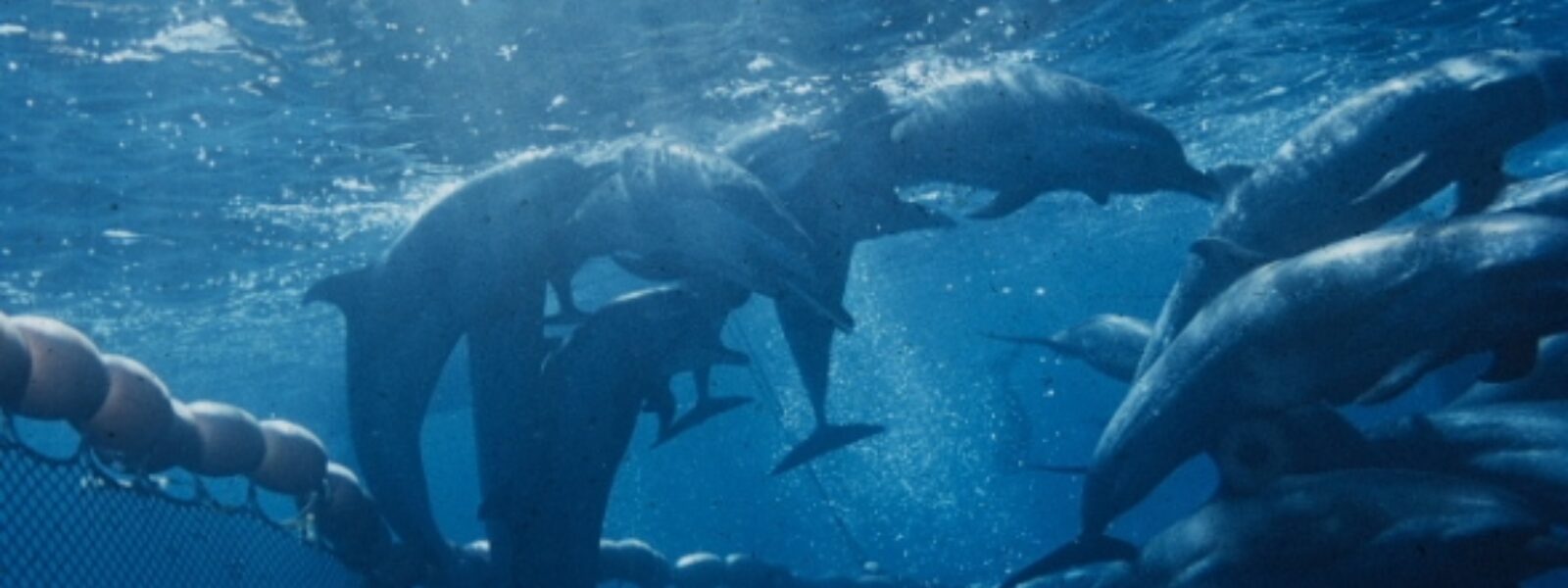
The concept of Dolphin Safe tuna fishing signifies a commitment from society, which took hold in the early 1990s. It initially provoked significant opposition from tuna fishermen on large purse seiner vessels, especially off the coasts of Latin American countries bordering the Pacific Ocean. However, over the years, persistence and hard work has led to changes in attitudes, Today, many vessels have adopted the Dolphin Safe fishing practices that prohibit setting nets on dolphins.
The Dolphin Safe concept represents one of the first largescale conservation efforts for cetaceans and oceans. We can’t overlook the importance of Dolphin Safe fishing practices standing for the respect for the living beings that inhabit the seas. We can consume tuna, but we must respect the beings that may be harmed in the fishing process, such as dolphins, sharks, birds, and any other living creatures, called “bycatch”.
Q. How has the program evolved since its inception in 1990, and what role have you played in these changes?
I began my relationship with IMMP in 1992. IMMP’s former staff member Brenda Killian was sent around the world to set up the network of monitors. Initially, the work was complicated due to communication issues. Telephone and fax services were expensive, and interconnections in Latin America were not very good. Weekly reports were sent to Brenda via mail to Hawaii, and this continued for about 15 years. The establishment of smartphones and WIFI, have completely changed the way we worked. It allowed for better connections with companies, improved planning of audit trips, and the development of a better monitoring network.
Eventually, the appearance of apps like WhatsApp and platforms like Global Fishing Watch and Maritime Traffic substantially changed the monitoring of fishing activities. As worldwide increase in the demand for dolphin safe tuna products continues to grow, many tuna companies have changed their attitudes and now embrace Dolphin Safe fishing practices. It nonetheless requires great diligence on our part to ensure that Dolphin Safe practices on board vessels and in canneries are followed.

Dr. Angel Herrera in Costa Rica.
Q. Your work spans multiple countries in Latin America. Could you describe some of the unique challenges and successes you've encountered while implementing the Dolphin Safe program across these diverse regions?
Brenda Killian trained me with the instructions for developing relationships with companies and conducting audits. She gave me the tools to build ties with companies in Panama, Colombia, and Ecuador.
In Guatemala, the social situation was and is complicated, and we have had several negative incidents of non-compliance with dolphin safe practices. In El Salvador, the Spanish company Grupo Calvo, is a major player, and I work closely and positively with them.
In Ecuador, the relationship with the companies has grown significantly. Most European and US tuna import and retail companies require that their supply of tuna must meet the Dolphin Safe label and fishing standards. This results in the companies contacting me to conduct regular on-site audits of their practices.
Working in my area has lots of challenges. In two instances in Ecuador over the years while conducting audits, I had to urgently leave the country because of coup d'états.
Sometimes I have to refuse to go to certain areas that are not safe because of political instability, areas of drug trafficking, and concerns about kidnappings. We have also developed techniques for doing remote electronic audits.
Q. Monitoring compliance with the Dolphin Safe standards across numerous countries must be complex. How do you ensure that the standards are consistently met? What are some of the innovative methods or technologies employed?
Developing standards for monitoring tuna companies is complex and continues to be an ongoing process. In my case, I focus on key indicators to trace the origin of the boats. I look at source export documents and fishing logbooks, fishing locations, and details on the vessels being used. My work also involves daily monitoring using Global Fishing Watch and Marine Traffic platforms, auditing, and data sampling to review fishing logs in most possible cases. With the arrival of WhatsApp, communication with Dolphin Safe company contacts and vice versa has improved significantly.
For the Latin American Pacific coast, tuna fishing for canning is almost exclusively done by purse seine vessels. Most Latin American countries are actively open to participating in the Dolphin Safe tuna program and do not see the Dolphin Safe concept as an enemy, and therefore, they are open to it.
Unfortunately, fishing fleets from Mexico and Columbia refuse to stop setting nets on dolphins and therefore we do not certify them as Dolphin Safe. We communicate to dolphin safe companies that they are not approved sources of Dolphin Safe tuna, and we don’t monitor those companies.
NIRSA, the second-largest tuna company in Latin America (the largest being PINSA in Mexico, which is not Dolphin Safe), has always been open to being part of the Dolphin Safe program. The NIRSA fleet, and in general the entire Ecuadorian fleet, do not set nets on dolphins. I still monitor these companies to identify any instances of non-compliance
For the Atlantic, Brazil is different. It has only a couple of purse seine vessels; the rest are longliners. Additionally, there are many regulations from the governmental institution responsible for protecting artisanal fishermen. It is not possible for non-Brazilian purse seine vessels to enter or fish. The fact that there are hardly any purse seiners makes it easier for us to ensure compliance with the Dolphin Safe standards.
Q. How has the Dolphin Safe program influenced the local fishing communities and the broader seafood industry in Latin America?
Latin America sees itself as tuna extractors. What I mean by this is that the primary reason for fishing is not as an artisanal fishery but instead as capital generators from international markets. Purse seine tuna fishing is very capital-intensive, with little labor on fishing vessels but significant employment at the cannery level.
In Latin America, my estimate is that 8 out of 10 canneries are operating to the Dolphin Safe standard and are a significant source of tuna to the world market. I would say that the consumer demands for dolphin safe tuna in developed countries is the big factor that led the canneries to adopt Dolphin Safe practices and significantly contributes to job creation.
It is a different scenario is in the northeast of Brazil, where artisanal longliner boats have dedicated themselves to catching yellowfin tuna for decades, focusing on selling to the sushi market in São Paulo (the largest Japanese colony outside Japan with 2 million people). In Costa Rica, a different consumer behavior is observed; a major supermarket chain similar to Costco (known as Pricesmart in the Caribbean region) promotes tuna with its private label, emphasizing the Dolphin Safe certification.
Q. Looking ahead, what are the major challenges facing the Dolphin Safe program, and how do you plan to address them?
I think the most important thing is maintaining the interest of companies in participating in the Dolphin Safe tuna program and fully complying with their certification as Dolphin Safe companies. This will require us to keep up our vigilance.
In Brazil, two years ago, the second-largest market brand (COQUEIROS, owned by CAMIL, a gigantic Brazilian food company) decided to stop maintaining the certification. The reason they cited is that it is not a brand that is exported internationally, and its internal market does not require the use of the Dolphin Safe certification. That is a challenge for us to address, and help them recognize the benefits to remaining Dolphin Safe.
Q. Over the years, what has been the most rewarding aspect of your work? Are there any particular moments or achievements that stand out?
I take pride in the fact that we receive the respect we receive in Latin America, not compromising on the duty to stand up for the Dolphin Safe standard, and knowing that this work has ensured the survival of millions of marine mammals.

Angel Monitoring a Tuna Company, Dressed to Avoid Contamination of Tuna.
The government of Mexico has repeatedly tried, through lobbying the US Congress, lawsuits, and a ten-year fight before the World Trade Organization (WTO), to allow their dolphin-deadly tuna to be falsely labeled Dolphin Safe in the US. They have done all this to try to overturn our Dolphin Safe program, and in all of the cases, IMMP has won.
Angel also has made significant achievements in supporting conservation efforts for marine protected areas in Costa Rica, Ecuador, and other countries to keep tuna fishing vessels away from dolphin habitats.
Q. Finally, what advice would you give to young scientists and advocates who want to contribute to marine conservation and sustainable resource management?
Marine conservation and sustainability in resource management are not just about idyllically observing marine mammals or enjoying research and publication. It's about supporting and engaging in political struggles so that conservation objectives can be realized, and thus striving for a better world.
Conclusion
Angel Herrera's dedication to marine conservation has left an indelible mark on the Dolphin Safe program and the broader efforts to protect marine mammals. His journey is a testament to the importance of persistence, technological innovation, and unwavering commitment to environmental stewardship.
Learn about IMMP’s Trixie Concepcion, our Monitoring Director in the Philippines.
*********************************
The International Marine Mammal Project (IMMP) supports many environmentalists around the world as monitors for Dolphin Safe tuna in various countries. Like Dr. Herrera, many of them help other local activists, organize marine protection efforts, and work for a better world. Your donations contribute to salaries and travel of our tuna monitors, to ensure that tuna companies are indeed fishing in a Dolphin Safe manner. Thank you for your support!
