Dolphin Safe Tuna: What You Need to Know
By Abigail Wadkins-Daub
Abigail is an intern with the International Marine Mammal Project at the Earth Island Institute and a senior Environmental Studies student at the University of San Francisco.
If you eat canned tuna, chances are you’re familiar with the Dolphin Safe label. But this label exists for a reason: decades of tuna fishing have trapped and killed millions of dolphins.
Beginning in the late 1950s and early 1960s, tuna fishers from the United States discovered that Yellowfin Tuna often swim beneath pods of dolphins. With this information, these fishermen began intentionally setting large purse-seine nets around dolphins to catch the tuna swimming below them.
There is nothing accidental in the drowning of dolphins in tuna nets. The dolphins are deliberately sought for and chased by the tuna vessels.
While this method produced higher tuna yields, it also trapped and drowned millions of dolphins in the process. Restrictions imposed by the 1972 Marine Mammal Protection Act initially reduced dolphin mortality, but the entry of foreign fleets not bound by the Act led to a subsequent increase in dolphin deaths within the fishery in the 1980s.
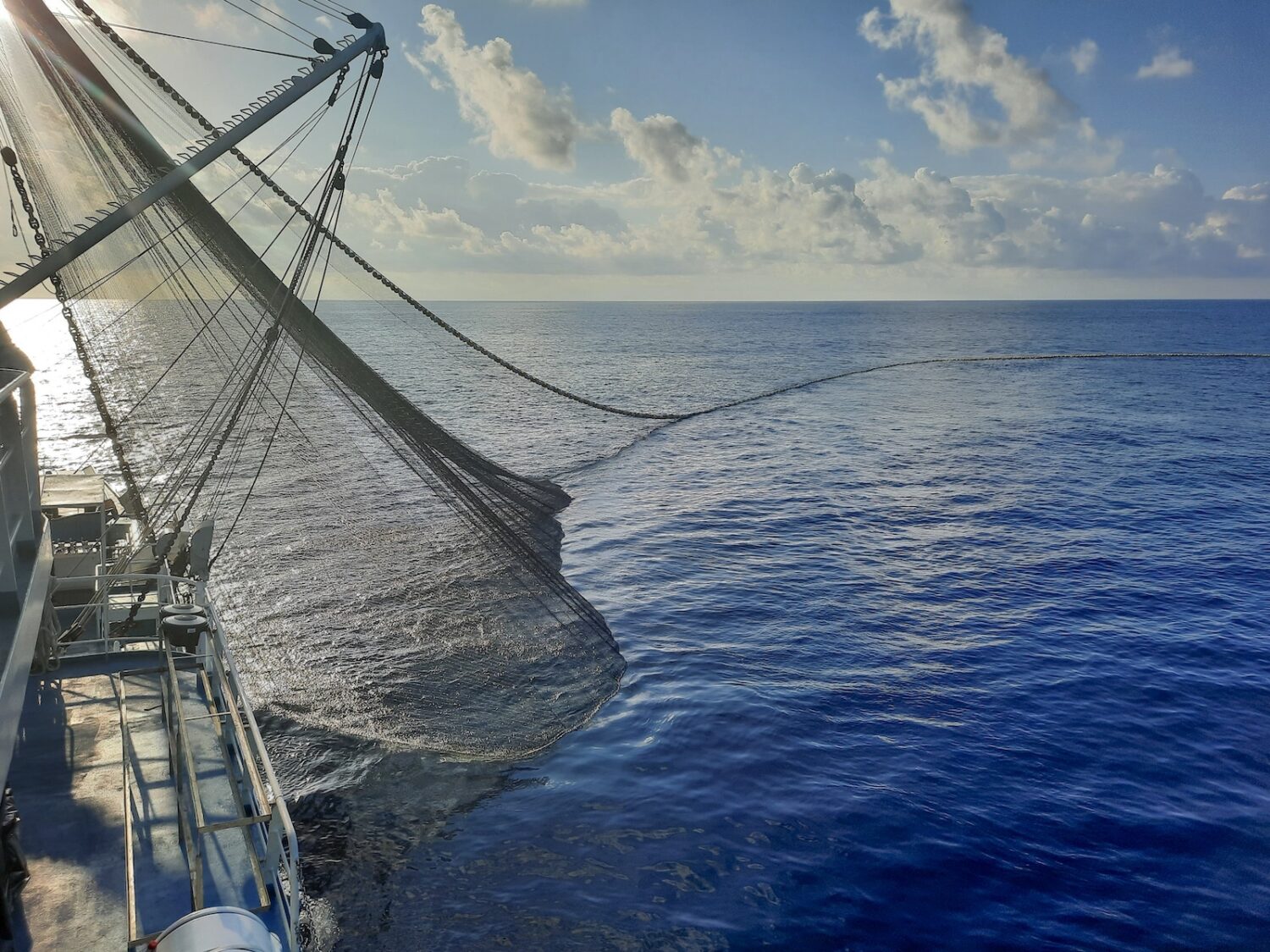
A tuna purse seiner -- the net can be more than a mile long, and is pulled around a school of tuna or a pod of dolphins. Photo credit: Dreamtime
In response, the International Marine Mammal Project at Earth Island Institute (IMMP) and Congress developed the Dolphin Safe tuna standards in 1990. These standards require that tuna be caught without intentionally setting nets on dolphins, thereby preventing their entrapment. Then, in 1997, the standards were expanded, now stating that the “Dolphin Safe” label cannot be given to tuna even if dolphins were accidentally killed or injured.
The implementation of the Dolphin Safe standards and label has dramatically decreased the mortality and injury rates of dolphins in the Eastern Tropical Pacific Ocean and other tuna fisheries; however, there is still work to be done.
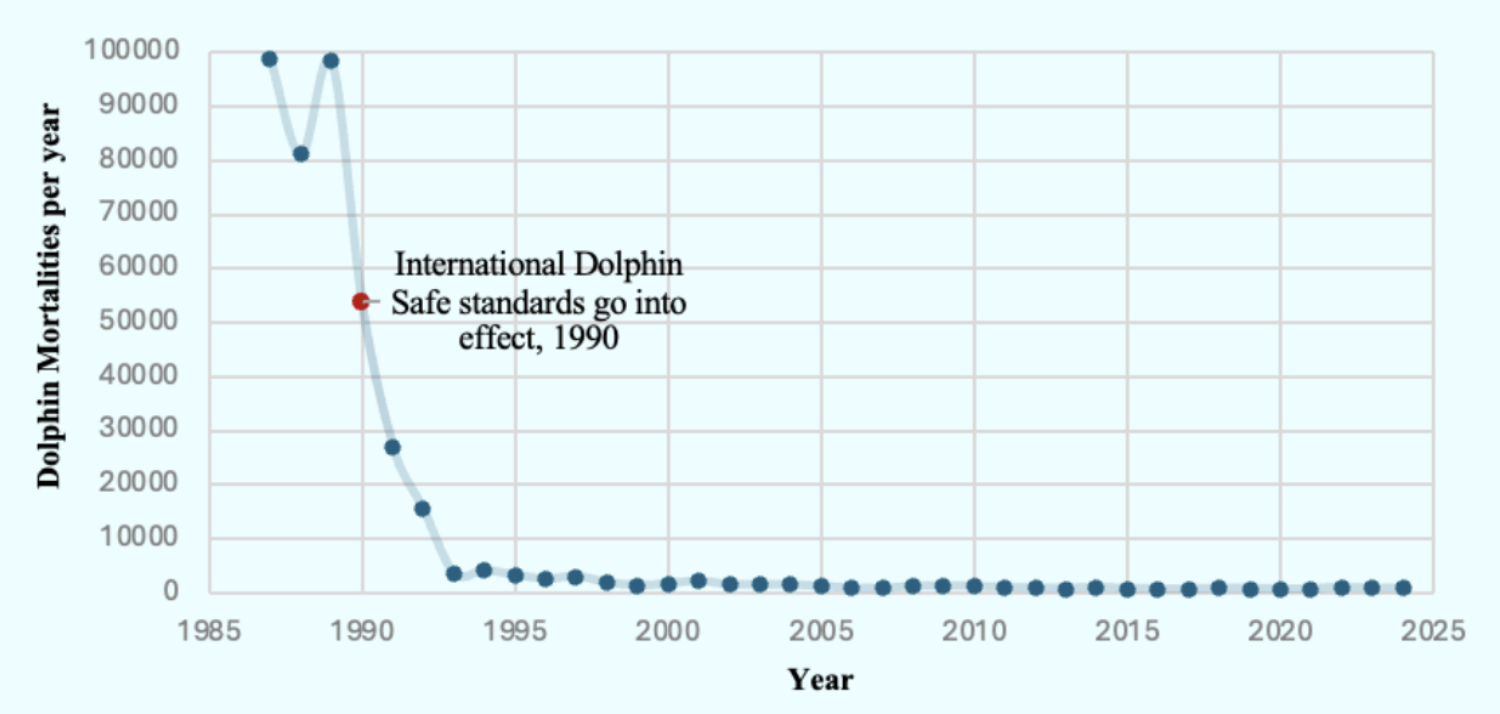
Tuna Fishing-Related Dolphin Mortalities 1987-2024, Based on the IATTC 2024 Dolphin Mortality Data. Actual mortality rates may be higher than reported due to limitations in observer coverage, reporting practices, and potential bias in data collection.
Although more than 90% of the world’s canned tuna industry abides by Dolphin Safe standards, some fishing boats continue to target and net dolphins. In particular, the Mexican tuna industry and government have pushed against the Dolphin Safe label, claiming it unfairly restricts their access to the United States’ tuna markets. Because of this, the government of Mexico has repeatedly tried to overturn or weaken the label. In 2018, the WTO denied Mexico’s efforts to dodge the Dolphin Safe label. Despite this, parts of the Mexican tuna industry continue using dolphin-deadly purse-seine methods, and a domestic market – deceived by misleading “dolphin–friendly” labels – continues to support the practice.
The Inter-American Tropical Tuna Commission (IATTC) manages tuna fisheries in the Eastern Pacific and oversees the Agreement on the International Dolphin Conservation Program (AIDCP). This program aims to reduce dolphin mortality and promote more “sustainable” fishing practices, yet still permits up to 5,000 dolphin deaths annually while labeling such practices as “Dolphin Safe” to consumers.
This highlights a key component of the IATTC: the use of Dolphin Mortality Limits (DMLs). Tuna fishing vessels are allocated a maximum number of allowable dolphin deaths each year. Under this system, vessels are still permitted to intentionally set nets on dolphins as long as they remain within their limit of dolphin deaths. Government observers on board vessels monitor and record dolphin mortality. Among IATTC member countries, Mexico receives the largest share of DML allocations, reflecting the scale of its purse-seine fishing practices.
Other nations that continue setting nets on dolphins to catch tuna include Colombia, some companies in Ecuador, and Venezuela. However, observer reports from these fleets are not publicly accessible, and IMMP believes that dolphin mortality is likely far higher than what is officially reported.
Alongside the DML allocation, some Mexican tuna fisheries have received MSC (Marine Stewardship Council) sustainability certification, despite continuing to set nets on dolphins. According to the MSC, this certification indicates that a fishery maintains healthy fish stocks and minimizes environmental impact. However, IMMP and the World Wildlife Fund argue that these fisheries still rely on dolphin-targeted fishing methods, raising concerns about whether they should be considered environmentally sustainable.
The IATTC Dolphin Mortality Limit and MSC certification, which allow intentional chasing and netting of dolphins, contrast sharply with the IMMP’s international Dolphin Safe certification standards, which prohibit intentionally chasing and setting nets on dolphins under any circumstances. Although any reduction of dolphin mortality is certainly beneficial, the ultimate goal is for all tuna fisheries to abandon the dolphin-deadly purse-seine method of fishing. The DML system and certification standards, such as MSC, risk normalizing fishing methods that continue to put dolphins at risk.
What You Can Do:
Dolphin-Safe standards are still incredibly important today. While policies and international agreements play a vital role in protecting marine mammals, consumer choices also have a real influence. Consumers influence retailers, who in turn tell the tuna companies that consumers prefer Dolphin Safe tuna.
By choosing Dolphin Safe-labeled products, supporting fisheries that avoid dolphin-targeted fishing, and learning more about how seafood is sourced, consumers can help drive demand for more responsible practices. Encourage your friends to buy only tuna with the Dolphin Safe label, and check IMMP’s list of participating companies – those pledged to never set nets on dolphins – on our website: https://savedolphins.eii.org/campaigns/dsf
Together, these actions contribute to protecting dolphins and encouraging a more sustainable future for the tuna industry.
*******************************************
The International Marine Mammal Project (IMMP) is dedicated to protecting dolphins and whales around the globe. More than 7 million dolphins have died in tuna nets. Today, the Dolphin Safe label saves the lives of an estimated 90,000 dolphins annually. Your donations go directly to saving the lives of hundreds of thousands of dolphins. Please consider a donation to save whales and dolphins. Thank you.