Two Weeks, Two Whales, One Urgent Question: How Many More?
By Cindy Lowry
Maine Campaign Coordinator for North Atlantic Right Whales, International Marine Mammal Project
In the span of two weeks this January and February, we lost two North Atlantic right whales, one of the most endangered whales in the world. Two whales with histories, families, and futures that were stolen from them far too soon. Their deaths are not anomalies. They are a pattern that will continue until we choose to stop it.
Division: Four Years, Four Entanglements
Division’s name came from his callosity pattern (the unique patches of rough skin on a right whale's head that scientists use to tell individuals apart). Division’s callosity resembled a mathematical symbol. He was only four years old.
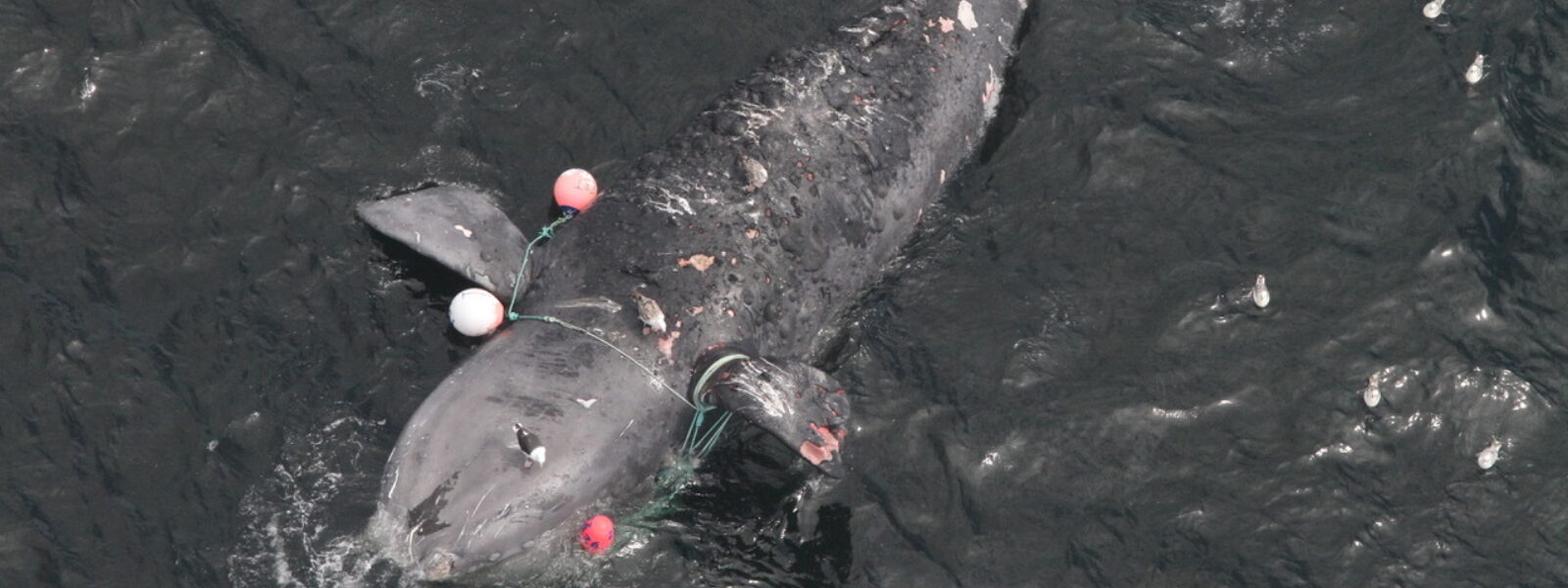
He was first spotted entangled on December 3, 2025, with fishing line wrapped around his head and mouth, cutting into his blowhole and lodged in his upper jaw. Local research teams made a partial disentanglement effort, but the gear had already done serious damage. Scientists at the New England Aquarium's Anderson Cabot Center for Ocean Life noted that Division had likely been entangled for some time before he was even found. Over the weeks that followed, his condition deteriorated. Poor weather and his distance from shore made further rescue attempts impossible.
He was last seen alive on January 21, 2026. Six days later, an aerial survey team spotted his carcass 25 miles off the coast of North Carolina.
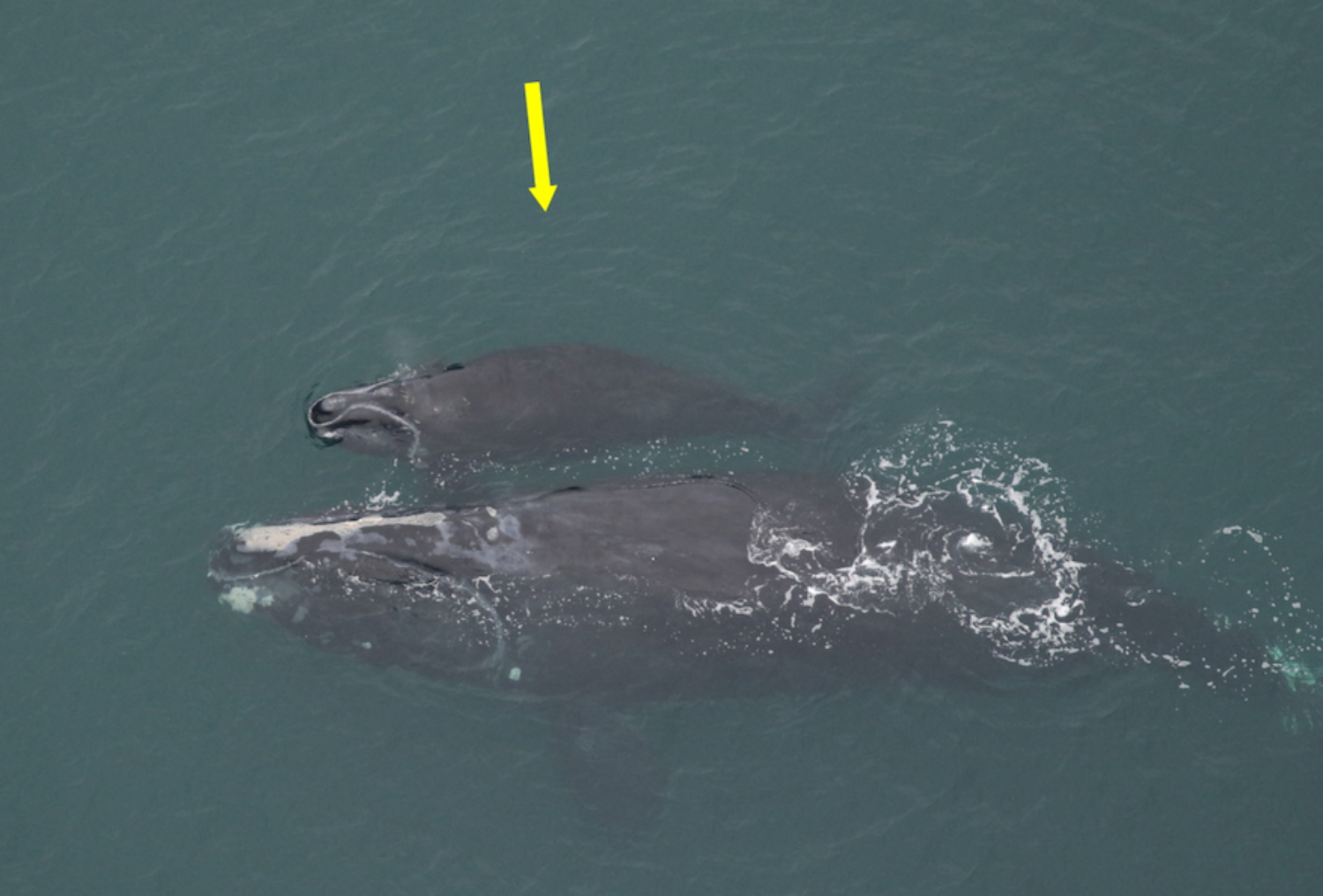
Silt with her calf Division in happier days. Photo Credit: Clearwater Marine Aquarium Research Institute, under NOAA Permit.
What makes Division's story especially gutting is that this wasn't his first entanglement. It was his fourth. Scientists had documented three previous entanglement events over the course of his short life. He had survived them all, until he didn't.
Division was the youngest of four calves born over time to his mother, Silt, in December 2021. He was a regular presence in the waters of New England and the Gulf of St. Lawrence. He had barely begun his life.
Porcia's Calf: Too Young for a Name
Two weeks after Division's death, another carcass was found. This time on a barrier island off the eastern shore of Virginia. She was just three years old.
She was the calf of Porcia, a 25-year-old right whale who has now lost all three of her offspring. The previous two died from fishing gear entanglements. This young whale's cause of death is still under investigation, though scientists note she had appeared healthy as recently as October.
She never received a name. Right whale calves are named after scientists analyze their callosity patterns, a process that takes time. She died before that time came.
There is something unbearable about that fact. In a population of roughly 380 animals, every individual is known, catalogued, watched over. Scientists track their health, their travels, their family relationships across decades. And yet this young whale slipped away before she could even be introduced to the world.
Her grandmother, Mantis, is over 40 years old and one of the most prolific mothers in the population. She has birthed eight calves, the most recent spotted just this past December. Her aunt, Squilla, was sighted this season with a new calf of her own. This is a family the researchers know deeply. And now Porcia has outlived every one of her offspring.
"The loss of a young female is especially impactful for an already small population," said Amy Warren, Scientific Program Officer at the New England Aquarium's Anderson Cabot Center. "Given the opportunity, a single female could add at least 10 whales to the right whale population in her lifetime."
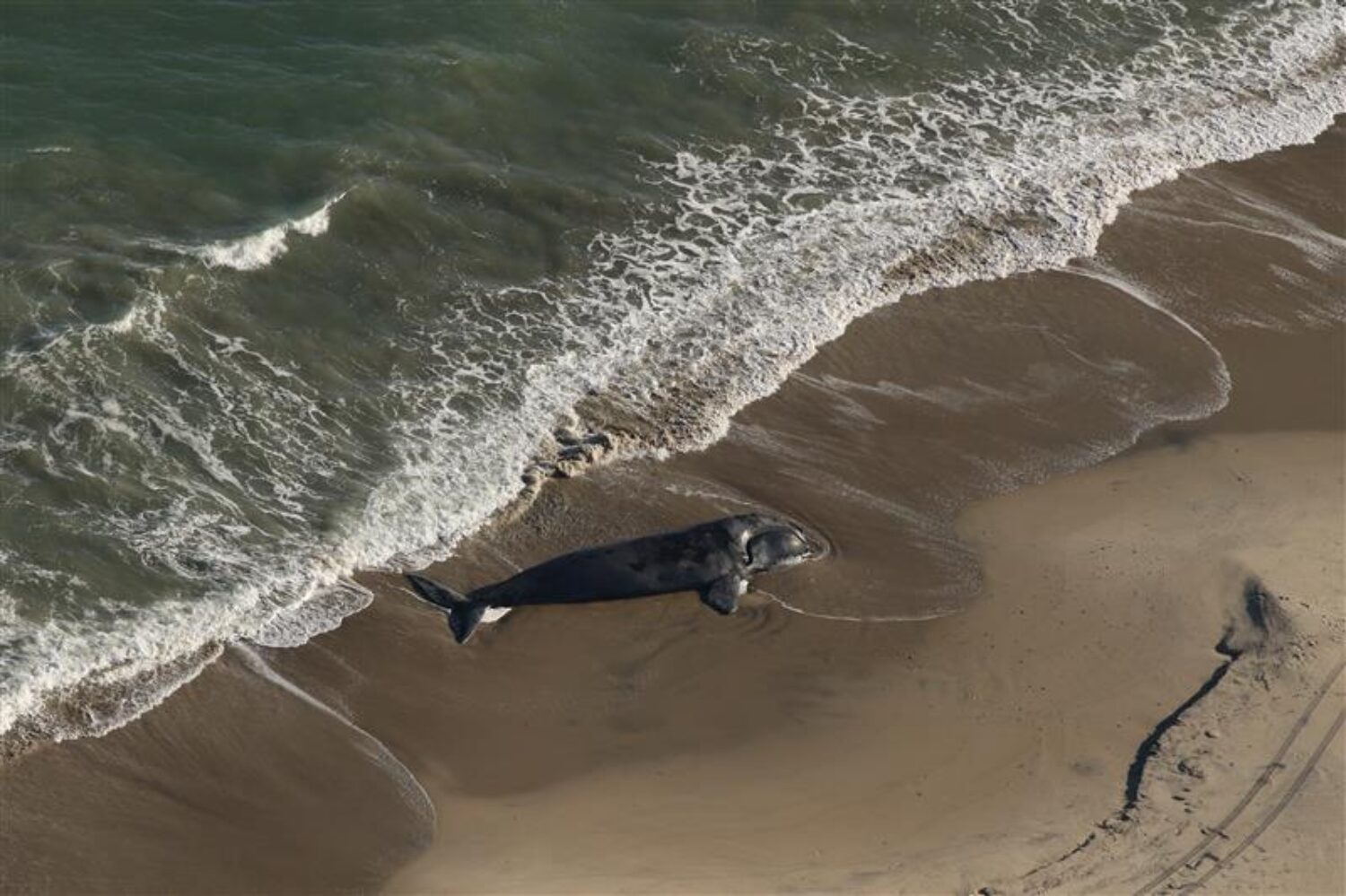
Porcia's calf. Photo Credit: Clearwater Marine Aquarium Research Institute, Under NOAA Permit # 24359
A Centuries-Old Pattern We Already Know How to Break
Here is what makes these deaths so difficult to sit with: we know why right whales die. And we know how to prevent it. Entanglements with fishing gear and vessel strikes are the leading causes of death and injury for North Atlantic right whales. Scientists have recorded more than 1,900 entanglement events since 1980, affecting over 87 percent of the entire right whale population. This is not a mystery; it is a crisis with a known cause.
And there are known solutions. Ropeless or "on-demand" fishing gear eliminates the vertical lines that whales become entangled in. Vessel speed restrictions in critical habitats reduce the risk of deadly ship strikes. These are not radical ideas. They are practical, available tools that exist right now.
Yet, as right whales begin their annual migration northward toward the Gulf of Maine, the National Oceanic & Atmospheric Administration (NOAA Fisheries) is considering a proposed rule change that could weaken the very vessel speed restrictions designed to protect them, part of the Trump administration’s attacks on regulations. These whales are heading toward waters where lobster gear fills the ocean, where vessel traffic is heavy, and where the risks are real and present. Some are mothers traveling with new calves, slower and more vulnerable than the rest. The urgency to act has never been greater. We urge you to submit a public comment opposing any rule changes that weaken vessel speed limits before the comment period closes on June 2, 2026.
What We Can Do
North Atlantic right whales do not have the luxury of time. With only about 380 individuals remaining, and just 72 reproductive females, every single life matters. Division deserved better. Porcia's daughter deserved the chance to grow up, to be named, to add her own calves to a recovering population. We can honor them by demanding the policies and regulations that would have kept them alive, and that can still protect the whales heading our way this spring.
*******************************************
Your donations help protect the fragile population of North Atlantic right whales. IMMP is working to support increased funding for NA right whale protection (such as monitoring ship traffic and subsidizing experimental efforts with ropeless gear) and opposing the weakening of right whale protection measures. Please give as generous a gift as you can. Thank you!