Wikie and Keijo Do Not Belong at Loro Parque Zoo
By Mark J. Palmer
Wikie and her son Keijo, the two orcas, have been left stranded in Marineland in the resort city of Antibes on the mainland of southeastern France, even though the aquarium has been closed to the public. These orcas were both born in captivity, so they cannot just be released into the ocean.
A new French law prohibits keeping cetaceans in captivity for entertainment and breeding, leading to the closing of Marineland, but Marineland has refused to cooperate with the government or other experts in placing Wikie and Keijo in a seaside sanctuary, the best place for the two orcas.
The International Marine Mammal Project (IMMP) of Earth Island Institute has pushed for the French government to accept the proposal of the Whale Sanctuary Project (WSP) to move Wikie and Keijo to the sanctuary they are building in Nova Scotia. WSP just announced new donations coming in for the sanctuary, including a $3 million donation.
The French Ministry has indicated that it strongly favors relocating the orcas to the WSP sanctuary that is being developed. However, the government, unfortunately, has not mandated that Marineland follow their determination of what is best for the orcas. Instead, Marineland is pushing to send the two orcas to the Loro Parque Zoo in Spain. Loro Parque would likely be a death certificate for the orcas. The facility has a shocking death rate of captive orcas at the zoo, and Wikie and Keijo would both be subject to breeding.
The Spanish government, based on determinations by their scientific authorities, has thus far rejected the relocation of the two orcas into Loro Parque because of it being too crowded with captive orcas, and not representing a facility that is better for the orcas than their current status.
But Marineland is back pairing with Loro Parque Zoo and the captivity industry to pressure both the French and Spanish governments to allow Wikie and Keijo into Loro Parque. Marineland Antibes is in a state of degradation, and once the cetaceans are relocated, the facility will likely be torn down.

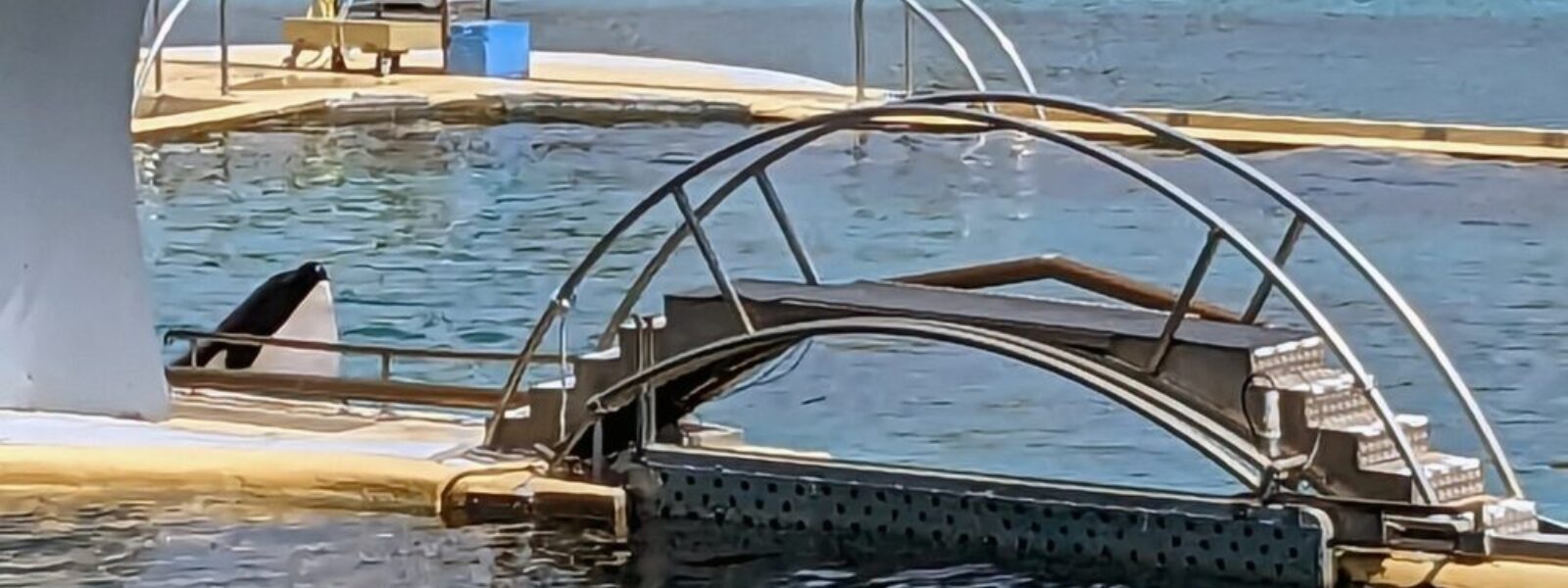
Wikie and her son Keijo at Marineland d'Antibes. The two orcas watched their companion orcas die, and they remain in their concrete tank. Photo Credit: One Voice France
On March 25, 2026, IMMP sent the following letter to the Spanish government, urging them to reject imports of Wikie and Keijo. We continue to believe the best place for Wikie and Keijo is a seaside sanctuary.
Ms. Sara Aagesen
Minister for Ecological Transition and Demographic Challenge
Ministerio para la Transición Ecológica y el Reto Demográfico
gabinete.ministra@miteco.es
RE: Relocation of Orcas Wikie and Keijo to Spain
Dear Minister Aagesen,
Reports indicate that in the coming
weeks, the French government may approve a request by Marineland Antibes
to relocate the orcas Wikie and Keijo to a captive facility of their
choice, most likely Loro Parque Zoo in Tenerife.
We write to
commend the decision by the Spanish government in 2025 to reject the
proposed transfer of Wikie and Keijo from Marineland Antibes to Loro
Parque. We believe that this was the right decision, and reflected
careful review by the Spanish scientific agency, and demonstrated
Spain’s commitment to the principles of CITES, animal welfare, and
science-based decision making.
We respectfully urge the Spanish government to maintain this position and continue the denial of any permit that would allow the two orcas to be transferred to Loro Parque Zoo.
Scientific and Welfare Concerns
- Failure to meet the Convention on International Trade in Endangered Species (CITES) 'Suitable Destination' requirement because the proposed receiving facility does not represent a demonstrable improvement in welfare conditions for orcas.
- High risk of social instability: Introducing a bonded mother–son pair into an already established group is likely to provoke aggression and chronic stress.
- Overcrowding concerns: the existing orca population at Loro Parque already strains available pool space and management capacity. These concerns were identified by your agency when reviewed last year, and are no better now.
- Elevated mortality history: four captive orcas have died at Loro Parque since 2021, raising serious continued concerns regarding the long‑term welfare environment.
- Documented controversial breeding practices, including inbreeding among calves born at the facility.
- Proponents of relocation claim that moving orcas to Loro Parque would be a rescue. We believe that this is false. Transfer from Marineland Antibes to Loro Parque would have multiple conditions listed above that would represent a significant decrease in welfare.
- The continuation of performance shows and commercial display rather than retirement or improved welfare conditions,
- Growing international scientific consensus supports transitioning captive cetaceans toward seaside sanctuaries or retirement environments rather than continued display and breeding.
Availability of Better Alternatives
We believe that the best course is for the two orcas to be maintained at Marineland Antibes while longer-term solutions are developed.
Development of a seaside sanctuary in Nova Scotia is in progress, and the orcas could live there in a natural marine environment, cared for by experts.
Such alternatives would represent genuine progress in the treatment
of captive cetaceans and better reflect evolving international
expectations regarding marine mammal welfare.
We appreciate the
leadership shown by Spain’s scientific authorities in upholding CITES
standards and carefully evaluating the welfare implications of this
proposed transfer.
We respectfully urge Spain to maintain this science‑based position
and ensure that any decision prioritizes the long‑term welfare of these
animals and the integrity of international wildlife protection
agreements.
Sincerely,
David Phillips
Director, International Marine Mammal Project, Earth Island Institute
Director, Free Willy Keiko Foundation
************************************
Can you help support Wikie and Keijo, as well as other orcas and dolphins stranded in concrete tanks around the world? Your donations go to give voice in support of Wikie and her son Keijo, in their best interests. We are working with the world’s experts on rehabilitation and maintenance of orca whales. IMMP and the Free Willy Keiko Foundation have already worked with Keiko to return him to his home waters, where he thrived in a seaside sanctuary for years. Please donate today! Thank you.