Gray Whales are Disappearing Again
By Abigail Wadkins-Daub
Abigail is an intern with the International Marine Mammal Project at the Earth Island Institute and a senior Environmental Studies student at the University of San Francisco.
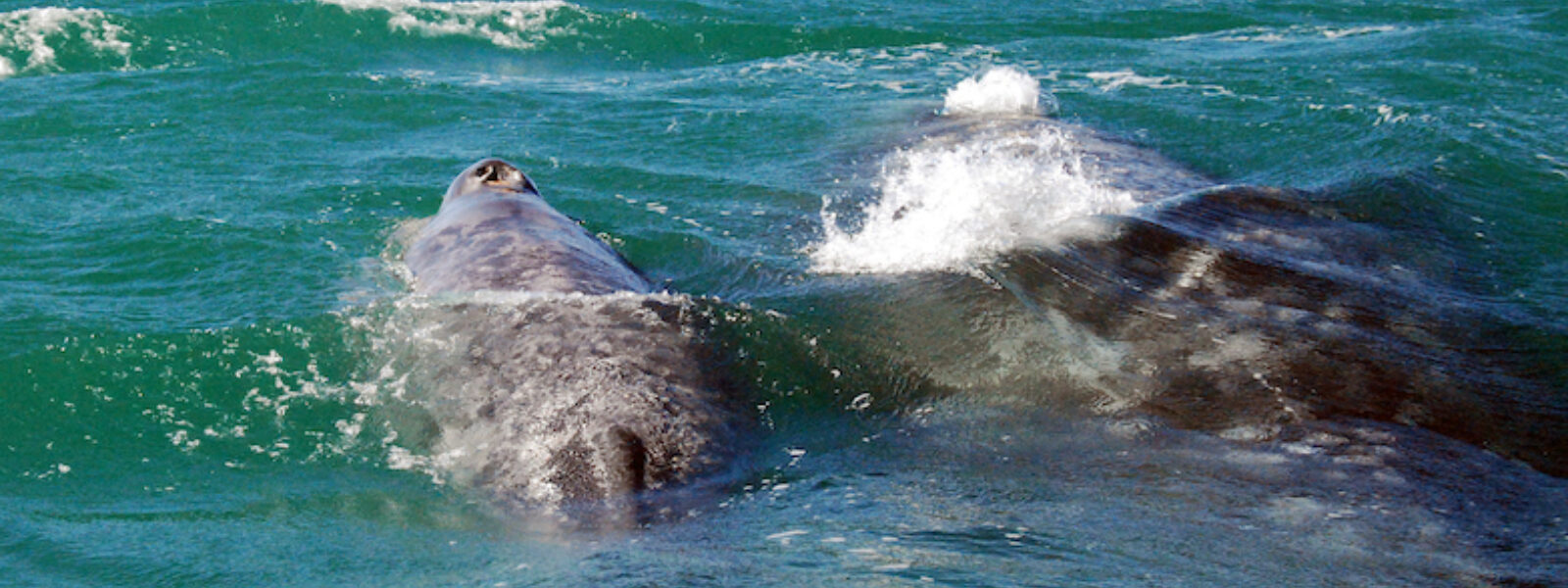
The population of gray whales in the Pacific Ocean is experiencing a serious decline, going from 25,000 individuals in the late 1990s to as few as 12,000, according to 2024 calculations. This population crash is unprecedented and represents a monumental ocean conservation problem.
Background
Eastern Pacific gray whales undertake one of the longest migrations of any mammal, traveling 12,000 miles each year between Arctic feeding grounds and the warm breeding lagoons of Baja California. This already strenuous journey is becoming increasingly dangerous, and human activity is to blame.
Gray whale populations have faced serious challenges before. In the late 19th and early 20th centuries, Eastern Pacific gray whales were driven to near extinction by whaling due to intense demand for lamp oil, which was produced from whale blubber.
In 1947, in response to declining populations, gray whales received protection from the International Whaling Commission. The United States responded to declining gray whale populations by adding them both to the Marine Mammal Protection Act and the Endangered Species Act. Mexico transformed some of Baja’s major breeding and nursing lagoons into protected refuges, with strict restrictions on boat traffic.
These recovery efforts were remarkably successful, and by the 1990s, Eastern Pacific gray whale populations had rebounded to over 20,000 individuals, leading to their removal from the U.S. Endangered Species List in 1994.
But now that comeback is in jeopardy. In recent years, population estimates have fluctuated between 12,000 and 19,000 individuals, with reproduction rates too low to support a meaningful recovery. Researchers have also reported a troubling rise in emaciated whales and strandings along the Pacific coast.
Causes of Decline
This trend is likely driven by several compounding factors: food scarcity in Arctic feeding grounds, increased ship traffic, entanglement in plastic fishing and crabbing gear, and noise disturbance.
Gray whale food sources in the Arctic feeding grounds are likely declining due to global warming and subsequent changes in sea ice. Similar damage will continue as the Earth heats up, unless we stop burning fossil fuels and implement green alternative energy sources.
Gill nets, crab and lobster traps, and other plastic fishing gear pose an especially serious risk, often leading to injury, exhaustion, and death.
Gray whales are also particularly vulnerable to ship strikes. Unlike many other whales, they are relatively quiet animals with very low profiles at the surface, making them difficult to detect using acoustic monitoring systems. This creates added challenges for prevention efforts and highlights the need for improved detection methods and vessel-speed regulations.
What are the Solutions?
Mandatory reduced speed limits in gray whale migration habitat are essential. In Southern California, whale-safe and ropeless crabbing gear is being tested to reduce entanglements. Expert teams can cut nets and lines from entangled whales, but most deaths at sea go unrecorded. Researchers and stranding networks study mortality events to improve response strategies, but these efforts require sustained funding and public support to be effective.
One critical step toward protecting gray whale populations would be reinstating their status on the U.S. Endangered Species List. This designation would require federal agencies to ensure that any actions they authorize, fund, or carry out does not harm gray whales or their habitats. It would also strengthen protections against offshore oil and gas development, shipping impacts, fishing gear, and other industrial activities that threaten critical migration routes.
In August 2025, Dr. Richard Steiner, a longtime marine mammal researcher, submitted a formal proposal to the U.S. National Marine Fisheries Service requesting the relisting of gray whales. The review process is supposed to take 90 days. Six months later, no decision has been made. At a time when whale populations are declining, delays like this have significant consequences.
The International Marine Mammal Project (IMMP) of Earth Island Institute is working with Dr. Steiner and other scientists in support of the relisting of the gray whale. We are looking at legal and other steps that may be necessary to push the listing forward.
What Can You Do?
The good news is, you can make a difference.
Public engagement plays a larger role than many realize. When proposals that impact whales are under review, there are often public comment periods where individuals can submit input and advocate for species protection. Staying informed and participating in these processes- by following this blog and other sources- can directly influence conservation outcomes.
You can also support organizations working directly with marine conservation- like the International Marine Mammal Project- which advocates for stronger protections, increased funding for research, and policies like relisting vulnerable species.
Being a conscious consumer matters. Reducing plastic consumption, supporting sustainable fisheries, and staying informed about whale-safe practices all contribute to a larger culture of ocean stewardship. You can also engage in beach clean-ups to remove plastic and other trash from our oceans.
Gray whales have made incredible recoveries before. With the right combination of science, policy, and public support, they can do so again, but only if we address the challenges they face along their migration.
*******************************************
The International Marine Mammal Project of Earth Island Institute works to protect gray whales and other whales and dolphins worldwide. With gray whale populations facing severe threats, public support is critical to fund research, conservation, and policy action. Please consider a donation to safeguard gray whales and to save whales and dolphins. Thank you for your support.