SeaWorld’s Farcical “Natural” Encounter with Captive Orcas
Poor SeaWorld. They can’t seem to do anything right.
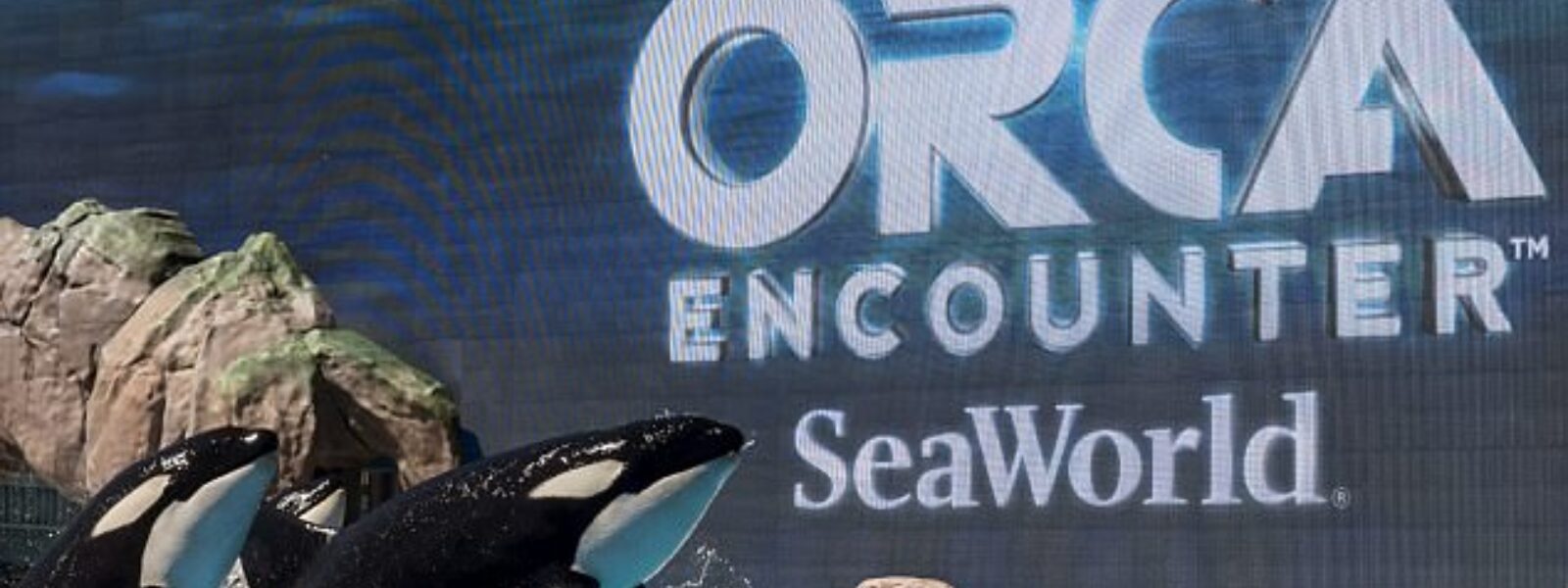
On Memorial Day weekend they opened their long-promised “natural” and scientific show of orcas, pretending to show how orcas live in the wild and getting away from the huge circus acts and blaring music of past orca “shows”.
But the show isn’t natural: The orcas still respond to the hand signals of their trainers.
And, as always, if the orcas don’t do the trick – in SeaWorld’s Orwellian talk, the “behavior” – they still don’t eat.
In place of blaring music and video shots of SeaWorld trainers standing 20 feet tall on screens, SeaWorld now provides video footage of real orcas in the wild.
This is doubly ironic. Not only do viewers now get TWO artificial views of orcas, one of them in tanks and the other on a video screen, but the orcas themselves can see the screen of their wild brethren. We know that orcas and dolphins can watch video and know what they are seeing. Will this have an effect on the orcas in captivity watching freedom and wild places that they may never have the chance to experience in the future?
The Los Angeles Times headlined a review of the new show: “SeaWorld San Diego answers critics with a slow and boring new Orca Encounter show.” Their reviewer said: “I found Orca Encounter to be boring, joyless and bogged down by scientific artifice.”
“What a flop!” was the headline in the Daily Mail from the United Kingdom.
SeaWorld orca trainer Linda Donahue told Channel 10 News in San Diego: “Everything we do with the whale is based on positive reinforcement and having a good time.” Scientific?
Captivity for these orcas will still mean:
- sterile tanks that are highly chlorinated so people can see the orcas;
- doing repetitive “behaviors” for audiences 7 days a week for dead fish;
- stress and physiological reactions that cause disease and infections that require medications like antacids, antidepressants, and antibiotics;
- difficulty and potential aggression from tank mates that are not related to each other;
- treatment of orcas as objects and possessions, not individual living beings that deserve rights;
- and finally bad education for children who learn the wrong things about the natural world from SeaWorld and similar theme parks.
In other words, despite Ms. Donahue’s enthusiasm, “positive reinforcement” and “having a good time” will not happen for SeaWorld’s orcas.
SeaWorld’s orcas should be retired to seaside sanctuaries, where they would receive care and feeding, but be free to live their lives in an ocean environment to which evolution has honed them.
Photo credit: Facebook.