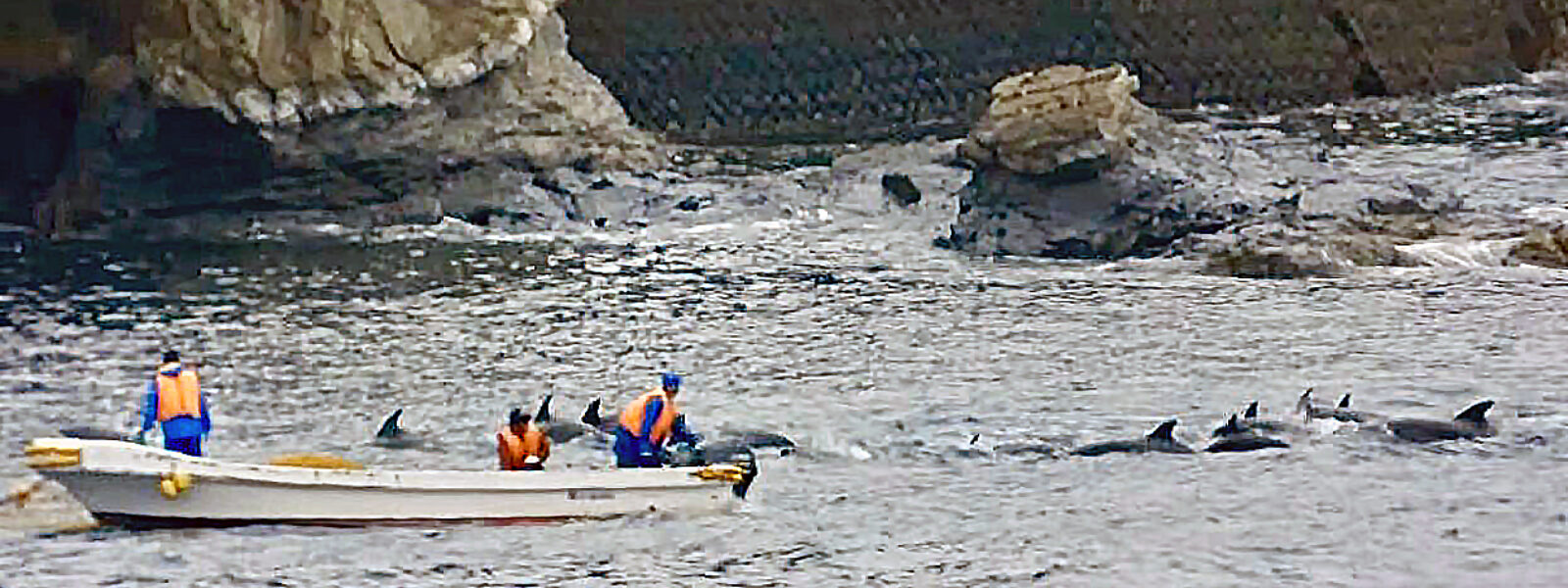
Taiji’s Hunters Wrestle Live Dolphins into Concrete Coffins
By Mark J. Palmer
The dolphins we see in marine parks did not get there from heaven.
They were caught in brutal round-ups, torn from their families and their freedom. Or they were bred in captivity from other captives, never to know the freedom of the sea.
Small concrete tanks are like purgatory for dolphins – they swim in circles or lie motionless on the surface until they die. They are forced to perform the same routine tricks time and time again, three to four times a day, every day, for the rest of their lives. Because if they don’t perform, they don’t eat.
In Japan, Taiji’s dolphin hunting began in 1969, according to the town’s own history (catching and eating dolphins was NEVER a tradition in Taiji). Slaughtering dolphins in a welter of blood is secondary to the captivity trade. A live trained dolphin can sell for $50,000 or more on the open market. A dead dolphin for meat brings in less than a $1,000.
On September 18th, our colleague Kunito Seko, who lives in Taiji, photographed the capture of several bottlenose dolphins in Taiji, taken from their pods to spend the rest of their life in concrete coffins.

Two female bottlenose dolphins with young, caught in the Cove in Taiji. Their fate is unknown -- perhaps one of the females was taken for captivity. Photo Credit: Kunito Seko

Diver's wrestle a female bottlenose dolphin for captivity. In the shallow water, surrounded by nets, the dolphin has no chance. Photo Credit: Kunito Seko
So many dolphins have been caught that the bottlenose dolphin population along the Japanese coast is severely depleted, yet the dolphin slaughter continues. The Taiji hunters will sometimes release the remaining pod members of bottlenose dolphins back into the ocean, after picking out the best-looking female dolphins (males are harder to tame). However, the traumatized dolphin pod is unlikely to thrive, mourning its lost members.
And this is only done for the bottlenose dolphin species, not any other species, which are ruthlessly killed.
In any event, this so-called “generosity” towards bottlenose dolphins is simply a means to hope that the hunters can catch more bottlenose dolphins in the future. Other dolphin species that are not so highly valued are being relentlessly pushed towards local extinction, including pilot whales, Risso’s dolphins and spotted dolphins, sold in local meat markets.

The dolphin hunters pull the net tight around the dolphin, and will then drag it, kicking and screaming, to pens and tanks set up around the town of Taiji, where the dolphin will be trained to eat dead fish and obey trainers (or they don't eat). Eventually, they will sold into captivity at some aquarium. Photo Credit: Kunito Seko
The current season for hunting lasts 6 months, concluding at the end of February, 2025. In that time, hundreds of dolphins will meet their deaths at the hands of the dolphin hunters in the notorious Cove.
****************************************
The Taiji dolphin drive hunts must end. It is cruel beyond words and is decimating Japan’s dolphin populations, for no good purpose. Dolphin meat is contaminated with mercury, PCBs and other pollutants and is not fit for human consumption. Keeping dolphins in captivity for entertainment purposes never makes any sense, but people continue to buy tickets. Don’t buy a ticket, and let the Japanese government know you do not support their treatment of whales and dolphins. Your donations to help dolphins has been key to help reduce dolphin deaths in the Cove by more than 50%, but too many dolphins are still dying. Donate today. Thank you!