Trump’s Offshore Drilling Plan Puts Marine Mammals at Risk
By Abigail Wadkins-Daub
Abigail is an intern with the International Marine Mammal Project at the Earth Island Institute and a senior Environmental Studies student at the University of San Francisco.
The Trump administration’s proposed offshore drilling plan, which calls to open up vast areas of U.S. coastal waters to oil and gas leasing, is a significant escalation in an already destructive industry. Offshore drilling poses serious, well-documented threats to marine ecosystems, and expanding it through this five-year plan is a major step backward for ocean conservation. At a time when renewable energy alternatives are widely available, expanding fossil fuel extraction risks irreparable and entirely avoidable harm to vulnerable species and ecosystems.
What is Offshore Drill drilling?
Offshore oil drilling is the process of extracting oil and gas from beneath the ocean floor using large industrial structures commonly known as oil rigs. These operations begin when fossil fuel companies lease sections of publicly owned ocean waters, then use techniques such as seismic airgun blasting to locate reserves deep below the seabed. Oil is not distributed uniformly, on land or under the sea, so the oil industry must search for potential oil reserves as part of the leasing process. Once found, wells are drilled and the extracted oil is transported to shore, often through pipelines. In the United States, the majority of this offshore oil drilling is concentrated in regions like the Gulf of Mexico, some areas of the Cook Inlet in Alaska, and along the Pacific Coast around the Santa Barbara Channel. The Gulf of Mexico has a lot of oil under the surface, however most other offshore areas have limited oil reserves, if any.
Trump’s 5-Year Offshore Leasing Plan
The Trump administration’s proposed 2026-2031 offshore leasing plan opens up roughly 1.3 billion acres of U.S. waters for oil and gas leasing and development, which is a dramatic expansion of past drilling efforts. With 34 planned lease sales across regions, including Alaska, the Gulf of Mexico, and parts of the Pacific Coast, this policy could bring offshore drilling back to areas like California, which has not seen a new lease since 1984.
This is not a distant possibility but rather an active proposal that could soon impact even protected marine environments, including areas near national marine sanctuaries and other marine protected areas. These waters belong to the wildlife they sustain and to the people of the United States- not the Trump administration or the oil industry. This leasing plan could put our coastlines at risk of oil contamination and increased underwater noise pollution. The marine life that depends on these ecosystems likely will suffer devastating consequences, from oil exposure to the disruption of their habitats.
Impact on Marine Mammals
Offshore drilling poses significant risks to marine mammals through oil spills, underwater noise pollution, and widespread habitat disruption. The case of Rice's whale illustrates these inevitable impacts of oil drilling, with only about 50 individuals remaining in the Gulf of Mexico, their only habitat on Earth. Following the Deepwater Horizon spill in 2010, which released over 210 million gallons of oil into the Gulf, Rice’s whale populations have declined an estimated 20%, with clear ongoing signs of poor health and limited reproduction.
Additional disasters, such as the Exxon Valdez oil spill – when a tanker ran aground in 1989 – further demonstrate the potential scale of damage, when roughly 11 million gallons of oil spilled into Alaska’s Prince William Sound. This spill caused extreme, long-term damage to the entire marine ecosystem, including orca and sea otter populations that have yet to recover.
Experts have conservatively estimated 4,232 oil spills, big and small, would result from Trump’s 5-year leasing plan, not including spills from oil tankers or catastrophic events like the Deepwater Horizon blow-out spill. Furthermore, more than half of these anticipated oil spills are predicted to occur in the Gulf of Mexico, putting vulnerable species such as Rice’s whale, bottlenose dolphins, and sea turtles at an even greater risk.
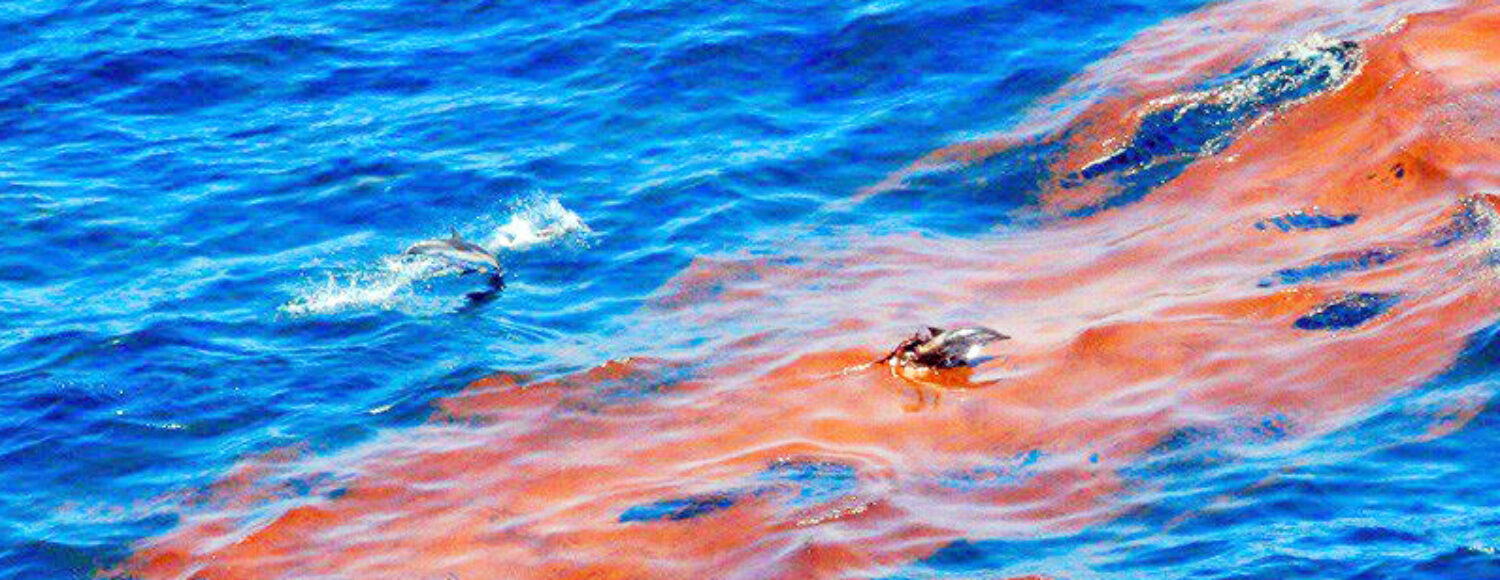
Dolphins swim through oil slicks from the Deepwater Horizon oil blowout in the Gulf of Mexico. Photo Credit: NOAA Fisheries
Why This Doesn't Make Sense
As troubling as these projections are, they are not inevitable. In a time when renewable energy is increasingly accessible and widely adopted, continued offshore oil drilling is an unnecessary risk to the environment, wildlife, and human health. Oil is a finite, non-renewable resource, and the amount that can be extracted is relatively limited compared to the scale of potential environmental damage. This is especially evident in California, where offshore oil reserves are relatively limited. With viable renewable alternatives already available, the ecological costs far outweigh the benefits. We are risking entire ecosystems for a resource that is both limited and replaceable.
Furthermore, the leasing scheme does not make sense economically. When the government floods the oil industry with thousands of acres of leasing options, the bidding price is significantly reduced. This is a ripoff of the American people’s pocketbooks.
Individual Action
Offshore oil drilling has long faced strong public opposition, influenced by decades of devastating spills that have destroyed marine ecosystems and the economies of coastal communities. The 1969 Santa Barbara oil spill became a turning point, helping motivate the environmental movement and fueling momentum behind Earth Day. Historically, this widespread resistance has been powerful enough to halt new offshore drilling proposals along both the East and West Coasts. As new threats of expanded drilling emerge under the current administration, public opinion once again plays a critical role in shaping the future of offshore energy policy.
This 5-year leasing plan will devastate our shared marine ecosystems for short-term gain. If this concerns you, there are many ways to make your voice heard.
Submitting public comments on offshore drilling proposals is one of the most direct ways to take action, and using or sharing a sample letter can make this process more accessible. Supporting marine conservation organizations, such as the International Marine Mammal Project (IMMP) at Earth Island Institute, and staying informed while educating others can help build awareness and momentum. On a larger scale, advocating for renewable energy, voting with environmental policies in mind, and participating in local conservation efforts are all critical steps toward a more sustainable future.
********************************
The International Marine Mammal Project of Earth Island Institute is working to end offshore oil drilling and preserve our ocean heritage. As the Trump administration's drilling plans are finalized, we have been filing comments against the schemes along with our colleagues and many thousands of concerned citizens. Your donations will help Rice’s whale and Pacific sea otters as we fight against leasing, intense sound bombing, and drilling. Thank you for your support!