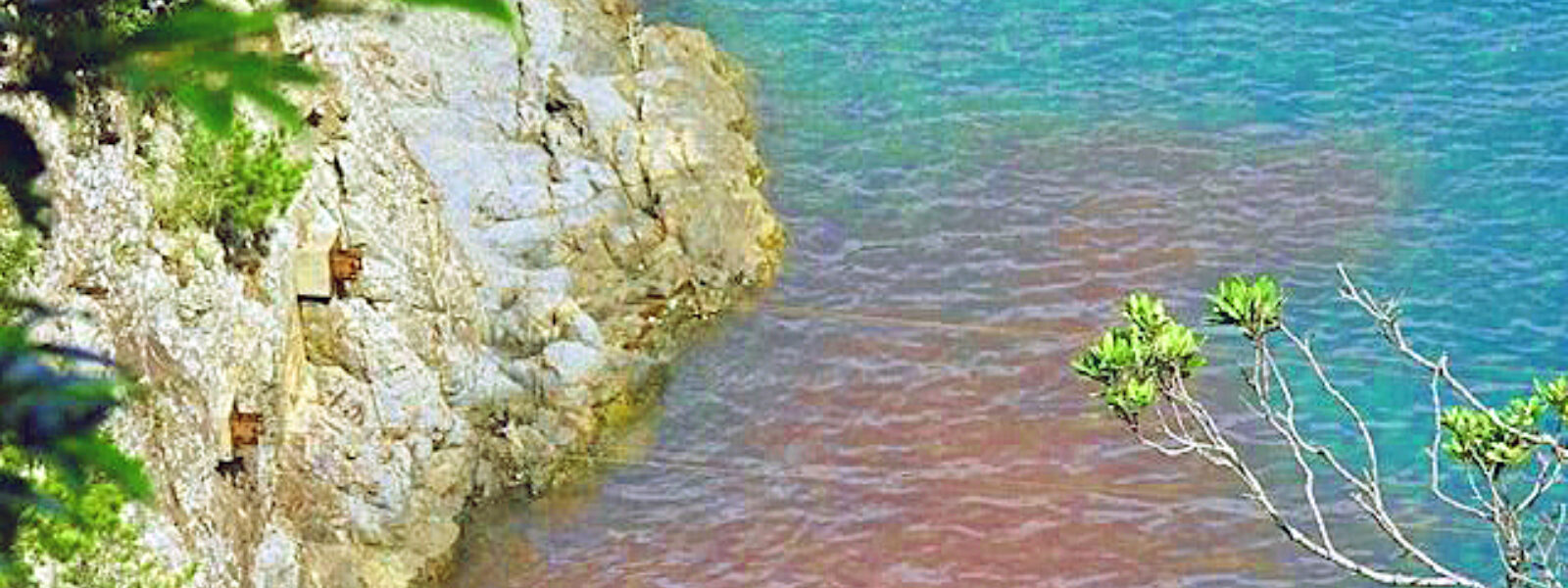
Another Taiji Dolphin Slaughter Season Ends
By Mark J. Palmer
On Friday, Feb. 28th, the most recent 6-month-long season of dolphin slaughter in the small town of Taiji, Japan, came to an end.
Every year in September, the Taiji hunters stop fishing and go to chase and harass dolphin pods into the notorious Cove, herding them like cattle to their doom. (The documentary The Cove, by produced and directed by Louie Psyhojos and the Oceanic Preservation Society, features the work of the International Marine Mammal Project of Earth Island Institute to expose the Taiji dolphin slaughter to the world.)
Hundreds of dolphins die in the process, which are sold for meat in Japanese markets. But the real money in Taiji comes from capturing live dolphins for aquariums around the world. Many of these captured dolphins, torn from their families (who are usually slaughtered once the selection of “show quality” dolphins is made by the hunters and attendant aquarium staff), will end up going to aquariums in Japan or exported to China (a major market for live dolphins for entertainment), Thailand and Bahrain.
This year, according to estimates made by our colleague Kunito Seko, an activist who lives in Taiji and films the dolphin hunts on a daily basis, and by other activists, total numbers of the dolphin killing and captures for this season have been listed:
Species
Striped Dolphin #Killed: 157 #Captivity: 3
Bottlenose Dolphin #Killed: 31 #Captivity: 87
Risso’s Dolphin #Killed: 55 #Captivity: 2
Rough-toothed Dolphin #Killed: 1* #Captivity: 0*
Melon-headed Whale #Killed: 31 #Captivity: 0
Short-finned Pilot Whale #Killed: 23 #Captivity: 0
*30 Rough-toothed dolphins were herded into the Cove, but all (but one calf that died in the nets) were apparently released.
In addition, a number of species that are normally caught in past seasons were absent this year. The dolphin hunters have attributed this to possible changes in currents and global warming effects, but there is no evidence for this case as the dolphin migrations have never been adequately studied. Another possible scenario is that years of hunting these species have seriously depleted the local populations, such that few are now swimming past Taiji anymore.
The species for which the hunters had quotas, but were not captured or killed this season, includes:
Pacific White-sided Dolphin
Pantropical Spotted Dolphin
False Killer Whale
In a word, Taiji hunters had quotas from the Japan Fisheries Agency to kill or capture for aquariums a total of 1,824 dolphins from nine species for the season.
In fact, the hunters were only able to kill about 298 dolphins and capture 92. Some dolphins were released (notably the bottlenose dolphins, which are the most popular for aquariums, so the hunters seldom kill many in order to save the species for future captivity purposes).
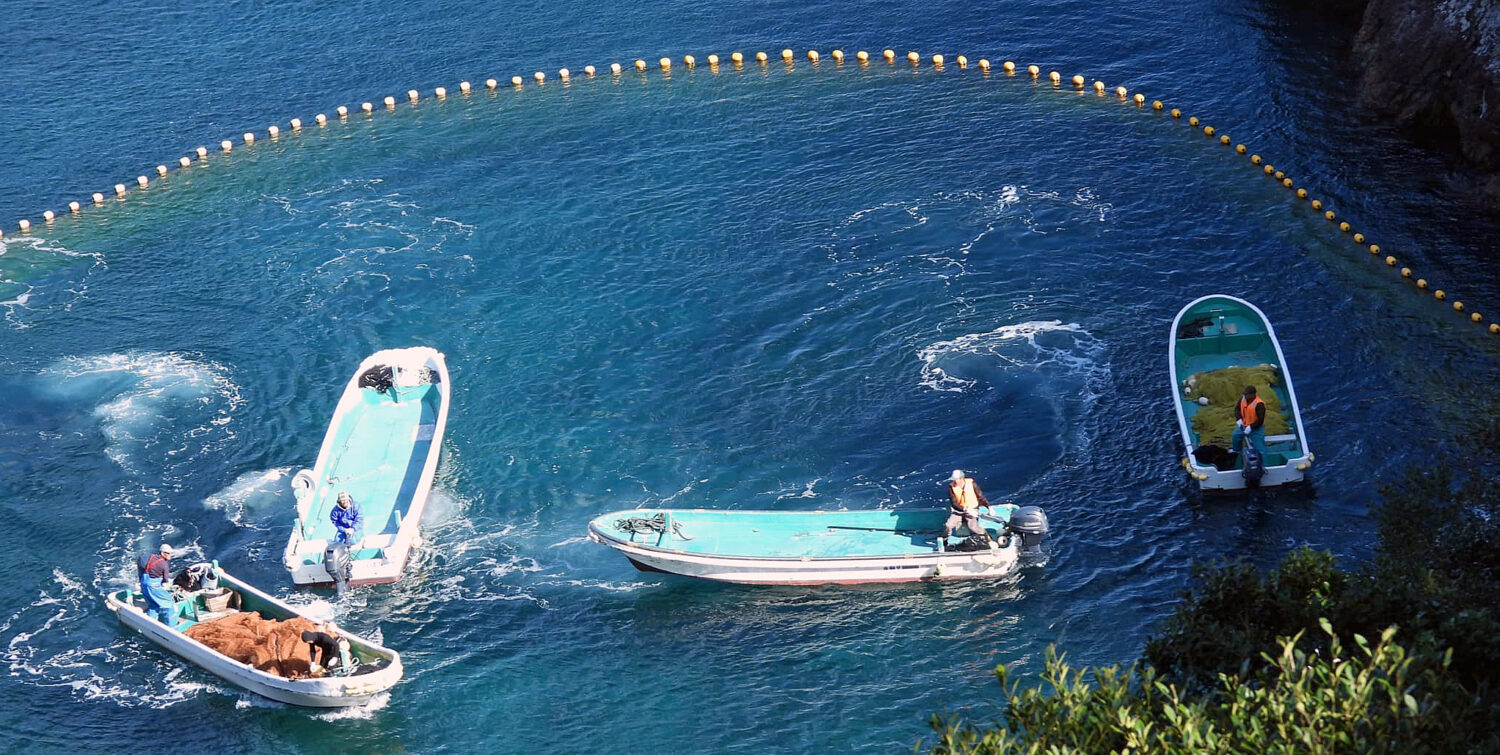
Striped dolphins in the nets in the Cove, Taiji, Japan. Photo Credit: Kunito Seko
It is unlikely that released dolphins, once they have been herded into the Cove, are able to resume normal activities. In the Cove, nets are pulled shut to prevent their escape, and then their families are broken up through the removal of animals for captivity or meat. Such a traumatic experience for the dolphins is not easily shaken. These are intelligent animals that mourn the loss of family members in the hunts. Releasing them after this trauma is not exactly a kindness – more like a crude attempt at conservation of the population.
One bit of good news – the number of dolphins slaughtered for meat this year is way down from last season. Last season (Sept. 1st, 2023 to Feb. 28th, 2024) resulted in 833 dolphins killed for meat (still lower than the quotas). Compare that number to this season’s total of 298 dolphins killed.
Still, there is no excuse for a rich nation like Japan to continue to hunt dolphins to provide mercury-laden meat for the table. Japanese consumer demand for dolphin and whale meat has declined so dramatically that most is stored in freezers. Additionally, confining dolphins and small whales in concrete tanks for entertainment is considered cruel, evidenced by the growing number of countries banning cetacean captivity and shutting down display facilities. The fact that so many dolphins are still captured for aquariums demonstrates just how poorly these animals fare in captivity – the existing wild dolphins brought into tanks soon die, and Taiji is happy to provide replacements, at a high cost.
We must keep pressuring the Japan Fisheries Agency and the hunters to end the vicious killing and capture of these wonderful animals for profit and entertainment.
Find out how Japan hunts the dolphins.
*************************************
Every day of the entire six-month season in Taiji, Kunito Seko, a volunteer activist living in Taiji, gets out of bed at dawn and films the Taiji hunters motoring out to find pods of dolphins to herd into the Cove. The International Marine Mammal Project (IMMP) helps support Kunito’s work, and IMMP further salutes the other activists who report on the Taiji dolphin hunts. You can help the dolphins of Taiji and dolphin around the world by signing our petition and donating to IMMP. We are a small but very active organization dedicated to saving whales, dolphins and their ocean habitats. We established our Save Japan Dolphins Campaign in 2004, and continue to work to end the slaughter. Thanks for your support for the dolphins and whales!