As Arctic Ice Disappears, Marine Mammals Face a Crisis
By Abigail Wadkins-Daub
Abigail is an intern with the International Marine Mammal Project at the Earth Island Institute and a recent graduate of the University of San Francisco.
Earth’s Arctic is warming nearly four times as fast as the rest of the planet. As temperatures rise and sea ice disappears, what was once one of Earth's most productive marine ecosystems has begun to collapse.
The Arctic: A Summer Feeding Ground
From May to July, the Arctic experiences its "polar summer," a period when the sun shines for nearly 24 hours each day. During this time, the extended daylight triggers phytoplankton blooms that form the foundation of the Arctic food web.
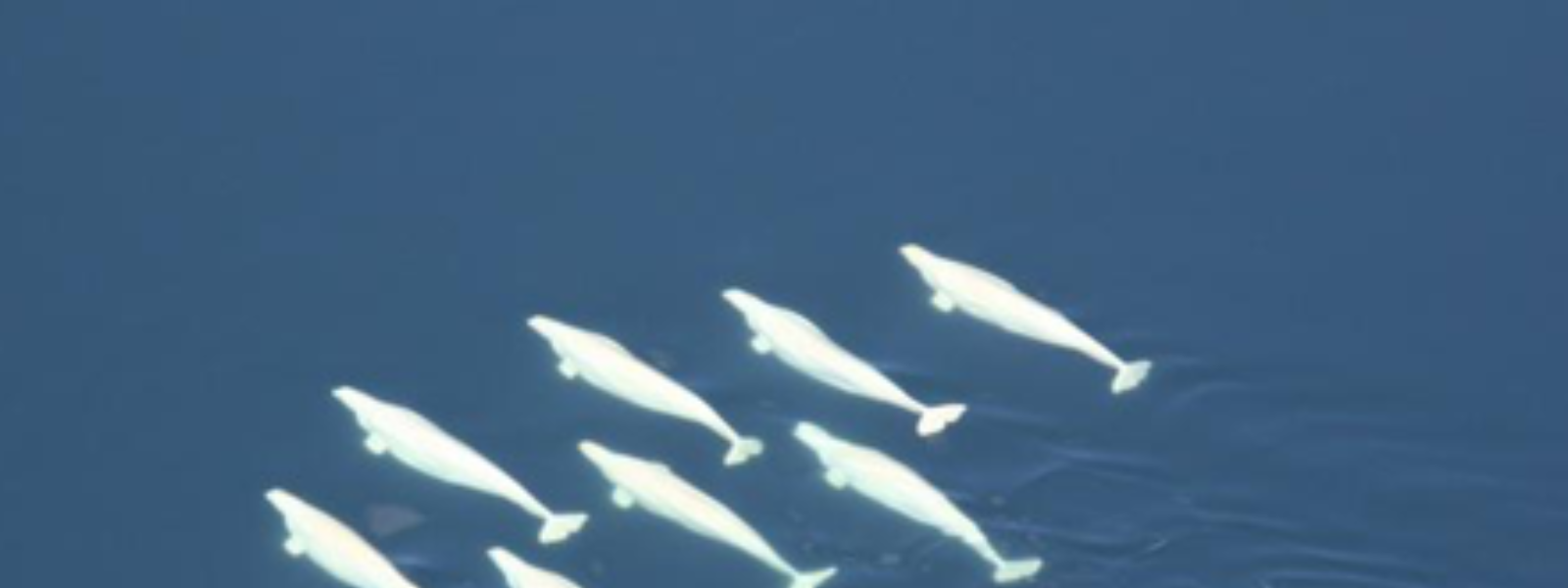
Throughout these months of extraordinary productivity, many marine mammals, including gray, humpback, fin, and beluga whales, migrate to the Arctic to take advantage of its abundant food resources and to build up energy reserves before their long journey south.
But the sea ice these ecosystems rely on is rapidly disappearing due to global warming.
The Consequences of a Warming Arctic
As sea ice declines, the Arctic ecosystem has begun to change dramatically. Some regions of the Arctic have become completely ice-free in summer months. Marine mammals lose critical habitat, food webs are disrupted, and prey availability declines when Arctic ice disappears. The loss of sea ice and the changes it causes in phytoplankton productivity and ocean conditions affects every level of the food web, creating cascading impacts that alter species interactions and threaten the long-term health of entire populations.
Additionally, as ocean waters continue to warm, harmful algal blooms are able to expand farther north. This spread is further accelerated by the loss of sea ice. Paralytic toxins such as saxitoxin and domoic acid, which are produced by certain species of algae, have been detected in seabirds, walruses, seals, and Arctic whales, where they affect the central nervous system of vertebrates. These toxins can cause respiratory failure, seizures, coma, and death. Over the past two decades, more than 40% of unusual marine mammal mortality events in the contiguous United States have been attributed to algal toxin exposure. As ocean temperatures continue to rise, scientists expect these harmful blooms and their impacts to spread farther north.
Furthermore, the loss of sea ice has resulted in the disappearance of haul-out sites on the ice for walrus, polar bear, and seals. Without the ice flows, we are hearing reports of animals drowning, unable to find a resting place.
Devastating Impact on Gray Whales
Gray whales are just one of many marine mammals suffering the consequences of a warming Arctic. In recent years, the species has been experiencing a shocking population decline, with approximately 136 gray whales having stranded this year alone as of June 16. Experts calculate that for every whale known to have died and stranded, there are likely ten whales that died at sea and sank, or were never otherwise found by researchers.
Recent research suggests that changes to their Arctic feeding grounds are playing a significant role in this mortality event. According to recent post-mortem studies, emaciation was the most common cause of or contribution to death among stranded gray whales. As food availability declines, many whales appear to be returning from their Arctic feeding grounds without the energy reserves they need to survive migration and reproduction. Many gray whales have been observed seeking food on their migration route away from the Arctic, which is also an unusual behavior.
Similar threats extend to other whales and marine mammals in the Arctic, as changes to the ecosystem may disrupt the annual productivity of phytoplankton (plants) and zooplankton (animals), which form the foundation of the Arctic food web.
David Phillips, Director of the International Marine Mammal Project of Earth Island Institute, stated that: “The decline of gray whales along the Pacific Coast is alarming. With their Arctic feeding grounds changing and the whales also facing ship strikes and entanglement in fishing gear, we risk pushing an already stressed population into a deeper crisis. We must act now to turn this around.”
Human Activity Increases as Ice Retreats
As sea ice melts away, the Arctic has become increasingly accessible to human activity. Retreating ice has opened the region to expanded shipping, offshore oil and gas development, mining, commercial fishing, tourism, and coastal development. While these industries continue to grow, they also introduce additional pressures on an already stressed ecosystem. Increased vessel traffic raises the risk of ship strikes and underwater noise pollution, while expanding industrial activity can contribute to habitat degradation, pollution, ocean noise, and other disturbances that threaten marine mammals.
The Arctic's Future Depends on What We Do Next
Marine mammals are more than just victims of a warming ocean- they are indicators of the health of the Arctic's vital ecosystem. The challenges they face reflect broader changes unfolding throughout one of the world's most unique and productive environments. Protecting Arctic habitats, reducing greenhouse gas emissions, and carefully managing expanding human activity will be essential if whales and other marine mammals are to continue thriving in one of the planet's most rapidly changing regions.
“The Arctic may feel remote, but it’s one of the world’s most important marine ecosystems. Protecting the Arctic helps ensure whales and countless other species have a future,” Phillips added.
What You Can Do:
The good news is that everyone can help reduce the impacts of climate change. Here are a few recommendations from the United Nations for reducing your carbon footprint.
Take steps to save energy and reduce the burning of oil, gas, and coal. Use green alternatives.
To Help Gray Whales:
The International Marine Mammal Project of Earth Island Institute is working closely with Prof. Richard Steiner of Alaska to petition the government to replace the gray whale species on the federal Endangered Species List.
Send a message to officials supporting protection of the gray whale and putting them on the Endangered Species list, to open up resources and special protections for gray whales.
Mr. Neil Jacobs, Administrator
National Oceanic and Atmospheric Administration
1401 Constitution Avenue NW, Room 5128
Washington, DC 20230
neil.jacobs@noaa.gov
Mr. Samuel D. Rauch III
Assistant Administrator for Fisheries
National Marine Fisheries Service
1315 East-West Highway
Silver Spring, MD 20910
samuel.rauch@noaa.gov
Thanks for your support for gray whales!
********************************
Please consider a donation to help the gray whale and other whales and dolphins around the world. Your support helps to ensure their protection through the work of the International Marine Mammal Project of Earth Island Institute. Thank you again for your support for the gray whale!