Maine Fishermen Should Help Test Gear to Save Right Whales
By Cindy Lowry
Cindy Lowry is a Maine-based environmental advocate with more than two decades of experience protecting marine wildlife, including work on high-profile whale rescue efforts and national conservation campaigns. Cindy is the Maine Campaign Coordinator for North Atlantic Right Whales, International Marine Mammal Project. She wrote this recent Opinion about the whales.
Originally Published in the Mount Desert Islander
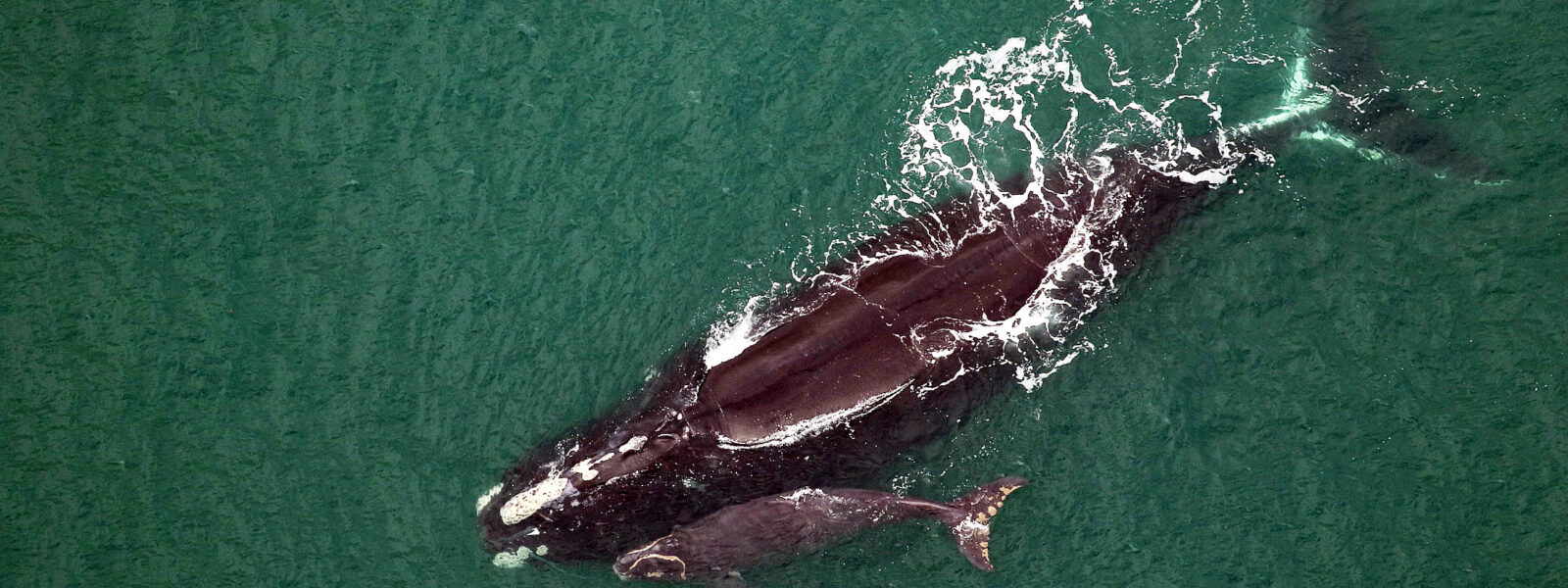
Every year, North Atlantic right whales make their way through the Gulf of Maine. With only around 380 remaining, they are in serious danger of extinction. Entanglement in fishing gear is one of the two leading causes of their deaths, and the vertical lines connecting lobster traps to surface buoys are a known part of that problem.
There is technology designed to address this: on-demand gear, sometimes called ropeless gear. The rope stays stowed on the ocean floor until a fisherman is ready to haul. An acoustic signal from the boat brings the buoy and the gear to the surface. No vertical line waiting for a whale to swim through it. The New England Aquarium has a short video explaining how it works.
I understand why Maine lobstermen are skeptical. The cost is a valid concern. Some systems run up to $10,000 to start, compared to around $150 for a traditional trap. The Maine Lobstermen’s Association estimates industry-wide adoption could cost $45 million.
But here’s what gets lost in that conversation. The Maine Department of Marine Resources says plainly on its own website: “Future federal rules to protect right whales will very likely prohibit the use of traditional gear with buoy lines in certain areas of the Gulf of Maine.” And “Without industry’s participation in testing, alternative gear technology could be approved by NOAA for use in those areas that does not work for Maine fishermen.”
That’s the state of Maine, not a conservation organization, making the case that lobstermen should get involved now, while the gear is still being shaped, so what eventually gets required actually works on the water.
The testing program is up and running. The DMR pays fishermen $400 to $600 a day to take part, and gear is available through the Maine Innovative Gear Library at no cost. As of late 2025, 33 fishermen across all seven lobster zones had completed more than 3,200 hauls. Retrieval success across New England has climbed from about 65% in 2020 to 93% in 2025. I’m grateful to the lobstermen who have taken part so far. A University of Maine study published last month found that consumers who learned about right whale entanglement risks were willing to pay $3.42 more for a lobster roll made with ropeless-caught lobster. There may be a market case here, too.
None of this means the transition will be easy. The cost questions are real and the technology still has room to improve. That’s exactly what fishermen’s participation in testing can help fix. Staying outside this process won’t make the rules, or the danger, go away. It just means Maine fishermen will have less say in what happens next.
Just this month, a young right whale was found entangled off New Brunswick. He’d been seen gear-free off Cape Cod in April. No one knows yet where the rope came from. What we do know is that this keeps happening, and on-demand gear is a real way to stop it.
***********************************
You can help the North Atlantic right whale, one of the most endangered whales on Earth, with a donation to the International Marine Mammal Project. You can help us fight proposals to weaken right whale protection from ship strikes and entanglement in fishing gear. There are several proposals in Congress and with the Trump administration to throw out the protections of the Marine Mammal Protection Act (MMPA) and the Endangered Species Act (ESA). Help the whales and marine life! Please donate today.