First Canadian Beluga Dies After “Rescue” Move
By Mark J. Palmer
BREAKING NEWS: After we posted this blog yesterday, we learned today that two more captive beluga whales have died at Shedd Aquarium in Chicago. So far, the aquarium has not released information on the cause of death. Of the total loss of 3 belugas in the past week, two were recently "rescued" from Marineland, Canada: Pikachu and Rain, while one beluga, Beethoven, also died as a long-time resident of the Shedd Aquarium. How many more will die from this so-called "rescue"?
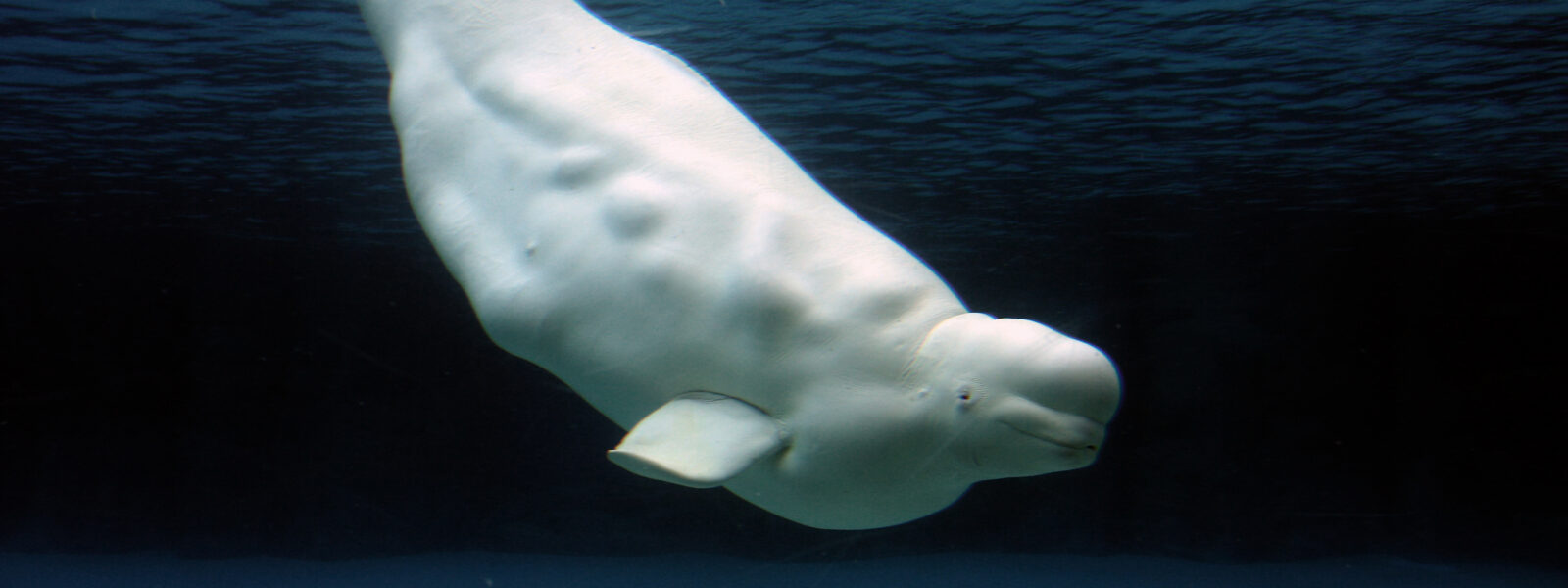
Sadly, as we feared, a “rescue” for thirty captive beluga whales left stranded in Marineland, Ontario, has resulted in the death of one of those belugas.
The Marineland park has a long history of violations of humane laws in Canada and animal losses. Since 2019, nineteen beluga whales and the orca Kiska have died under the care of Marineland. The company has never been made to account for the losses.
Once Marineland closed in 2024, the company sought permits to move all of the 30 belugas to a park in China. The Canadian government would not issue the permit, but refused to intervene as the belugas (and four dolphins) languished in captivity for months on end.
The International Marine Mammal Project (IMMP) of Earth Island Institute worked closely with the Whale Sanctuary Project to provide a seaside sanctuary, being built in Nova Scotia, to accommodate as many as ten of the thirty belugas.
But Marineland refused to consider working with the Whale Sanctuary Project and IMMP to establish a seaside sanctuary, the healthier option. Marineland instead insisted the belugas be transferred to other commercial marine parks. The park even threatened to euthanize the remaining belugas!
The Canadian government caved to this incredibly hostile response from the park, and the belugas have been moved out of Marineland to other parks in the US and Spain. (Marineland will remain closed, and the property will be developed for other purposes.)
Eight belugas, including a 23-year-old female named Peekachu, were moved two weeks ago to Chicago’s Shedd Aquarium. Peekachu appeared to stop eating and showed signs of dehydration, suddenly dying while being treated.
In fact, this was a predictable tragedy. In 2021, five Marineland beluga whales were transferred to Mystic Aquarium in Connecticut. Over the next two years, three of the five belugas died at the aquarium. IMMP had also opposed that transfer. IMMP further protested the current transfers, given that the parks in the US would put the belugas on display and even breed them to produce more sad belugas stuck in captivity for life.
Needless to say, the American parks are keeping mum about breeding and entertainment uses of the belugas, but they don’t deny outright that they will breed the belugas eventually.
Two beluga whales and four dolphins were flown to Oceanografic Valencia in Spain. The Shedd Aquarium has taken ten belugas, including Peekachu. Sixteen belugas have been sent to SeaWorld San Antonio and SeaWorld San Diego. Georgia Aquarium obtained two belugas.
But the health of these belugas is precarious, and moving them to new parks takes its toll on their ability to deal with the stress and fight off disease. All of these belugas were either caught in the wild in Russian waters or bred in captivity from Russian belugas. There may be genetic issues that crop up under the stress of captivity, but belugas generally do not do well in captivity, dying at an early age amid concrete walls.
The toll the park industry takes on captive cetaceans is enormous. As people turn away from such parks, more and more cetaceans will become abandoned, with no place to go except for other concrete tanks.
Seaside sanctuaries are needed to humanely reduce the stress of captives and provide a healthy environment for whales and dolphins. Belugas, orcas, and dolphins would not be required to perform tricks for food. They would be fed and receive medical care, but could live out their lives with their fellow animals in peace, experiencing the ocean (perhaps for the first time).
In any event, we should no longer allow any captures of wild whales and dolphins for captivity, nor should we be breeding animals in captivity – we need to break the cycle of exploitation of belugas, orcas and dolphins for profit.
******************************
Imagine living in a concrete tank for your entire life. You would not do very well, and likely would die an early death. That is what is happening around the world to thousands of dolphins and other species of cetaceans now on display for our entertainment. Can you give a donation today to help end captivity and move existing captive animals to seaside sanctuaries, to live out their lives in the ocean, where they belong? Thank you for your support!