First Dolphin Captures for the Season in Taiji
By Mark J. Palmer
Photos by Kunito Seko
Warning: Graphic Images that Might be Disturbing
On September 1st, our colleague Kunito Seko witnessed the opening of the annual 6-month Taiji dolphin drive slaughter.
Often, on the first day, the dolphin hunters of Taiji, Japan, come up empty, but this year they lucked out with a large pod of bottlenose dolphins.
As we’ve noted before, the main economic driver for the Taiji hunts is not so much the capture of dolphins for meat, but instead the capture of live dolphins for the international dolphin trade. Taiji captures wild bottlenose dolphins, the most popular captive cetacean in marine parks, and trains them before selling them.
Taiji dolphins have wound up in marine entertainment parks in Egypt, Dubai, and Thailand. The main markets appear to be in Japan itself and in China.
A live dolphin is worth much more than a dead dolphin butchered for meat.
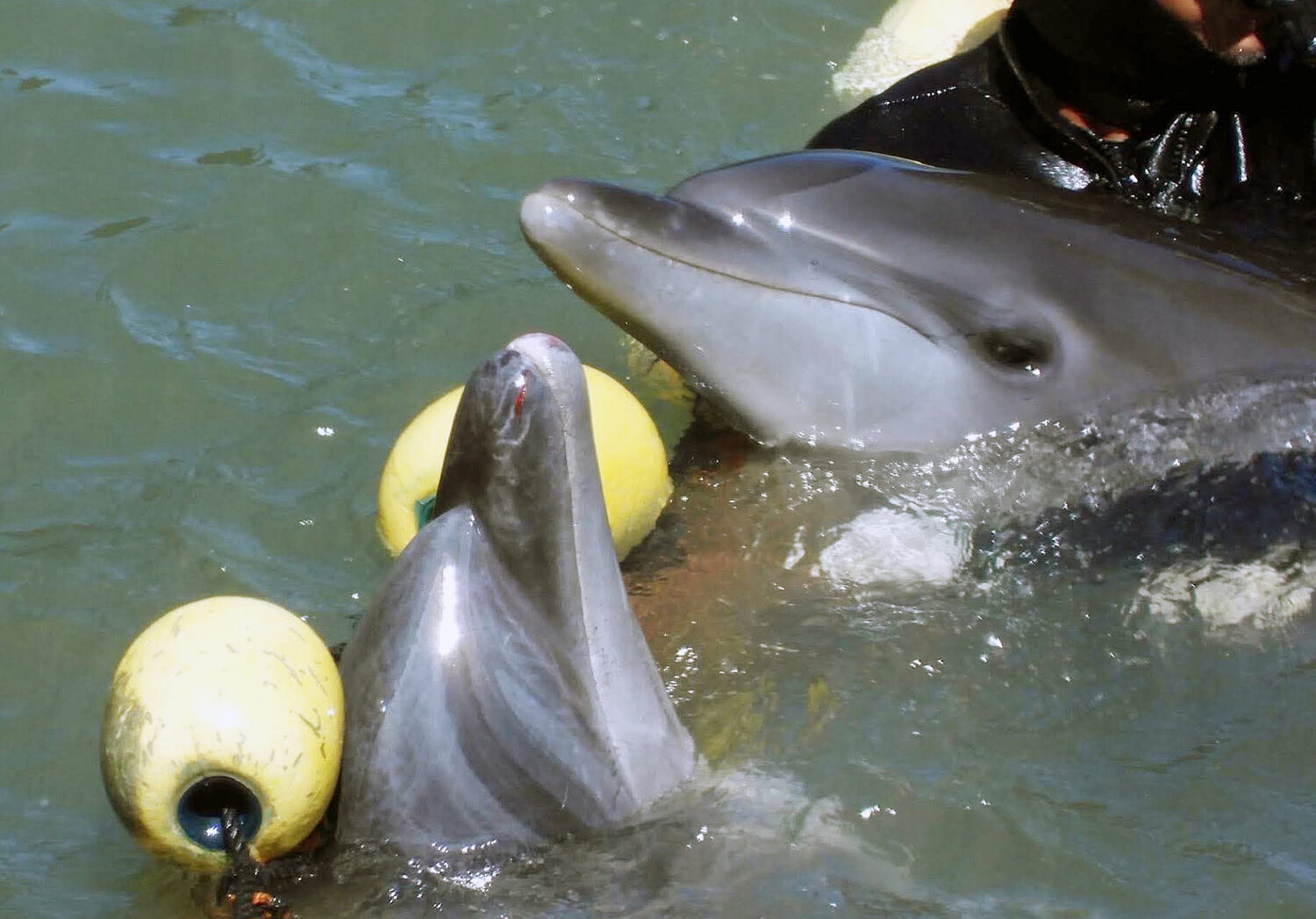
Two Bottlenose Dolphins Up Against the Netline in the Notorious Cove. Photo Credit: Kunito Seko
Dolphins try desperately to escape the nets, but divers grab them for evaluation and possible capture, condemning dolphins to a miserable life in captivity. When dolphins die in marine parks, the parks can always go back to Taiji for another live dolphin replacement.
The chosen dolphins are then muscled into slings attached to the hunter’s skiffs. They are then transported to facilities in Taiji for training – often makeshift sea pens or small tanks on land in Taiji.
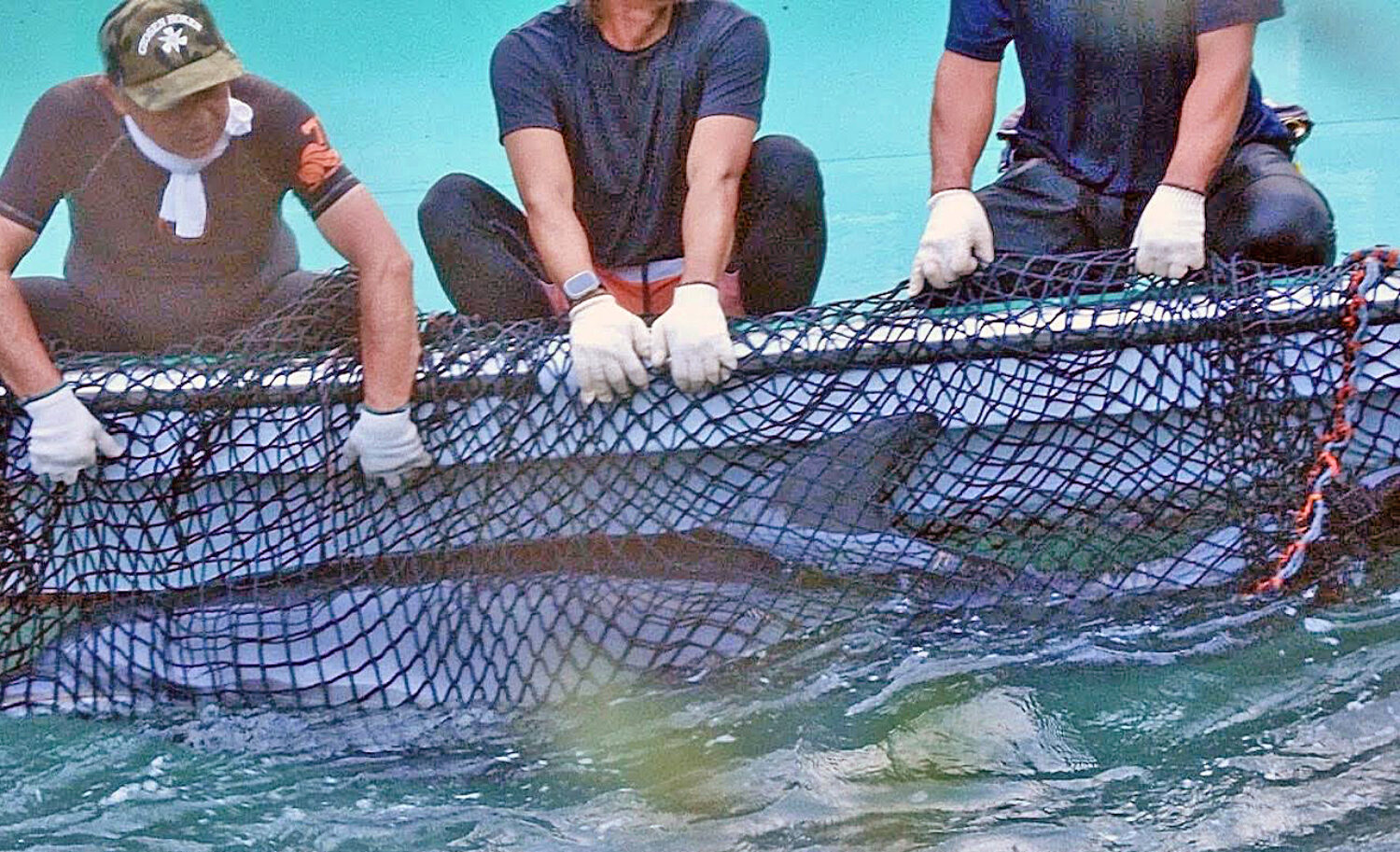
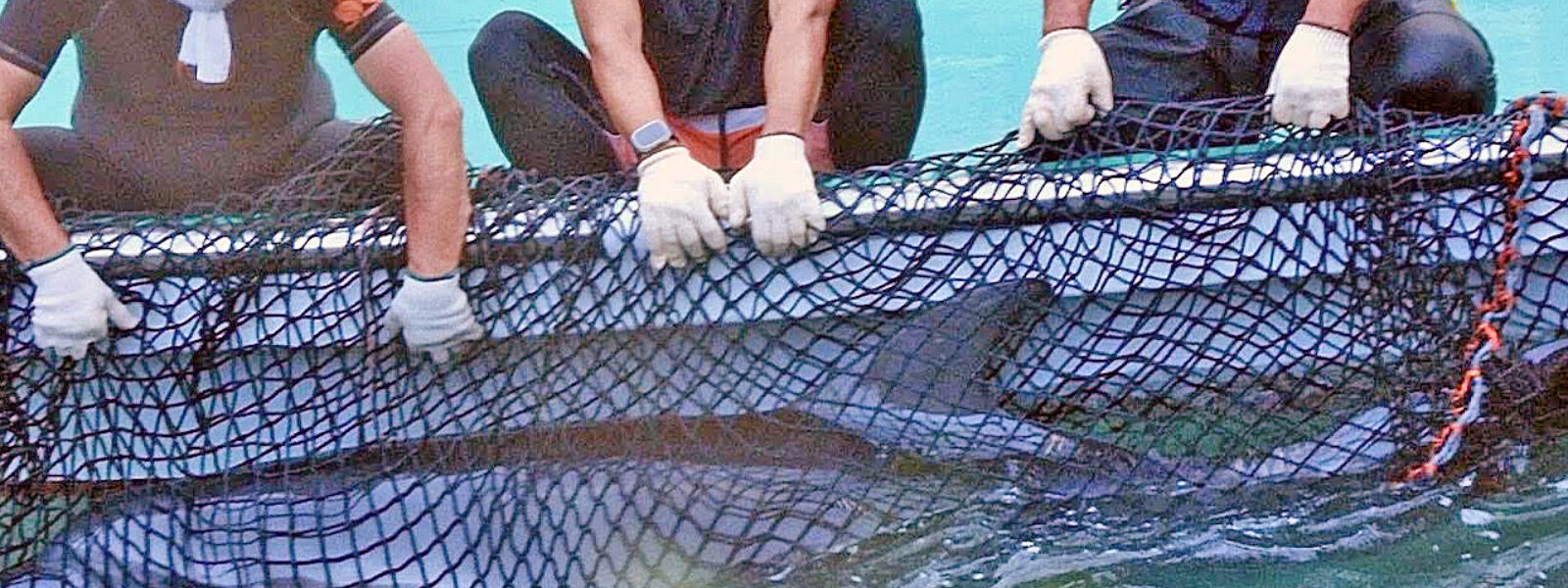
A dolphin is netted prior to moving into a sling for transport. Photo Credit: Kunito Seko
The holding facilities often hold hundreds of dolphins by the end of the season.
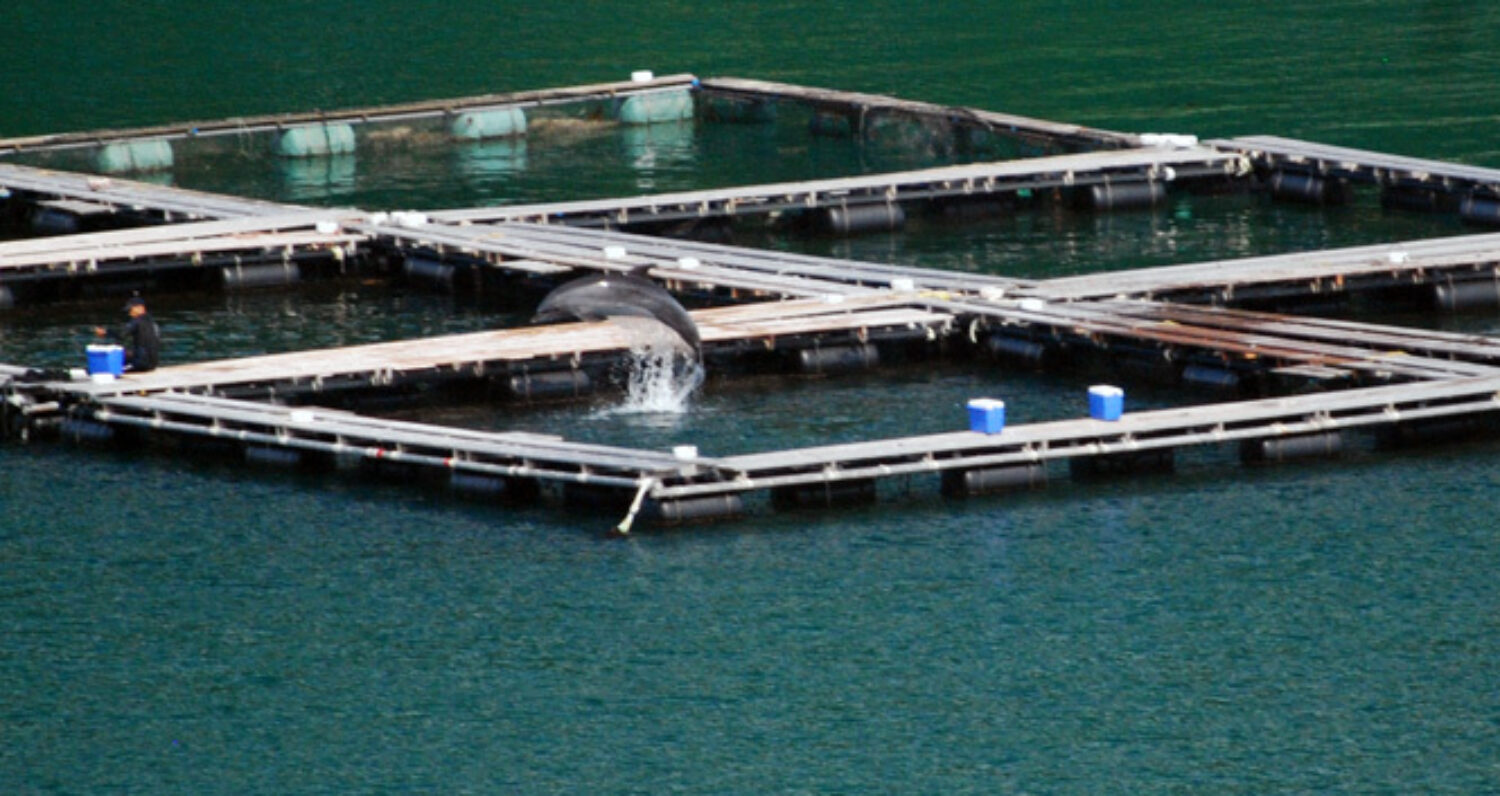
Taiji dolphin training sea pens. Photo Credit: Mark J. Palmer
Here are the quotas for this season’s (Sept. 1st to March 1st) dolphin drive hunts.
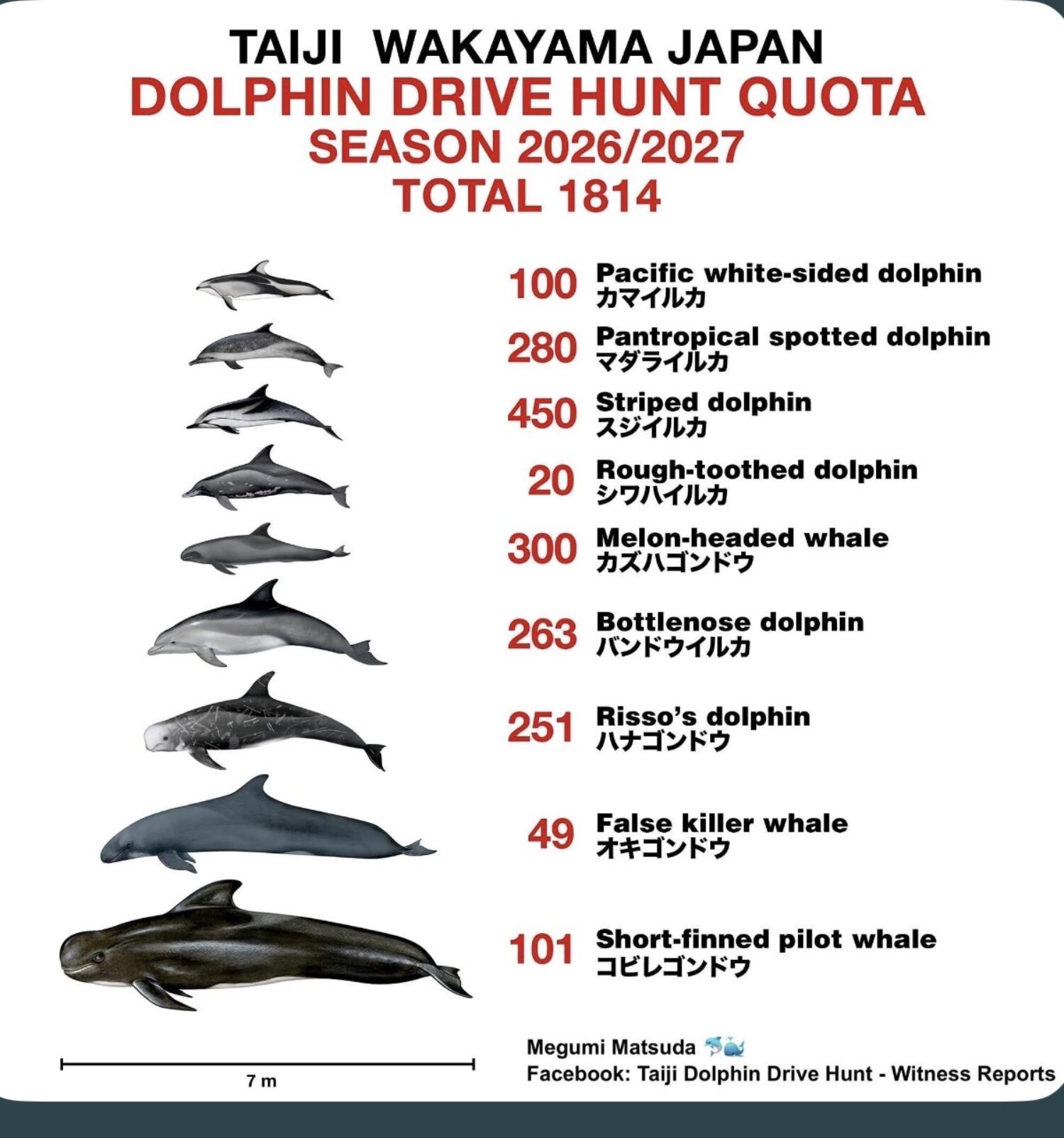
Chart Credit: Megumi Matsuda
Note on the chart: Taiji can capture or kill up to 263 bottlenose dolphins this season. Virtually all of them will be live-captured. Bottlenose dolphins, because they are so valuable alive, are seldom slaughtered for meat. Instead, after the dolphin hunters, park trainers, and dolphin brokers have captured live dolphins from a bottlenose pod, the rest of the pod is forced out of the Cove back into the ocean, traumatized.
Most of the other species will be slaughtered, although a few will be caught for captivity.
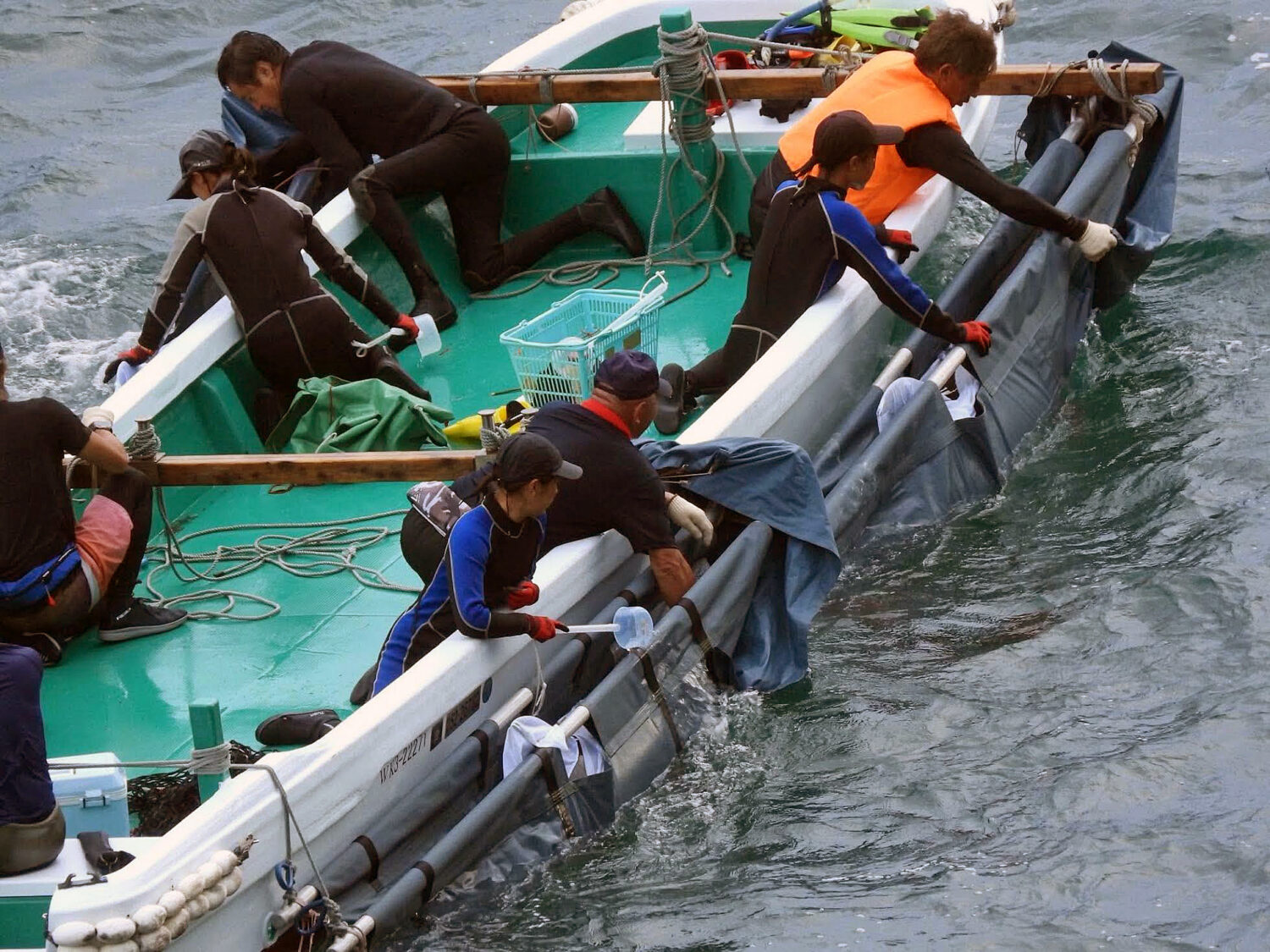
A skiff towing several dolphins in slings heads to the tanks and sea pens used for training. Photo Credit: Kunito Seko
Once the slings have been loaded with dolphins, skiffs pull the dolphins to the various training tanks and sea pens in Taiji harbor.
The Japanese hunters and government supporters claim that releasing the rest of the bottlenose dolphins in the pod, unwanted by the captivity industry, is a conservation measure.
This is highly misleading. The bottlenose families have been herded into the notorious Cove in Taiji; they’ve been held in by nets for days while the industry chooses the best “show” dolphins; and the traumatized pod must leave the Cove bereft of family members.
We know that dolphins will “mourn” their own baby dolphins that have died, carrying around the corpse for days or even weeks of mourning.
The Taiji dolphin drive hunts, fueled by the dolphin captivity industry (thriving in some countries, while other countries have phased out captivity), should come to an end.
The blood of the slaughter taints Japan, and the Japanese government must end it.
WHAT YOU CAN DO:
Sign our petition to Japan’s Prime Minister Sanae Takaichi.
**************************