White Whales in Captivity
By Jillian Surdilla
Jillian Surdilla is an intern with the International Marine Mammal Project. She attends the University of California at Berkeley and plans to attend veterinary school.
Belugas are cherished for their characteristically “cute” appearances – their soft features, curious nature, and bright smiles. But beneath their gentle demeanor lies a reality that’s far from their picture-perfect image: captivity. While they are technically a species of dolphin, belugas are often called “whales”.
Currently, there are at least 62 belugas being held captive in all of North America, spread across facilities such as the three SeaWorld parks, Mystic Aquarium, Shedd Aquarium. Georgia Aquarium, and Marineland Canada. While this number may seem small, a closer look at their lives in confinement reveals the dark truth about cetacean captivity across the continent.
Firstly, belugas are wild animals with wild needs. In their natural Arctic habitat, these whales are known to swim for hundreds of miles in their family pods, navigating open waters and relishing freezing temperatures. In captivity, they are limited to concrete tanks, and even the largest are a fraction of the size of their natural habitat.
For instance, the belugas in Georgia Aquarium inhabit an 800,000-gallon tank about the size of an Olympic swimming pool. In comparison, the Arctic Ocean contains more than 1.1 quadrillion gallons of water and spans over 5 million square miles, to put that into perspective.
Secondly, belugas are known for being social creatures, dependent on their families, and have even earned the nickname “canaries of the sea” because of the whistles and songs they use to communicate. These whales are deeply bonded to their pods, and in the wild they often travel with their mothers, calves, and other tight-knit relatives.
But in aquariums, these familial connections are severed by transfers, breeding programs, and tank separators. When five belugas were transferred from Marineland, Canada to Mystic Aquarium (a move opposed by IMMP and other conservationists), three of them perished within 18 months. Their demise is highly attributed to the stress of being moved and being separated from their family.
Thirdly, captive belugas face a slew of health issues that are rarely observed in their wild counterparts, such as gastrointestinal disorders, respiratory infections, and even bacterial contamination. Studies have shown that concrete tanks are the likely culprit, as USDA inspections have sometimes revealed dangerously high levels of coliform bacteria due to poor water quality and fecal build-up in some aquariums.
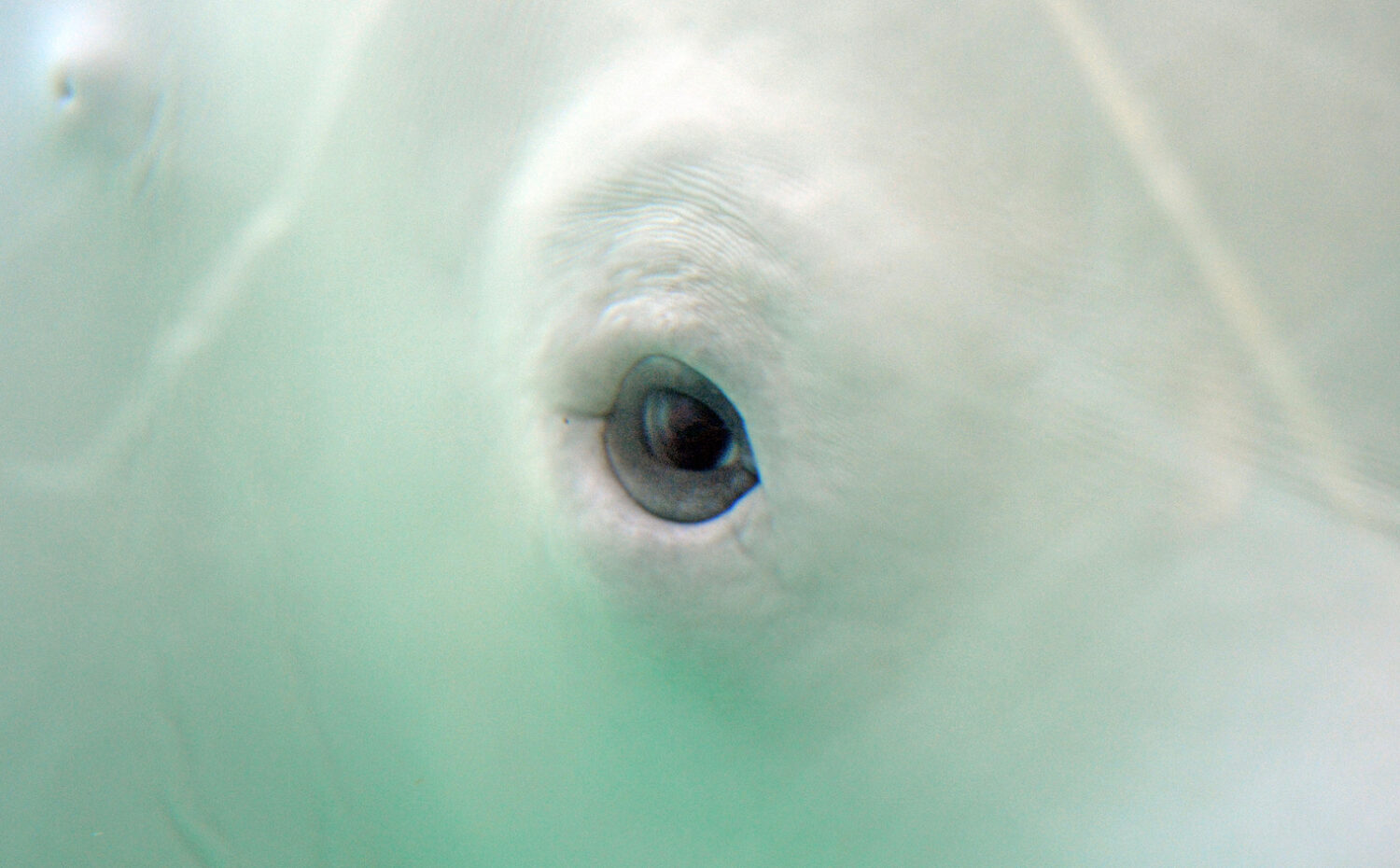
Eye of a beluga whale. Photo Credit: Mark J. Palmer
These whales have also demonstrated behaviors related to psychological distress, such as repetitive circling and swimming patterns, which also happen to be primary indicators of mental decline. Alarmingly, the cetaceans have also been known to engage in self-inflicted injuries, and such behaviors preceded several beluga deaths at Mystic Aquarium.
The friendly smile on a beluga’s face conceals a dismal life of imprisonment. Indeed, belugas, like other dolphins, have limited muscles to change their expression – they will look like they are smiling even in death.
However, the issue of cetacean captivity should not be reduced to the topic of “sad animals being in tanks.” Instead, this subject is one that concerns ethics, science, and upholding the legal progress countries have already made to protect marine life. While captivity is regulated in the US, many nations, including India, Canada, and France, have laws that preclude captivity, including prohibiting captures, imports, and breeding of beluga whales and other cetaceans. The US should follow suit.
Belugas are intelligent, social, and sentient beings. They don’t belong behind glass, but instead in the ocean surrounded by ice, family, and the promise of freedom.
*************************************
The International Marine Mammal Project of Earth Island Institute is dedicated to shutting down aquariums displaying whales and dolphins. We seek to end cetacean captivity worldwide. Dolphins and whales belong in the ocean, not on land in small concrete tanks. Whales and dolphins currently in captivity should be retired to seaside sanctuaries. Your donations can help end the suffering of dolphins and whales in captivity and safeguard the future of cetaceans in the ocean. Please donate today to save whales and dolphins.