A Hidden Refuge: Blue Whale Migrations and the Costa Rican Thermal Dome
By Angel Herrera, PhD
Dr. Angel Herrera is the Director of the International Marine Mammal Project’s (IMMP’s) Dolphin Safe (DS) Tuna Monitoring Program in Latin America. As a representative of Earth Island Institute since 1993, his DS monitoring work spans countries including Argentina, Brazil, Colombia, Costa Rica, Ecuador, El Salvador, Guatemala, Mexico, Panamá, Peru, and Uruguay. He has authored more than 15 scientific articles and co-authored two books.
Since the majority of humans stopped hunting whales — aside from a few exceptions — the migrations of these majestic marine mammals have largely taken place in peace. These migrations have become a highly anticipated annual event for many coastal communities, particularly in the Americas. Whether whales migrate during the boreal winters of the Arctic or the austral winters of Antarctica, they continue to follow awe-inspiring routes that span vast distances of the world’s oceans.
Humpback whales (Megaptera novaeangliae) embark on extraordinary migrations from the Arctic to the Hawaiian Islands, the Baja California Peninsula, and even as far south as Costa Rica. They also journey from the Arctic to Madagascar and northeastern Brazil, covering distances of up to 8,000 kilometers. Similarly, the southern right whale (Eubalaena australis) migrates from sub-Antarctic waters to the coasts of Argentina, South Africa, and Australia.
The gray whale (Eschrichtius robustus), often referred to as the "friendly whale," travels from the Bering Sea to Baja California. Despite the violent history between humans and whales, newer generations of gray whales appear to have forgotten these dangers and, remarkably, even seek out physical contact with humans.
The blue whale (Balaenoptera musculus), the largest of all whale species, migrates from Alaska to Baja California Sur and into the Sea of Cortez, with some continuing their journey to the northern Pacific waters off Costa Rica. During the first few months of the year, it is not unusual—though always breathtaking—to witness these ocean giants along the shores of Baja California. The blue whales that venture further south to Costa Rica encounter tropical waters that might seem too warm for them. However, they find refuge in a unique oceanic zone known as the "Costa Rican Thermal Dome." Thousands of years ago, a group of blue whales pressed on beyond Mexico, discovering this natural "marine air conditioning"—a cold-water oasis in the midst of a tropical zone. This area became a sanctuary where whales could give birth, nurse, and raise their young during the boreal winter. It has likely served this purpose for tens of thousands of years.
The Costa Rican Thermal Dome, located at 10.5°N and 89.5°W, about 200 miles offshore, is a rare oceanographic phenomenon. Globally, only three other similar zones exist, located in Guinea, the Arabian Sea, and the Seychelles. While sea surface temperatures in Central America can reach 29°C (84°F), during the months of December to March, water temperatures within the Thermal Dome drop to around 24°C (75°F). In addition, the Eastern Tropical Pacific features a distinct thermocline—a subsurface layer where temperatures rapidly decline with depth. Just meters below the surface, the water can cool to 15°C (59°F) or lower, creating an ideal habitat for marine life.
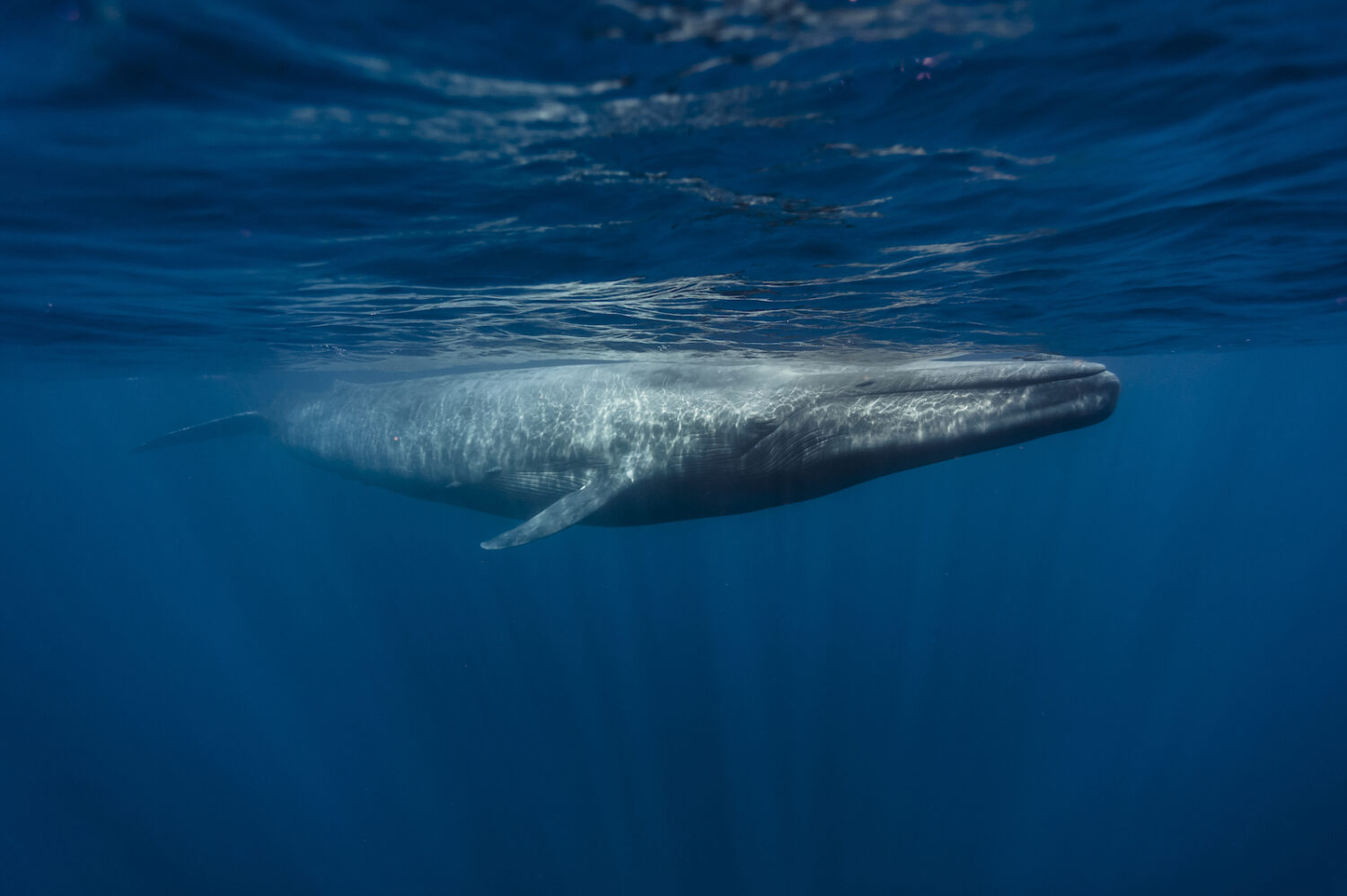
A blue whale, largest animal on Earth. Photo Credit: iStock
The presence of these cold waters is driven by several factors: deep oceanic trenches, eastward-flowing underwater currents that meet the continental shelf, proximity to the coast, and Caribbean winds that push cooler Pacific currents upward. This combination results in a significant upwelling of nutrients, turning the area into a "green marine meadow," rich in phytoplankton and teeming with marine life. It is an ideal feeding ground for blue whales, allowing calves to transition to solid food and build up the fat reserves they need for survival.
Around 2,000 blue whales visit the Thermal Dome annually, staying in the area for two to three months. While the region benefits from some protection due to its location within Costa Rica’s Exclusive Economic Zone, it is under constant threat from busy shipping routes. Vessels traveling both ways between the Panama Canal and the U.S. West Coast pose significant risks, and although the exact number of ship-whale collisions is difficult to measure, it is known that whale carcasses crashed by boats are sometimes carried ashore by ocean currents in other regions, but often whales struck by ships simply sink out of sight.
At present, the Thermal Dome lacks specific legal protection that could, for example, restrict commercial shipping traffic. Costa Rica’s current conservation efforts have focused largely on the marine corridor between Cocos Island and the Galapagos Islands. Nevertheless, designating this region as a "Marine Sanctuary for Blue Whales in the Costa Rican Thermal Dome" could provide the necessary protections for this vital refuge and ensure the continued survival of these magnificent creatures and the rich biodiversity they support.
***************************************
The International Marine Mammal Project of Earth Island Institute employs local experts as monitors to work with local tuna industries to verfiy they do not harm dolphins when fishing for tuna. Dr. Herrera is one of our distinguished monitors who ensure compliance with our Dolphin Safe standards. He is also active in Latin America in supporting marine protected areas for whales and other marine wildlife. With legal designation as a sanctuary, whales and dolphins can be protected. Your donation helps whales, dolphins, and their ocean homes thrive around the world. Thank you for your support!