Why Marine Mammals Should Never Be Held Captive
By Rosemary Ellis
Introduction
Captivity is a cruel and unnatural life for marine mammals, stripping them of their freedom, intelligence, and complex social bonds, often with devastating consequences. The sixth edition of The Case Against Marine Mammals in Captivity, authored by Naomi A. Rose, PhD, A.S. Soller, PhD, and E.C.M. Parsons, PhD, presents a compelling critique of the public display industry that exploits marine mammals. This blog summarizes key findings from the report, emphasizing its strengthened arguments against captivity.
About the Authors
Dr. Naomi Rose is a highly accomplished marine mammal scientist and advocate with decades of experience in marine mammal biology and welfare. Her work has significantly influenced public awareness and policy regarding marine mammals, including the 2012 book Death at SeaWorld by David Kirby, which features her work, and her TEDx talk on captive orca welfare.
Dr. A.S. Soller is an expert in marine conservation communications. Soller’s contributions provide additional depth to the critical analysis of the public display industry.
Dr. E.C.M. Parsons is a prominent marine conservationist and academic with a career spanning nearly three decades. He has extensive experience in whale and dolphin research, participating in projects across continents and authoring over 170 scientific papers and book chapters.
Overview
Public awareness about the issues with holding marine mammals in captivity has surged over the past decade, driven by documentaries like Blackfish and The Cove. While marine parks insist captive environments protect animals from natural dangers, Dr. Rose, Dr. Soller, and Dr. Parsons argue that these claims mask inherent cruelty and misrepresentation. The report critiques the industry's misleading emphasis on conservation and education, providing evidence that captivity is fundamentally incompatible with marine mammals' needs.
The "Conservation Fallacy"
The report expands on the “conservation fallacy,” exposing how marine parks’ captive breeding programs focus on non-endangered species, perpetuating captivity rather than contributing to wild populations. As scientific understanding of marine mammals grows, the evidence increasingly supports the view that captivity is fundamentally at odds with their physical and psychological needs. The report highlights the industry’s continued lack of substantial conservation impact, emphasizing that breeding programs often result in surplus animals with no viable role in conservation.
Education and Conservation: Myths vs. Reality
Do captive marine mammals truly educate and inspire? The report reveals that observing marine mammals in captivity does not significantly enhance public understanding of these animals or inspire meaningful conservation action. Recent survey data show a global shift in public opinion against captivity, with respondents favoring whale watching and naturalistic experiences over marine parks. Captive animals often display unnatural behaviors, further misleading the public.
The "Blackfish Effect”
The 2013 documentary Blackfish brought widespread attention to the plight of captive orcas, igniting a global movement against marine mammal captivity. This "Blackfish Effect" has led to increased scrutiny of marine parks, legislative changes, and a shift in public perception. The report underscores the need to build on this momentum by advocating for seaside sanctuaries as humane alternatives for retired marine mammals.
Ethical and Welfare Concerns
The ethical implications of marine mammal captivity are profound. Captive environments prioritize human convenience and visibility over animal welfare, stripping these creatures of their autonomy and subjecting them to lives devoid of natural experiences. The report critiques the ethical implications of marine mammal captivity, highlighting research on stress-related conditions and stereotypical behaviors resulting from captivity’s unnatural environments. Captive breeding exacerbates these issues, producing animals ill-suited for release due to disrupted natural behaviors and cultural learning.
The Cost of Captivity
Marine mammals, especially cetaceans, are highly intelligent and socially complex animals adapted to roam vast ocean expanses. Captivity subjects them to restricted spaces, artificial environments, and unnatural social groupings, leading to physical and psychological distress. Captive breeding produces animals ill-suited for release into the wild due to disrupted natural behaviors and cultural learning. Additionally, the authors reveal that “enrichment” activities often fail to replicate natural behaviors.
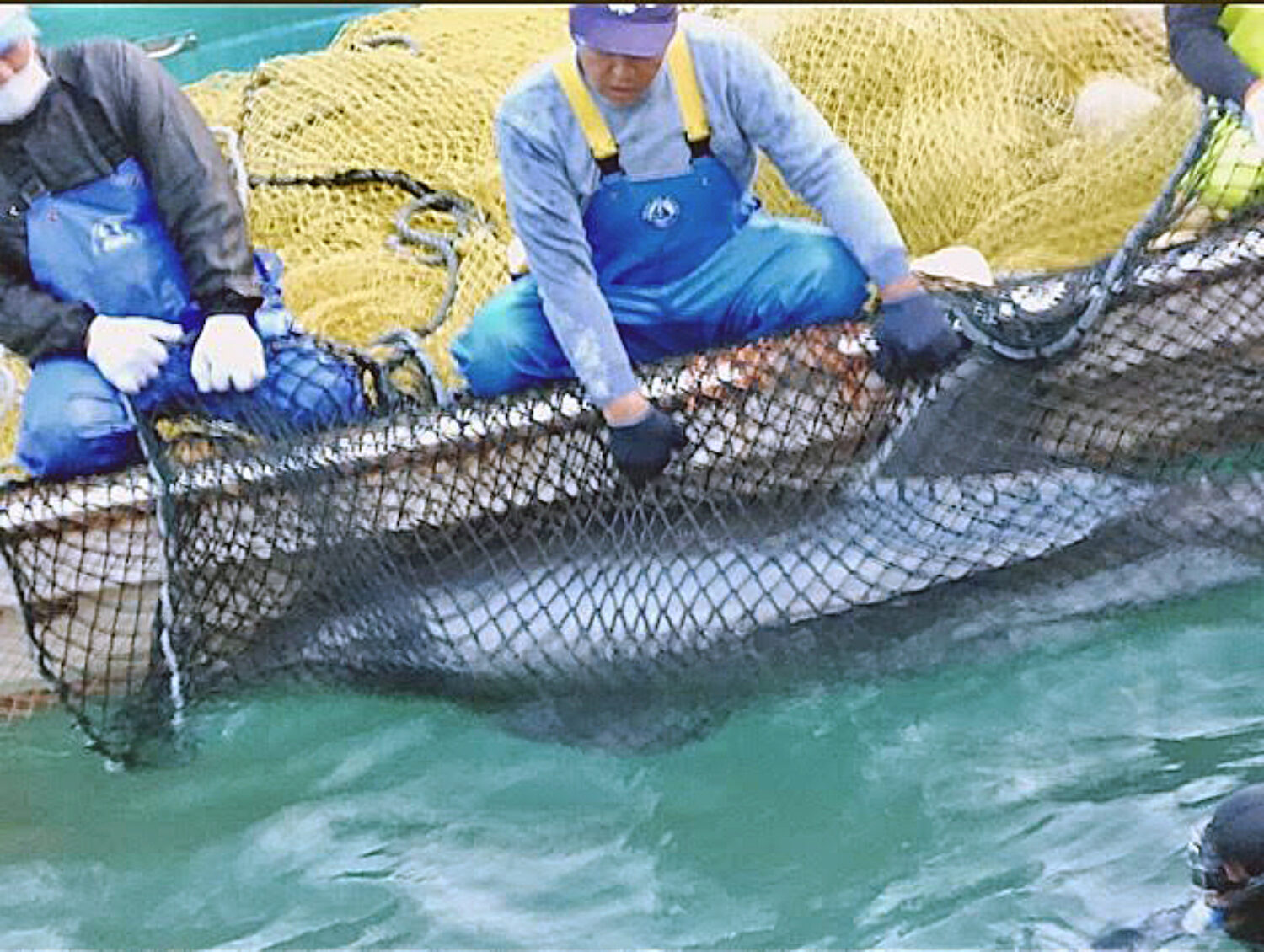
A wild bottlenose dolphin is brutally captured in Taiji, Japan, for a life in captivity. The rest of the pod -- its family -- are slaughtered for meat. Photo Credit: Kunito Seko
Live Captures: A Persistent Issue
Despite international condemnation, live captures of marine mammals continue in countries such as Japan and, until recently, Russia, fueling the public display industry. The report introduces updated data on the ecological and welfare impacts of these practices. Targeting juveniles disrupts wild populations and fuels the public display industry, reflecting its disregard for marine mammal welfare.
Seaside Sanctuaries: A Viable Future
Seaside sanctuaries provide a compromise between full release into the wild and continued captivity. The report elaborates on progress in establishing these sanctuaries, positioning them as the future of ethical care for marine mammals. Unlike artificial tanks, sanctuaries offer larger, more natural environments where animals can exhibit behaviors closer to their wild counterparts.
Discover more about the two remaining captive orcas in France and how The Whale Sanctuary Project offers the most viable solution for their care.
Your Role in Ending Captivity
In The Case Against Marine Mammals in Captivity, the authors consistently assert that captivity deprives these animals of their natural behaviors, autonomy, and social structures, leaving them physically and mentally distressed. But there is hope.
Here’s what you can do:
- Support Organizations: Advocate for groups working to establish seaside sanctuaries.
- Boycott Captive Facilities: Refrain from visiting marine parks or aquariums that keep marine mammals in captivity.
- Legislative Advocacy: Push for laws, such as the SWIMS Act, banning live captures and phasing out marine mammal captivity.
- Educate Others: Share the realities of captivity with your networks.
****************************************
The International Marine Mammal Project of Earth Island Institute is working toward a future where sanctuaries replace concrete tanks, providing marine mammals with sanctuary environments that respect their dignity and well-being. Together, we can honor their intrinsic value, preserve marine life in its natural habitat, and align our actions with both ethical principles and scientific understanding. Please donate to help keep wild whales and dolphins in the ocean, where they belong. For captive cetaceans, help retire them to seaside sanctuaries. Thank you for your support!