20,000 Whales Are Killed by Ship Strikes Each Year
By Elena Gavigan
What’s Being Done About It?
Elena Gavigan is an intern with the International Marine Mammal Project and is an M.A. Candidate in Environmental Policy and Management at Middlebury Institute of International Studies.
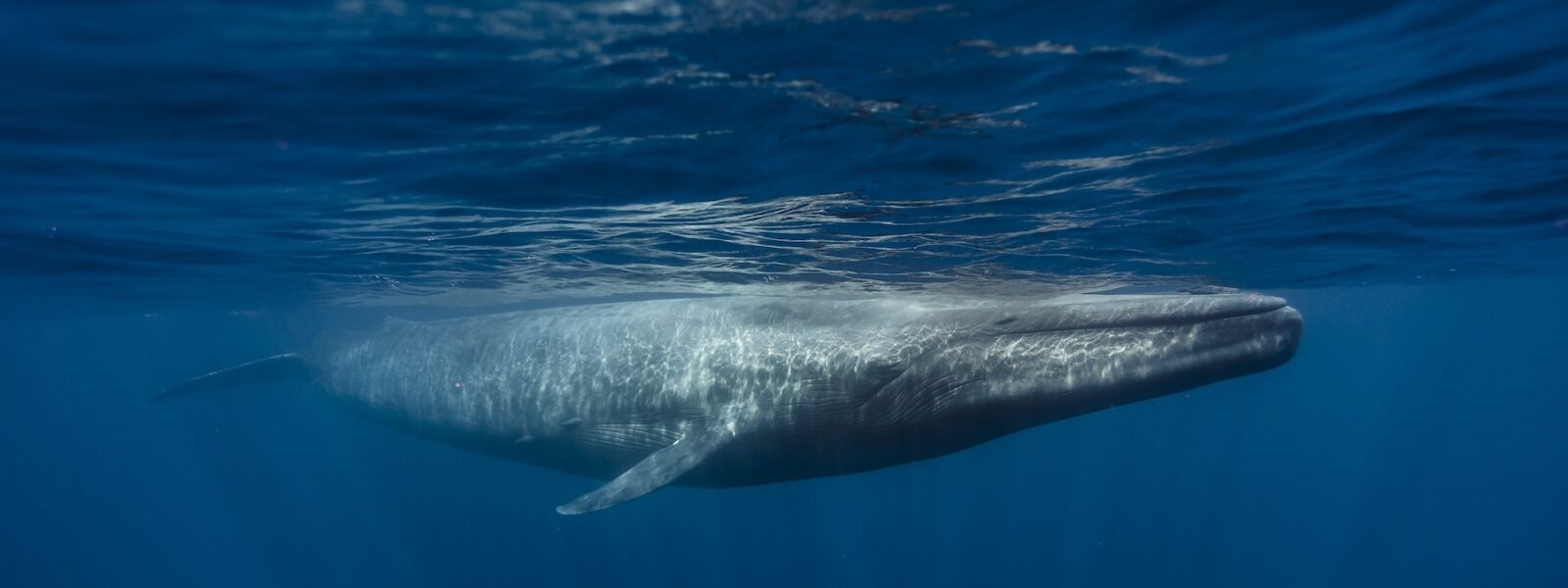
Each year, an estimated 20,000 whales are killed worldwide by vessel strikes. Large whale species such as fin, humpback, gray, and blue whales are most often victims, with collisions concentrated in busy shipping lanes near major ports and along migratory routes. On the U.S. West Coast, California’s waters are a hotspot, with ship traffic converging near critical whale feeding and migration areas.
On July 22-23, The Marine Mammal Center (TMMC) in Sausalito hosted the inaugural Enhancing Collaboration to Prevent Vessel Strikes in California workshop. Organized by Ocean Wise, the California Marine Sanctuary Foundation, TMMC, and the Benioff Institute Ocean Science Laboratory at UC Santa Barbara, the event gathered marine scientists, data analysts, shipping representatives, tech innovators, and policymakers from around the U.S. to tackle a growing crisis: the rise in whale deaths caused by vessel strikes off the California coast
The Problem
Between 2015 and 2024, 118 whale-vessel strikes were reported on the U.S. West Coast - 75 of those occurred in California waters. The actual number of vessel strikes is surely much greater than reported, as many incidents go unreported or undetected, particularly in remote regions or when whales drift out to sea and sink post-mortem. Necropsies of ship-struck whales reveal deep tissue trauma, propeller wounds, and fractured bones—injuries that are almost always fatal. Whales simply can’t dodge ships large and small traveling at even moderate speeds on the high seas.
As of July 2025, California has already recorded 24 whale deaths, most being gray whales in the San Francisco Bay Area. Nine of those deaths are confirmed vessel strikes – an alarming rise from previous years, posing a significant threat to already vulnerable whale populations. Blue whales, humpbacks, and fin whales are also frequently struck, especially in shipping corridors off Los Angeles, Long Beach, and the Golden Gate.
The East Coast Connection: North Atlantic Right Whales
While the workshop focused on California, ship strikes are a critical threat on the U.S. East Coast—particularly for the North Atlantic right whale, one of the most endangered large whale species on Earth. Fewer than 360 remain. Two of their leading causes of death are vessel strikes and entanglement in lobster and crab pot gear. Even one or two deaths a year can have devastating consequences for the species’ survival. Protecting these whales requires strict speed limits in their habitat and strong enforcement measures—any weakening of such protections could push the species toward extinction.
Current Solutions and Challenges
Day one of the workshop focused on reviewing the current datasets and technologies aimed at mitigating ship strikes. Progress has been made to combat this issue; a variety of near real-time whale alert systems are in place that utilize acoustic monitoring, boat and aerial surveys, thermal imaging, satellite data, and species distribution models to detect or predict whale presence in high-traffic areas. This data is sent to mariners in real-time, advising them to divert their course or slow down.
While these systems are a great start, challenges remain. Technology malfunctions, data overload from multiple sources, and low compliance from vessels hinder the effectiveness of these systems. Most critically, vessel slowdowns are voluntary, not mandatory in California. Many national marine sanctuaries in the state have implemented Voluntary Vessel Speed Reduction (VSR) Zones which encourage ships over 300 gross tons to travel at 10 knots or less, but there are no legal requirements to comply.
Programs like Protecting Blue Whales and Blue Skies combat this by recognizing and rewarding shipping lines that slow-down in these zones, and Whale Safe publicly grades vessels based on compliance. Still, many large and small vessels ignore the speed suggestions and continue to collide with whales.
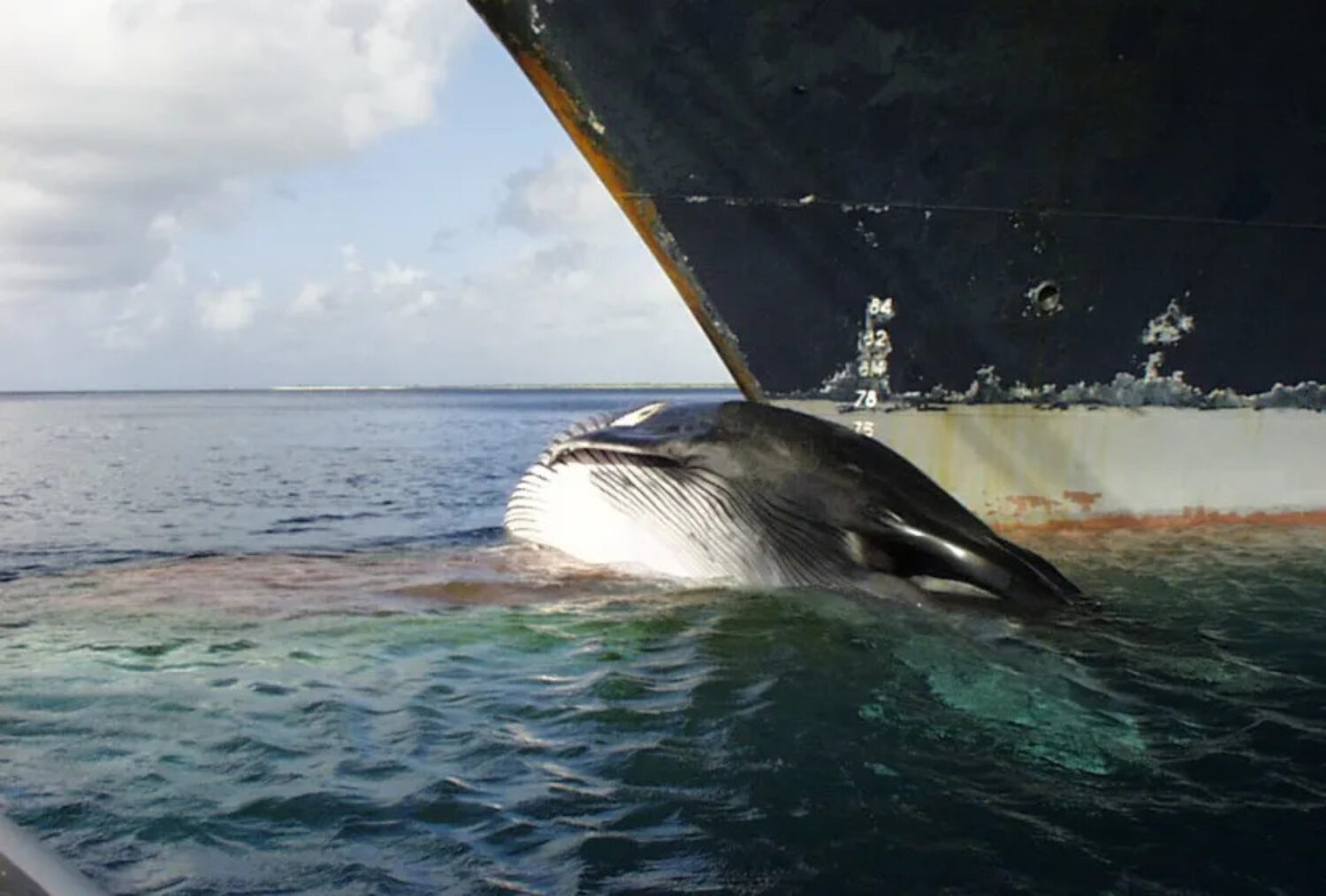
A dead whale killed by a ship. The solution is easy: Vessels need to slow down. Photo Credit: Kalli de Meyer
Current Solutions and Challenges
Day one of the workshop focused on reviewing the current datasets and technologies aimed at mitigating ship strikes. Progress has been made to combat this issue; a variety of near real-time whale alert systems are in place that utilize acoustic monitoring, boat and aerial surveys, thermal imaging, satellite data, and species distribution models to detect or predict whale presence in high-traffic areas. This data is sent to mariners in real-time, advising them to divert their course or slow down.
While these systems are a great start, challenges remain. Technology malfunctions, data overload from multiple sources, and low compliance from vessels hinder the effectiveness of these systems. Most critically, vessel slowdowns are voluntary, not mandatory in California. Many national marine sanctuaries in the state have implemented Voluntary Vessel Speed Reduction (VSR) Zones which encourage ships over 300 gross tons to travel at 10 knots or less, but there are no legal requirements to comply.
Programs like Protecting Blue Whales and Blue Skies combat this by recognizing and rewarding shipping lines that slow-down in these zones, and Whale Safe publicly grades vessels based on compliance. Still, many large and small vessels ignore the speed suggestions and continue to collide with whales.
Where Do We Go From Here?
Day two of the workshop shifted to solution-building. Attendees from various organizations including The Nature Conservancy, NOAA National Marine Fisheries Service, California Academy of Sciences, Woods Hole Oceanographic Institution, WhaleSpotter, Happywhale, Mysticetus, Protected Seas, and several major shipping companies, along with the International Marine Mammal Project, collaborated on ways forward.
Some key proposals included:
- Standardizing whale detection and reporting data: With multiple different reporting systems, detection technologies, and messaging tools, there’s an urgent need for streamlined protocols and unified messaging to make whale alerts more effective and actionable.
- Mandating speed reduction zones: Converting voluntary zones into mandatory ones, and potentially expanding them further offshore, could drastically reduce whale-vessel collisions.
- Further engagement with vessel operators: Educating operators about whale safety and avoidance strategies can increase awareness in the water.
While no single path forward was agreed upon, the workshop made one thing crystal clear: incremental steps are not enough. Far greater action is needed at the state, federal, and international levels. Efforts to weaken ship speed reduction rules or erode protections under the Marine Mammal Protection Act must be stopped. The survival of many whale species depends on stronger laws, consistent enforcement, and global cooperation.
Ship strikes remain one of the most serious and preventable threats to whales worldwide. Reducing vessel speeds in high-risk areas has been scientifically proven to lower collision risk and improve survival rates. Implementing and enforcing these measures at scale could significantly reduce whale mortality and contribute to the recovery of vulnerable populations. Every collision avoided is a life saved, and every slowdown brings us closer to coexistence on the ocean.
IMMP expresses our appreciation to the participants, from so many organizations, working to solve this terrible problem. They deserve our thanks and our support.