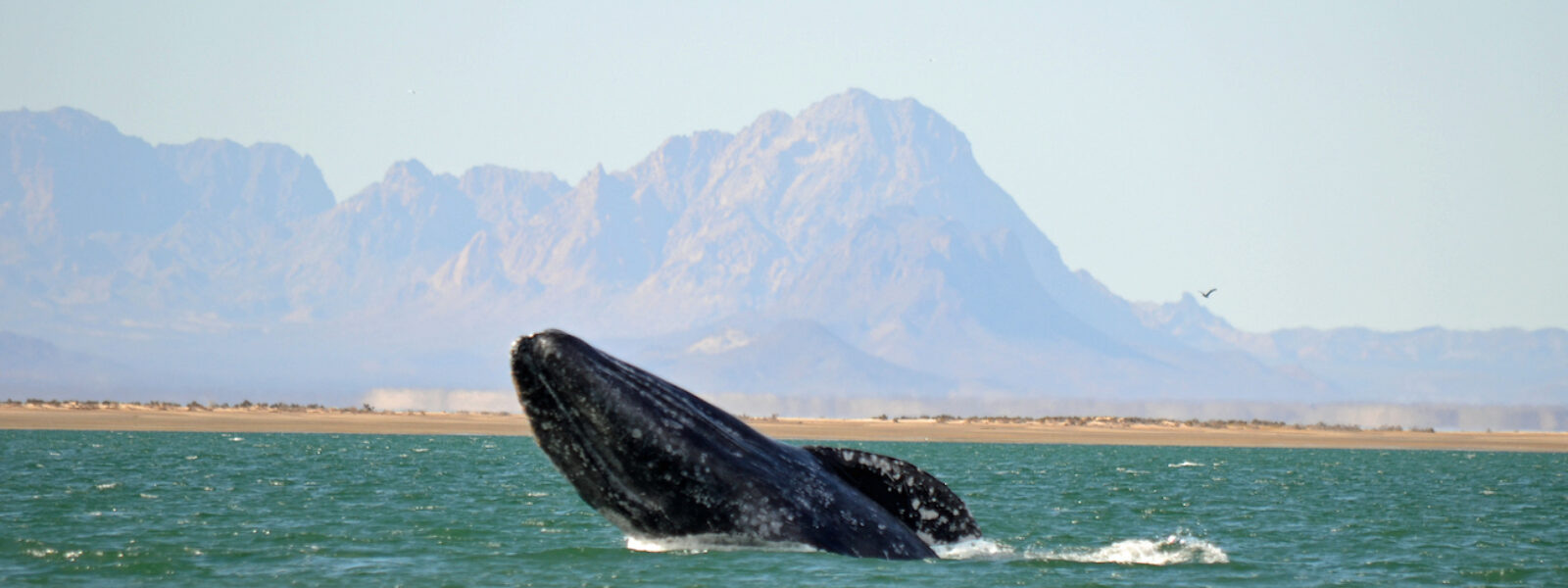
The New Plight of the Gray Whale
By Mark J. Palmer
New data on the gray whale population, which populates the West Coast of North America, migrating from Arctic feeding grounds to Baja birthing lagoons, displays a new decline of the species.
In an August 15th, 2025, open letter, Dr. James Darling and other gray whale researchers raised alarms about the decline: “Gray whales are showing signs of extreme stress with significant unusual mortalities, reduced reproductive rates, increased proportion of malnourished whales, and changes in foraging behavior. The result has been a precipitous drop in numbers – the latest estimate of 13,000 animals is less than half of the 27,000 of ten years ago.”
(There is a small population of gray whales that migrates along the East Coast of Russia, Korea and China. The population is only 100-150 whales and is endangered.)
The population had a major decline from 2019 to 2023 due likely to changes in the Arctic, caused by global warming, that apparently depressed the food sources for gray whales, who do most of their feeding during the summer in the Arctic. Many of the gray whales that washed ashore during this period showed signs of starvation and malnutrition, often skinny and underweight.
The US National Marine Fisheries Service (NMFS) estimated the population of gray whales declined from 20,500 in 2019 to just 14,526 by 2023. The incident appeared to end at that time, with the population slightly rebounding over the next two years.
The estimates for 2023-24 year were slightly higher, indicating some recovery. But the estimate for 2024-25 showed a range of 11,700 to 14,500 gray whales, about the third lowest numbers in the history of population estimates for gray whales.

Gray whale abundance estimates. Chart Credit: US National Marine Fisheries Service
NMFS scientists use several sources of information to determine the current population of gray whales and the trends. These include visual sightings from shore stations and vessels, use of drones, and counting of calves born each year in Baja to the population.
So, what is causing the new decline being observed?
There are dead whales washing ashore, but most are not skinny and starving – they appear to be quite healthy.
At least 24 dead whales (21 gray whales) have stranded this summer in San Francisco Bay so far this year. Twelve of these gray whales were necropsied by experts, who determined that nine of the twelve were struck by ships and died from injuries. For the other three, the cause of death could not be determined.
The most common danger to the whales is entanglement in plastic fishing gear like gill nets.
Whales also carry large loads of pollutants like mercury and PCBs, which are toxic and damage the immune systems, increasing susceptibility to infections and disease. And global warming, especially in the Arctic, is likely going to continue to impact the food supply.
But except for the obvious issue of ship strikes, it is not clear what is suppressing the population this time around. Typically, about 80 whales are estimated to be killed by ship strikes off the US West Coast every year, according to the Center for Biological Diversity.
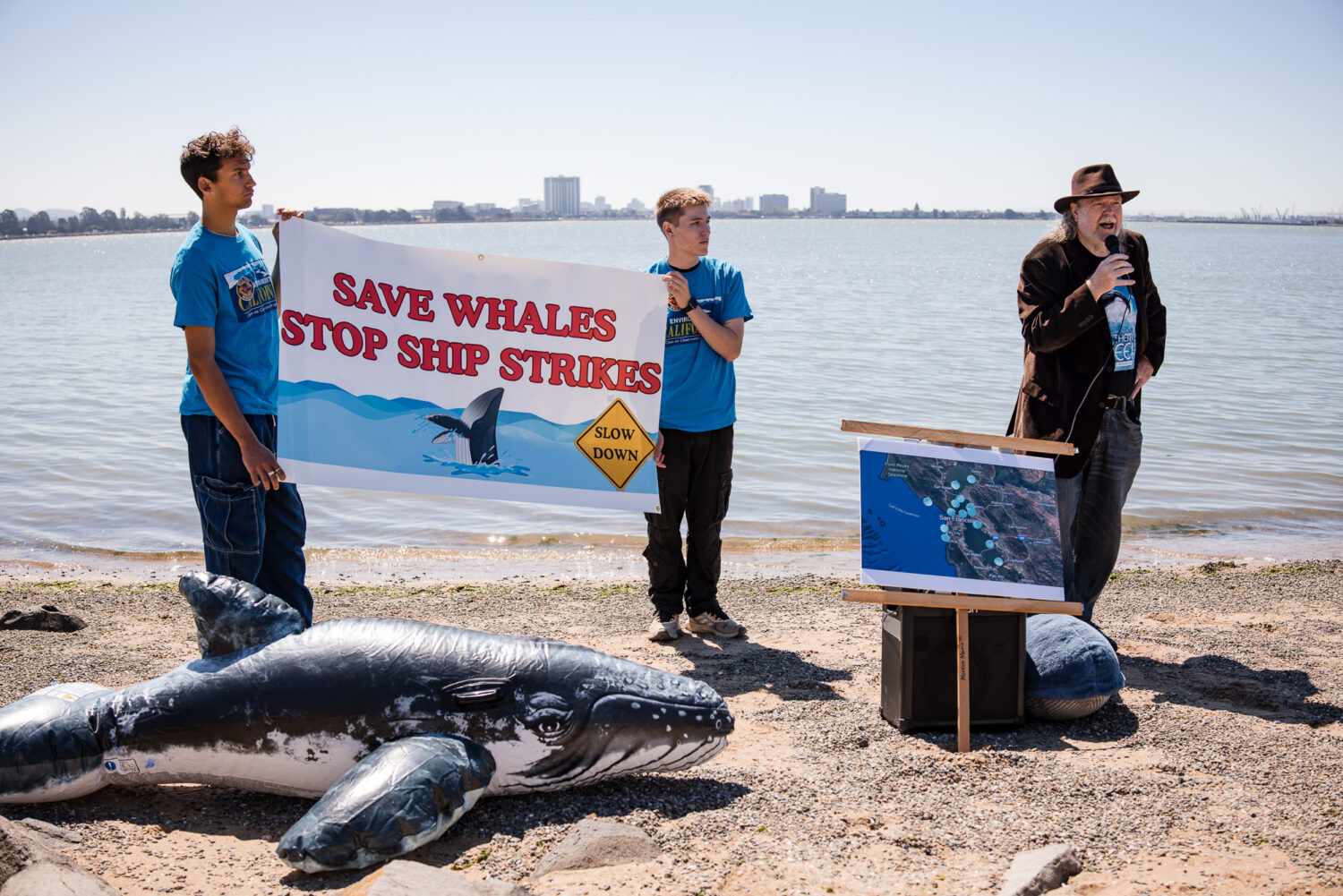
Mark J. Palmer of the International Marine Mammal Project speaks at a press conference about the deaths of whales in San Francisco Bay, many killed by ship strikes. Photo Credit: Drew Bird Photo https://www.drewbirdphoto.com/
The International Marine Mammal Project of Earth Island Institute is calling on government agencies, scientists, and environmentalists to take steps to address the new decline and determine the causes.
The gray whale population has expanded and contracted, especially contracting in the past due to commercial whaling in the 19th century and early 20th century.
****************************
Whales and dolphins continue to suffer from direct killing with harpoons, entanglement in plastic fishing gear, global warming impacts, and ship strikes. Your donations go to help address these concerns, through the International Marine Mammal Project’s advocacy for reducing ship speeds in critical areas for whales; in urging replacement of plastic with non-entangling, non-polluting fishing gear; and our advocacy against commercial whaling and the slaughter of dolphins for food. Thank you for donating today!