How New Monitoring Technologies on Fishing Vessels Are Helping to Protect Whales
By Rosemary Ellis
The ocean faces constant pressure from human activities, and industrial fishing poses one of the greatest risks to marine life. Bycatch — when unintended species like whales, dolphins, and turtles are caught in fishing gear — causes injury and death to thousands of marine animals each year. With these concerns, scientists and regulators are exploring electronic monitoring (EM) and closed-circuit television (CCTV) systems on fishing vessels to make fishing safer and more sustainable for marine ecosystems. In this blog, we’ll explore how EM and CCTV are helping safeguard whales and dolphins, some challenges these systems face, and the potential they hold for ocean conservation.
The International Marine Mammal Project (IMMP) of Earth Island Institute wants to expand the coverage of tuna fishing to include EM and CCTV information, to ensure that no netting of dolphins and whales, as well as other nontarget marine life, occurs during fishing.
What’s Electronic Monitoring (EM) and Closed-Circuit Television (CCTV) on Fishing Boats?
EM and CCTV can act as the eyes and ears on fishing vessels. These setups often include cameras, GPS trackers, and other sensors that keep tabs on what’s happening on board. CCTV cameras capture the action as it unfolds, recording fishing practices, but are not yet widely used. Movements of fishing vessels, tied to GPS satellites, can be tracked to determine where vessels are unloading fish. Digital oversight can help ensure fishing is done by the book — and it’s a big deal for both fisheries management and marine protection.
IMMP’s Dolphin Safe Tuna Program is pressing for fishing companies to provide EM and CCTV data to us so that we can ensure that fishing practices are consistent with dolphin safe provisions. IMMP is also seeking action by Regional Fisheries Management Organizations (RFMOs) to require EM and CCTV's on all tuna purse-seiners and longliners.
Why Fishing Boat Monitoring is Needed
The fishing industry poses some serious risks to marine mammals. Many whales end up entangled in fishing gear, caught accidentally (called bycatch), or even struck by vessels. These incidents take a toll on whale populations every year, especially for species already struggling to survive and overcome decades of whaling impacts. By monitoring fishing boats closely, we can reduce these kinds of risks. When fishers know they’re on camera, they’re more likely to follow rules that help protect marine life, like avoiding areas where whales are known to swim or refraining from deploying nets when dolphins are present. This transparency helps save lives by encouraging safer fishing practices. Many vessels have onboard monitors representing fisheries agencies, but these observers can be harassed on board – CCTV improves observer safety. Plus, knowing which areas are high-risk for bycatch can lead to better-informed regulations that keep marine mammals out of harm’s way.
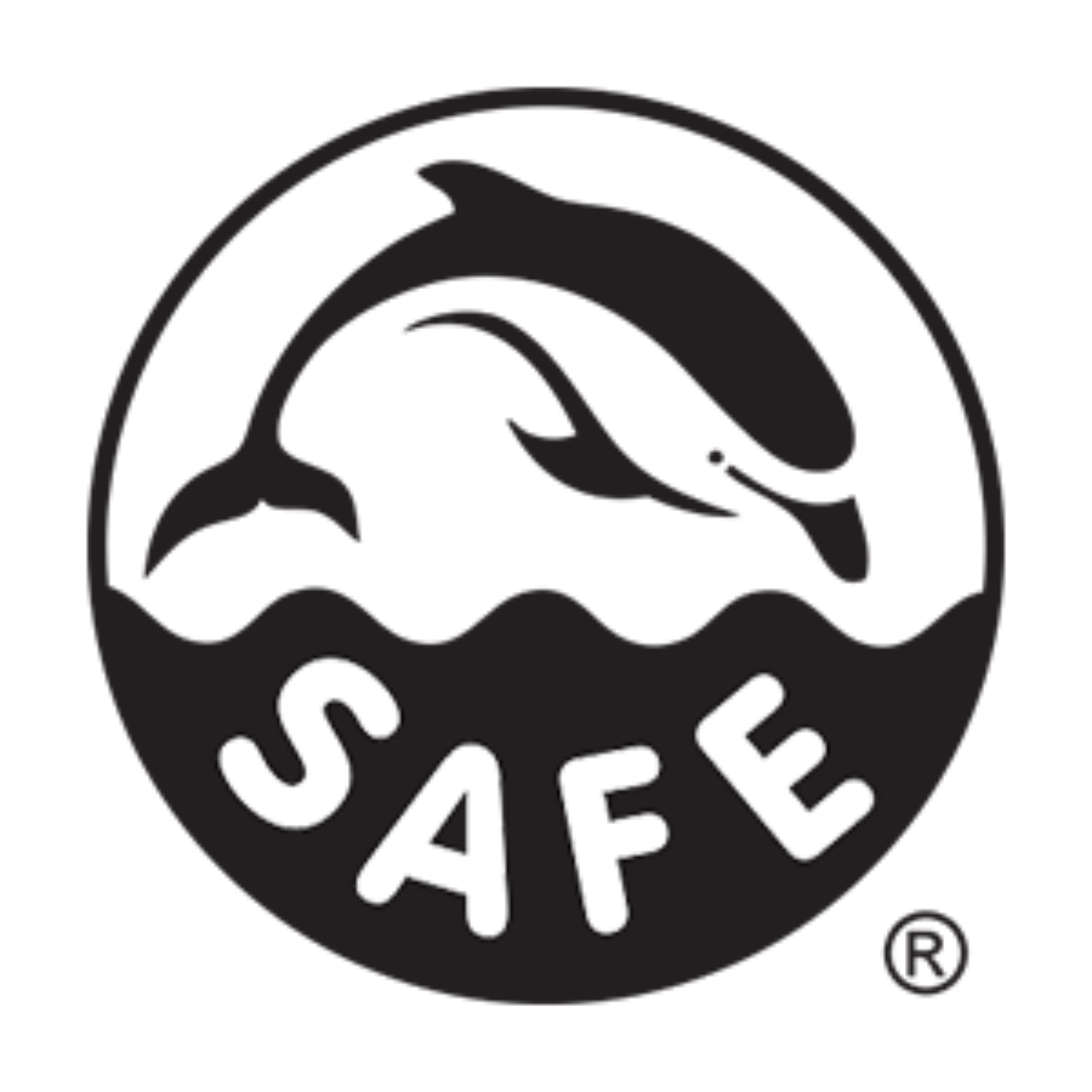
IMMP's Registered Dolphin Safe Label, Only Available to Companies that Follow Dolphin Safe Standards for Fishing Tuna. Image Credit: International Marine Mammal Project, Earth Island Institute
How EM and CCTV are Changing the Game for Whale Conservation
EM and CCTV don’t just catch rule-breaking; they play a key role in enforcing sustainable fishing practices. Illegal, unreported, and unregulated (IUU) fishing — basically, fishing outside the rules, like a pirate — is a huge threat to ocean life. By recording where and when fishing takes place, these monitoring systems give regulators the info they need to enforce bycatch reduction measures and other critical protections.
But it’s not only about catching rule-breakers. The data collected by EM and CCTV systems can be used by scientists and conservationists too. This information sheds light on how fishing affects whale populations and helps develop smart policies to prevent collisions and entanglements. For instance, if monitoring shows a rise in whale bycatch in a certain area, authorities might enforce seasonal restrictions to keep fishers out of that zone when whales are around.
The Hurdles Facing EM and CCTV Technology
As great as EM and CCTV are, they’re not without challenges. First off, technology issues like low video quality or limited data storage can reduce their effectiveness. Privacy is another sticking point —many fishers feel like constant surveillance is a little too close for comfort.
Then there’s the problem of consistency. While some countries are making EM mandatory on fishing vessels, many fleets operate in international waters, where it’s tougher to enforce these rules. Since whales and dolphins often migrate across these areas, they’re still at risk of facing unmonitored fishing operations.
On the other hand, many fishing companies, retailers, and processors want better enforcement of environmental laws meant to protect marine life during fishing, including whales and dolphins. Some of these companies are already experimenting with various systems to provide information and video of fishing operations. Consumers, of course, are the final arbiters of what fish get sold and what fish doesn’t.
The Future: Technology and Policy Working Together
Looking ahead, EM and CCTV have a lot of promise in the conservation space. Technology is advancing fast, and innovations in artificial intelligence (AI) are already helping by quickly processing video data, identifying species, and tracking gear deployment — all crucial for expanding EM’s reach and effectiveness.
On the policy side, more countries are starting to see the value in these monitoring systems. International bodies, like the UN’s Sustainable Development Goals, encourage the adoption of these tools, and increased cooperation across countries can help protect migrating species like whales and dolphins.
Ultimately, electronic monitoring and CCTV are reshaping the future of marine conservation. They bring accountability and transparency to an industry that’s long been difficult to manage, offering whales and other marine animals a safer future. By giving us clear data on fishing practices, these tools are vital for enforcing regulations, protecting vulnerable species, and helping the fishing industry operate responsibly. By supporting these technologies and the policies that promote them, we can play a part in creating a healthier ocean, one where whales, dolphins, and other marine life can continue to thrive.
For further information on Dolphin Safe tuna and a list of companies that are monitored by IMMP, go here.
***********************************
With your support, the International Marine Mammal Project (IMMP) of Earth Island Institute has made historic progress in reducing the deaths and injuries of dolphins in tuna nets, protecting the lives of an estimated 90,000 dolphins annually in the Eastern Tropical Pacific Ocean. More than 7 million dolphins have been killed in tuna fisheries, but dolphin deaths have been reduced by more than 90%+ through IMMP’s Dolphin Safe program. If you buy tuna, buy tuna that is monitored by IMMP and carries a Dolphin Safe label. Please donate today to protect whales, dolphins, and their ocean homes. Thank you for your support, and Happy New Year!