Offshore Oil Drilling: Coming to a Beach Near You?
By Mark J. Palmer
The US Bureau of Ocean Energy Management (BOEM) has issued a new 5-year-plan to lease the Outer Continental Shelf (OCS) of the US for offshore oil drilling and seismic testing for oil, using extreme sound punched into the ocean bottom.
Basically, the proposal would open up virtually ALL of the country’s OCS to leasing, testing, and drilling, in keeping with the administration’s state policy of “energy dominance”.
This includes opening National Marine Sanctuaries, like the Channel Islands National Marine Sanctuary offshore southern California, to oil drilling despite the ban on drilling in the Sanctuary established by law.
Similarly, the proposal ignores California’s state Marine Protected Areas (MPAs) as well. The MPAs were set up specifically to protect fish populations and biodiversity along the California coast.
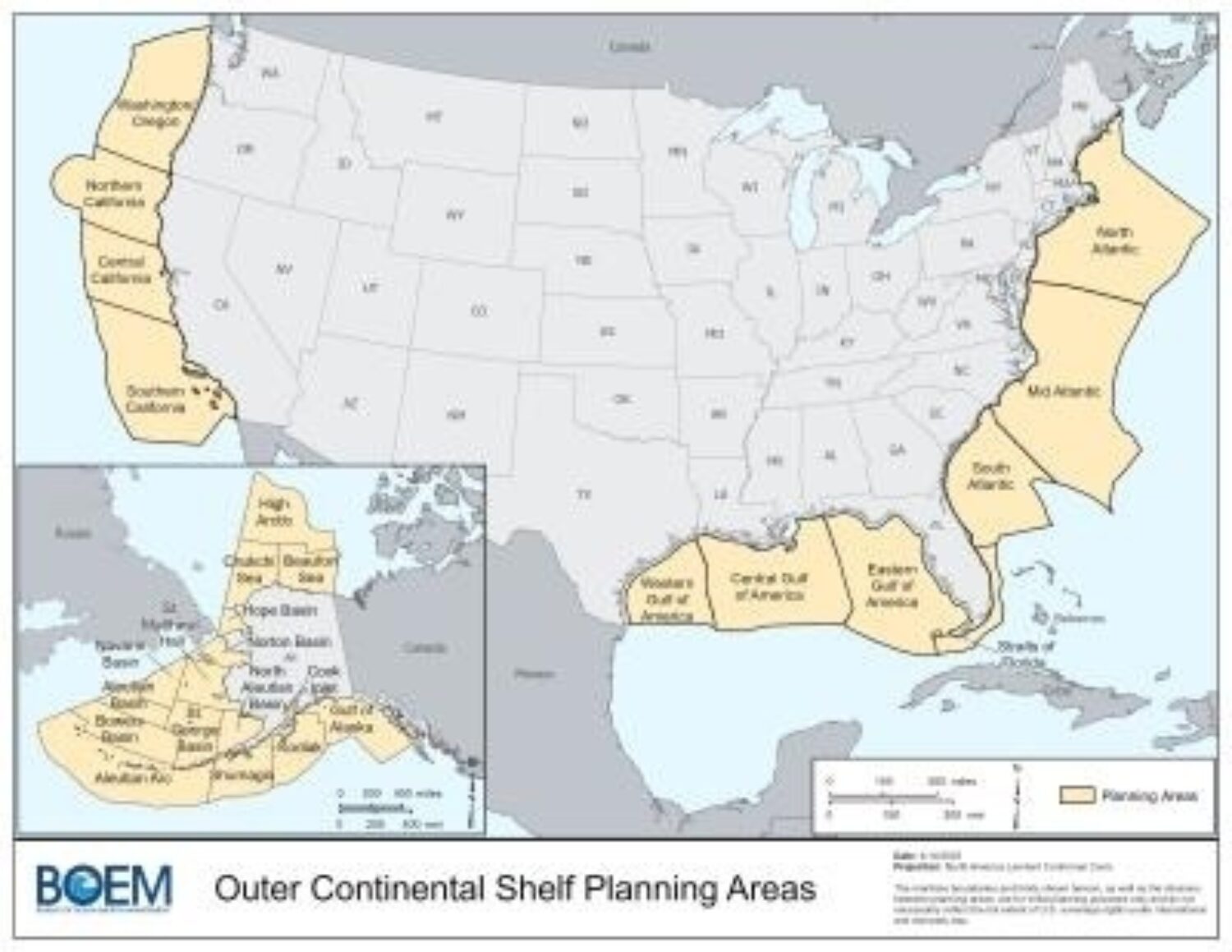
BOEM's Plan to least the entire offshore area of the US for oil drilling. Graphic Credit: BOEM
The administration is bent on “Drill, Baby, Drill”, but what we see happening are “Spills, Baby, Spills”.
Offshore oil drilling poses many dangers to the marine environment, including whales and dolphins. Seismic testing consists of towed powerful air-guns that make ear-piercing noise levels, shot into the ocean bottom. The returning echoes can indicate where oil reserves are present in the underlying sediment. In the meantime, the home of whales and dolphins is filled with huge noise blasts repeating for days on end that can travel for dozens and even hundreds of miles.
Once areas are leased to oil companies, drilling can commence. The construction of oil platforms and pipelines, and drilling produce yet more ocean noise. Oil spills on a small scale are regular occurrences. Drilling muds, which contain toxic heavy metals and can contaminate large areas of the ocean bottom, are sometimes simply dumped over the side of the drill platform.
Fracking is now occurring in some offshore areas to increase production, by injecting a devil’s mix of chemicals and hot water to crack sedimentary rocks, allowing the oil to be pumped out. But if any of the fracking fluids should escape the sediments, it would poison large areas of the coast.
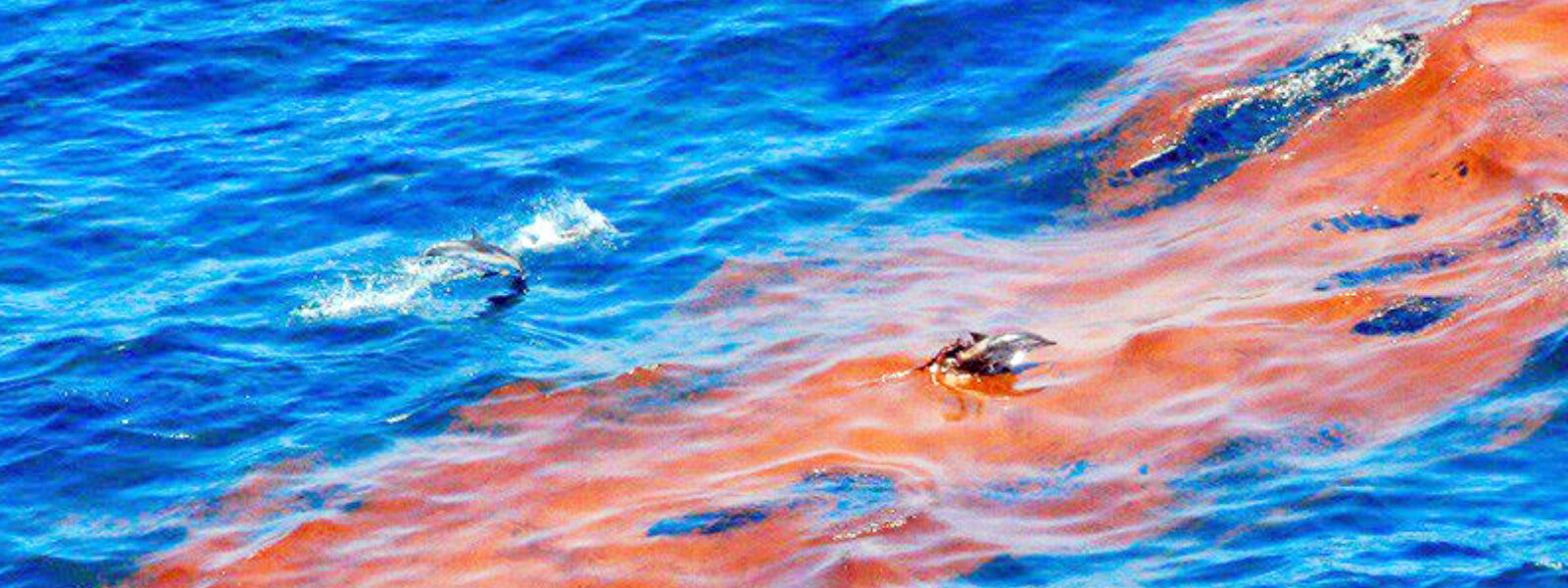
Large scale oil spills have occurred when things go wrong with offshore oil platforms, pipelines, and tankers, causing billions of dollars in damage to tourism, fisheries, and the marine ecosystems – damage that can last for years. Oil and water do not mix.
In 1989, when the Exon Valdez tanker crashed into a reef and leaked oil all over Prince William Sound in Alaska, an estimated 2,800 sea otters and as many as 22 orcas died as result of oil contamination and poisoning.
The explosion and oil leak of the Deepwater Horizon oil platform, in addition to killing oil workers, also killed, just from March 2010 to July 2014, an estimated 1,141 dolphins and is still having adverse impacts to this day on the Gulf of Mexico.
What You Can Do:
The BOEM, during a narrow window, is asking for comments from the public about their reaction to offshore oil drilling virtually everywhere.
TO COMMENT, GO TO: www.SaveMyCoast.org
This website, set up by environmentalists, will give you access to the BOEM comment record so you can state your views.
URGE THE BOEM TO REJECT THIS 5-Year-Plan and BAN OFFSHORE OIL DRILLING.
DEADLINE FOR COMMENTS: June 16, 2025
Thank you for your support for our oceans and its inhabitants!
*************************************
The International Marine Mammal Project (IMMP) of Earth Island Institute is working with coastal communities, environmental organizations, and local governments to oppose offshore oil drilling and the damages it brings to our coasts and ocean. Donate today to help block drilling and protect whales and dolphins. They can’t speak for themselves, so you have to speak for them! Thank you for donating to save whales and dolphins.