Paolo Bray: Global Fisheries Sustainability and Dolphin Safe
By IMMP Staff
We conducted an interview with Paolo Bray, who heads up IMMP’s Dolphin Safe monitoring in Europe (Paolo is based in Milan, Italy) and further founded and directs Friend of the Sea, a program to monitor sustainability of commercial fishing operations globally.
1. Introduction to Paolo’s Work:
QUESTION: Could you share about your journey with marine biology and natural resource management? What inspired you to focus specifically on marine mammals, fisheries, and their conservation?
PAOLO: I actually graduated from Economics University in the early ‘90s. At that time, the issues of global warming and destruction of the Amazon rainforest were featured on all the news. I thus felt I wanted to do something to help preserve our beautiful planet. I believe economists can help Non-Governmental Organizations (NGOs) in developing successful conservation projects. Economists have good organizational and management skills, which are vital to support biologists and scientists to carry out their research and to lobby the involved industries appropriately.
Q: When did you first join the campaign for ending the tuna industry’s chasing and netting dolphins, and how do you feel about what has been accomplished by that campaign?
PAOLO: In 1991, my CV ended up at the Earth Island Institute, which asked me to work on the Dolphin Safe program run by the International Marine Mammal Project (IMMP) of Earth Island Institute (EII). I immediately felt empathy for dolphins and their need for help to avoid mortality due to the tuna industry. I enthusiastically accepted the offer to help in the project, and since then I never stopped.
Q: How did Friend of the Sea and Friend of the Earth develop from your work for Dolphin Safe tuna?
PAOLO: Over the years, more and more information became available regarding overfishing and the impact of fishing and aquaculture on marine ecosystems. In the meantime, overfishing increased every year, and fish populations became overexploited. The success of the Dolphin Safe project and reduction in dolphin mortality made me realize how certifications could help achieve important conservation results. So, in 2008 I launched the Friend of the Sea certification program to tackle other issues related to fishing and aquaculture impact on the marine environment.
Q: How does Friend of the Sea certification program have an impact on fisheries, and what differentiates your program from the Marine Stewardship Council?
PAOLO: Friend of the Sea certification is part of the sustainable seafood movement and led to an epochal shift in the seafood industry’s environmental awareness. Friend of the Sea contributed to change in companies’ approaches, and this led the fishing and aquaculture industry to improve their fishing management practices and reduce their impact on the environment. Some fish stocks, such as bluefin, swordfish, cod and Peruvian anchovy have recovered, and use of antibiotics in aquaculture has dramatically decreased in these past decades.
There are some important differences between Friend of the Sea and the Marine Stewardship Council (MSC). MSC was started by Unilever in 1996. At that time, Unilever was one of the major seafood producers and, in the first decade, most of the suppliers of Unilever were certified by MSC, among them some major vessels using highly impactive trawlers to catch whitefish. Friend of the Sea’s management is free of any potential conflict of interest, and it is not involved in the seafood business. Additionally, Friend of the Sea can certify products from both fisheries and aquaculture, as we believe the two are connected by the ‘feed-factor’ as aquaculture feed originates from fisheries. MSC is only focused on certification of fisheries. Last, but not least, Friend of the Sea requires fisheries, in particular tuna ones, to also be fishing Dolphin Safe, according to the Earth Island Institute fishing standards. This is not the case for MSC, which has certified the dolphin-killing Mexican tuna fishery which fishes for tuna by setting nets on dolphins.
2. Deep Dive into the Dolphin Safe Program:
Q: What does the Dolphin Safe label signify, and why is it crucial for marine conservation?
PAOLO: The EII Dolphin Safe label means tuna cannot be caught by setting nets on dolphins or in any way harassing, harming or killing dolphins or other marine mammals. Other certification requirements have been added over time, to prevent shark finning, albatross bycatch, trawling impacts, illegal, unreported and unregulated fishing (IUU) and much more. The EII Dolphin Safe program has been the precursor of the Sustainable Seafood movement, at a time when sustainability was not even used as a word in the seafood arena.
Q: How has the program evolved since its inception in 1990, and what changes in fishing practices are you proudest of?
PAOLO: The program has introduced several new requirements, as mentioned in the previous answer, and this has led to major changes in fishing practices. Several fisheries have stopped fishing by setting nets on dolphins in the Eastern Tropical Pacific (ETP), and others have introduced policies to avoid setting nets on marine mammals in other oceans. EII also was the first NGO alerting seafood companies about IUU tuna shipments and also about crews’ mistreatment on longliners. Consequently, and thanks also to the contributions of other NGOs, several companies have introduced new management initiatives to reduce their impact and be more socially accountable.
Q: Your work spans multiple countries in Europe and now the world. Could you describe some of the unique challenges and successes you've encountered while implementing the Dolphin Safe program across these diverse regions?
PAOLO: The travelling has been very exhausting at times, with risky situations while driving through the Amazon jungle in Ecuador and Brazil, dealing with physical threats and bribery offers in Venezuela, Panama, and even Italy. Had to travel by train for almost 3 days, through the war in the ex-Yugoslavia and fly on a small plane in Solomon Islands, with water pouring inside the plane. A couple of times, in South America and Oceania, I had to take 24 flights in 3 weeks, in order to meet as many companies as possible in the shortest time. Not easy, but a wonderful lot of life experiences which have expanded my knowledge of different cultures around the globe. Some of the companies I met were new to the concept of sustainability, and it was thanks to those meetings and audits that they became aware of the need to reduce their impact on the environment.
Q: Monitoring compliance with the Dolphin Safe standards across numerous countries must be complex. How do you ensure that the standards are consistently met? What are some of the innovative methods or technologies employed?
PAOLO: As new technologies and communications have been introduced, it has become possible to reduce traveling and carry out some of the audits remotely, by video recording the whole audit. This, combined with Satellite Monitoring, made available publicly and free of charge by platforms such as Global Fishing Watch, and onboard Closed-Circuit Television (CCTV), allow for an even more effective monitoring of the fishing fleets and processing lines. For example, we are now able to request an immediate unannounced remote audit, as we notice suspicious movements of vessels approaching the processing lines.
Q: You’ve focused for quite a while on the benefits of CCTVs onboard fishing vessels. Why is this important, and is it starting to catch on?
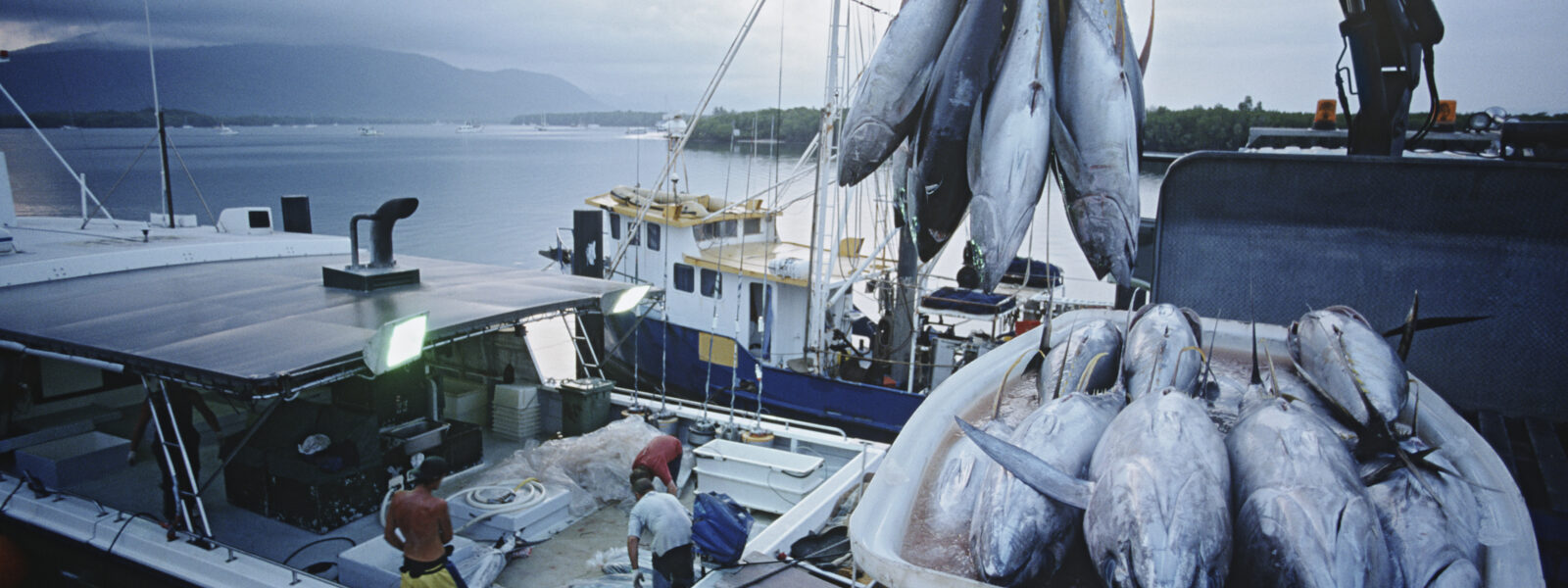
PAOLO: Fishing, in particular tuna fishing with longlines and purse seines, is carried out often in international waters, many miles from the coast. The vessels stay at sea for weeks and sometimes months. It is therefore necessary to be able to visualize all that occurs in the fishing vessels, such as how the nets are deployed and if no marine mammal interactions occur. Until now we have relied on onboard observers, sometimes EII’s, other times observers of governments and Regional Fisheries Management Organizations. The CCTV technology has now advanced greatly, and it allows for real-time viewing on cell phone of what is happening in the vessels. This is why both EII Dolphin Safe and Friend of the Sea are increasingly encouraging companies and ship owners to install CCTVs and make videos available to EII and auditors. Some companies, such as Baja Aqua Farms in Mexico, have accepted, and others seem to be willing to collaborate. The process is still slow, but we feel, from our last talks during the INFOFISH meeting of global tuna companies, that the speed of change is increasing, and soon it will be possible to monitor at least Dolphin Safe compliance with CCTVs.
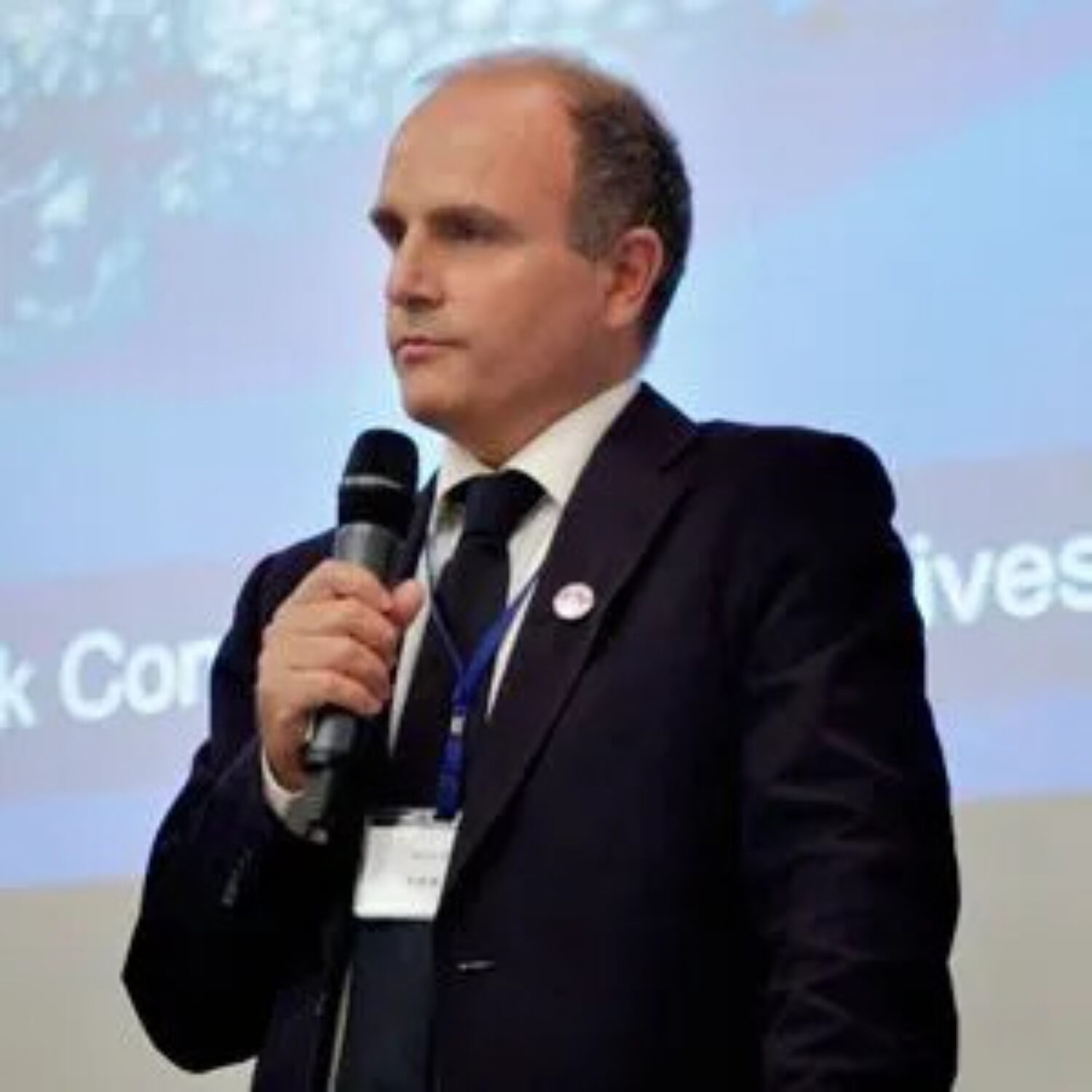
Paolo Bray. Photo Credit: Friend of the Sea
Q: How has the Dolphin Safe program influenced consumers gaining more interest in how tuna is fished, and the evolution of the broader seafood industry in Europe?
PAOLO: The EII Dolphin Safe program has been the precursor of the sustainable seafood movement. At a time when sustainability was not yet used as a word in the seafood arena, we managed to let consumers worldwide know about the impact of tuna fishing on dolphins and then campaigned against use of high seas driftnets, shark finning, IUU, albatross bycatch in longlines and much more. The first seafood sustainability certifications were started only a decade later. We really contributed to a major shift in consumers’ and companies’ awareness about the impact of fishing on the environment. The seafood industry is now one of the most engaged at reducing its impact on the environment, thanks to the Dolphin Safe tuna project of EII.
Q: Looking ahead, what are the major challenges facing the Dolphin Safe program, Friend of the Sea, and survival of marine mammals and the oceans?
PAOLO: While many in the fishing industry have changed their approach dramatically, and some improvements have occurred in fishing management and biomass recovery, there is still a lot to be done. I believe companies and shipowners have to start realizing that they have a residual impact on the marine ecosystem, even when fishing sustainably. They are taking thousands of tons of fish biomass from the sea, every year, thus impacting oceans’ biodiversity. They need to compensate this impact by supporting conservation projects and Marine Protected Areas, which are able to increase biomass and biodiversity. Our programs can contribute to lead companies in this direction and thus multiply their results in conservation.
Q: Are there new initiatives or expansions of the program planned that you can tell us about?
PAOLO: Dolphin Safe/EII and Friend of the Sea are working closer each year, thanks to our successful collaborations so far. The number of companies involved increases every year by over 100, and the projects have strengthened and expanded globally. Implementation of new technologies and biodiversity offset programs, as explained, could allow the projects new breakthroughs and to further contribute to conservation of the marine ecosystem. Additionally, I believe more can be done to stimulate social accountability in fishing and improve crews’ standards of living.
Q: Over the years, what has been the most rewarding aspect of your work? Are there any particular moments or achievements that stand out?
PAOLO: At the end of each working day, whether achievements or disappointments occurred, it is always rewarding to feel that I have done my best to provide my little contribution to our planet. It also makes me feel good to realize how we managed to contribute to an epochal change in awareness in society, among consumers, managers and employees of the companies we work with.
Q: Finally, what advice would you give to young scientists and advocates who want to contribute to marine conservation and sustainable resource management?
PAOLO: Collaborate more with economists, as we need each other’s collaboration to achieve even better conservation results. ;-)