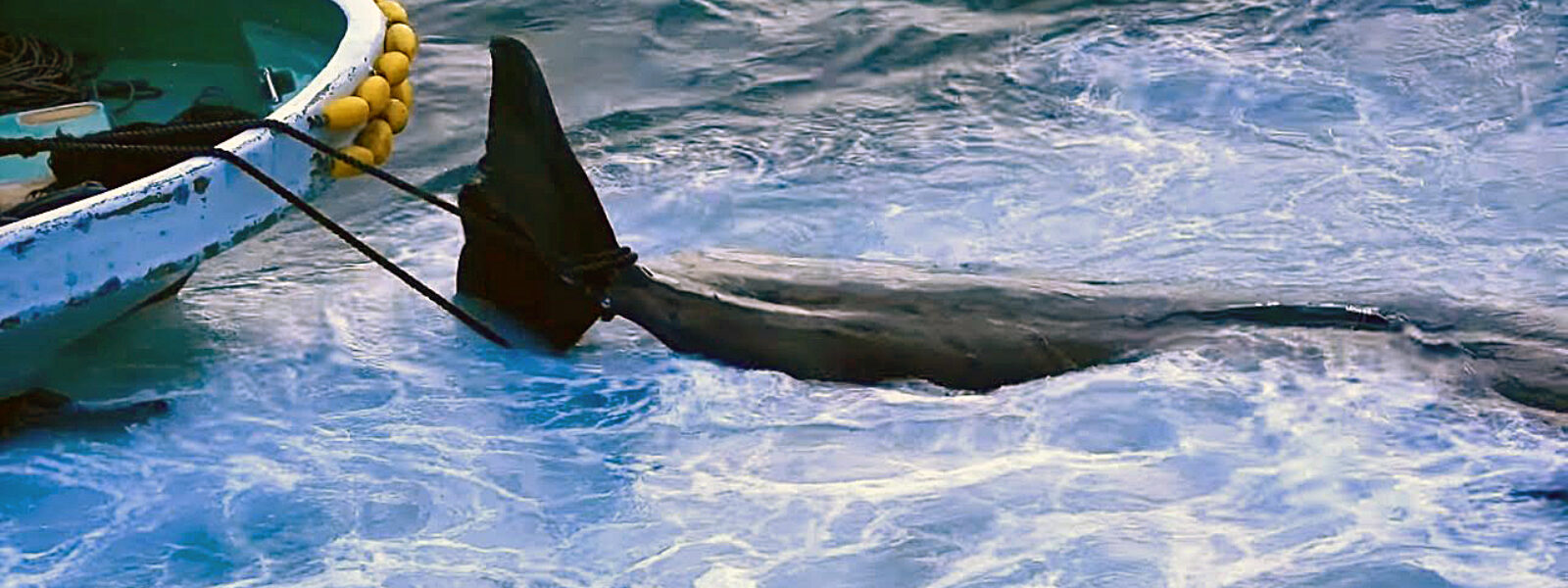
Pilot Whales Die in Taiji Hunt
By Mark J. Palmer
Photos by Kunito Seko
Warning: Graphic Images that Might be Disturbing
Pilot whales are, in reality, large dolphins, abundant in tropical and warm temperate waters around the world. Males can reach 20 feet or longer, and live up to 50 years (females live slightly longer), if they don’t end up in one of Taiji’s drive hunts. They eat mainly squid, being deep divers.
Among the species that are regularly slaughtered in Taiji for human food, pilot whales repeatedly show the highest levels of contamination from mercury and other pollutants, based on studies conducted by the International Marine Mammal Project and other organizations. The meat is not fit for human consumption, yet the Japanese government has silenced its environmental health experts to continue the hunts.
Our friend and colleague, Kunito Seko, is a resident activist living in Taiji. Kunito, on a daily basis, photographs and reports on the annual dolphin drive hunts. He recorded this latest hunt, which drove a large pod of pilot whales into the notorious Cove, to be killed and butchered for meat.
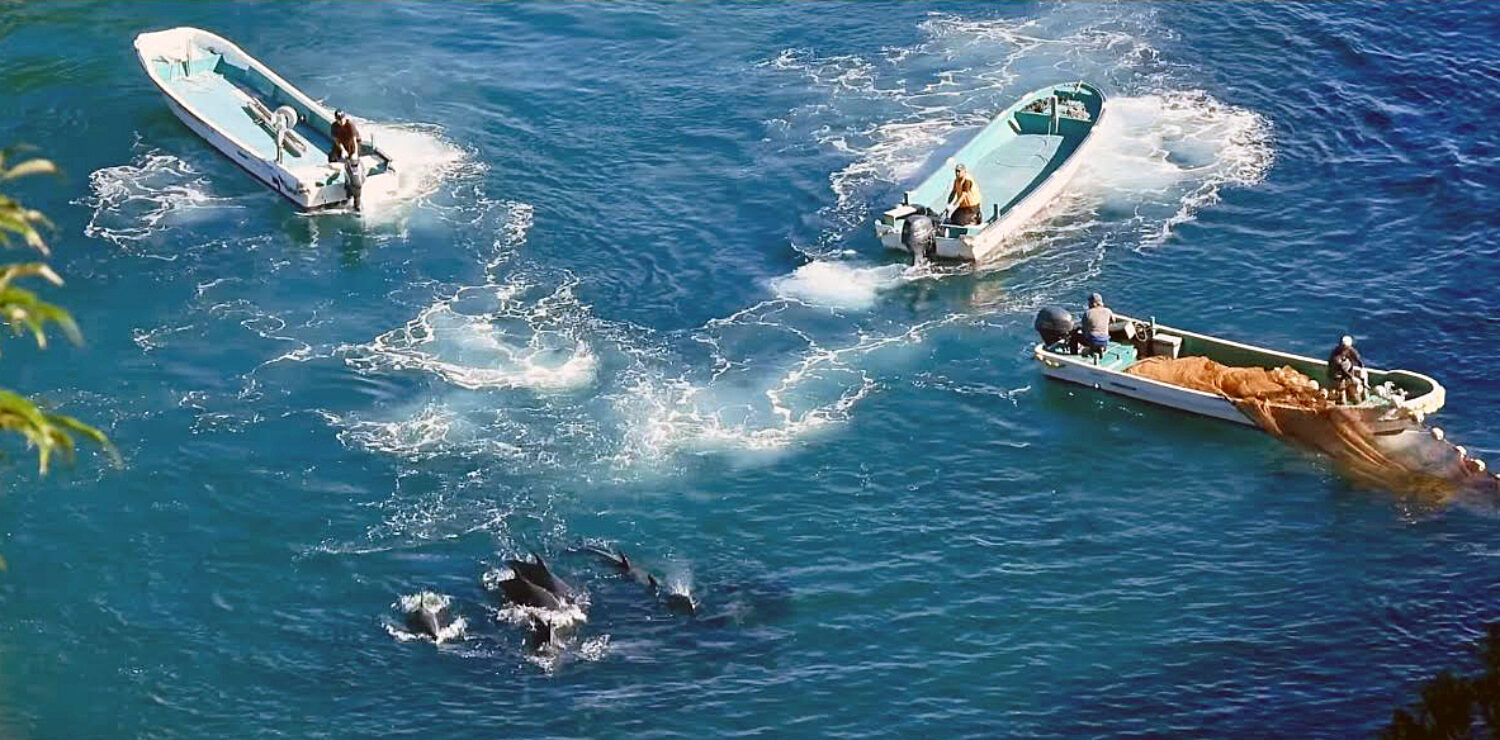
Pilot Whales Herded by Taiji Boats. Photo Credit: Kunito Seko
The hunters spot pods of dolphins on the ocean and form their vessels around the pod, banging on pipes to make a wall of sound, driving the pod into the killing Cove, which is netted off to prevent their escape.
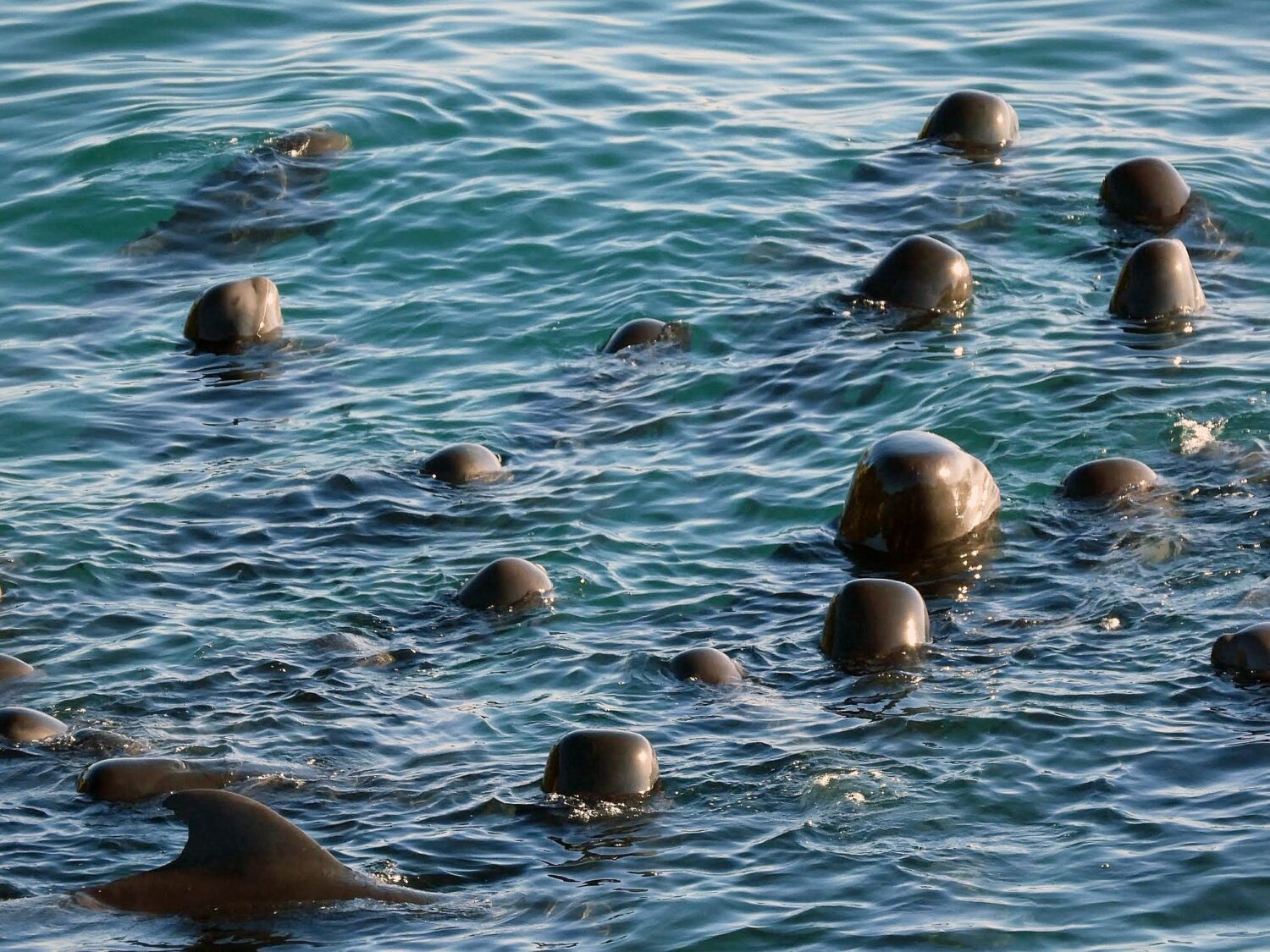
Pilot Whales in the Cove. Photo Credit: Kunito Seko
The pilot whales circle in terror, often kept in the nets overnight to await the representatives from aquariums to arrive and pick out the “show quality” animals that will look good on display. Those individuals are then torn from their families for a life in miserable, small tanks, doing tricks for their food.
The aquarium trade is what fuels the dolphin slaughter. The main purpose of the hunt is to find show-quality dolphins and small whales for captivity. The dolphin hunters of Taiji get far more money for a live, trained dolphin than they do for the meat market.
In this case, Kunito notes, no pilot whales were chosen for captivity.
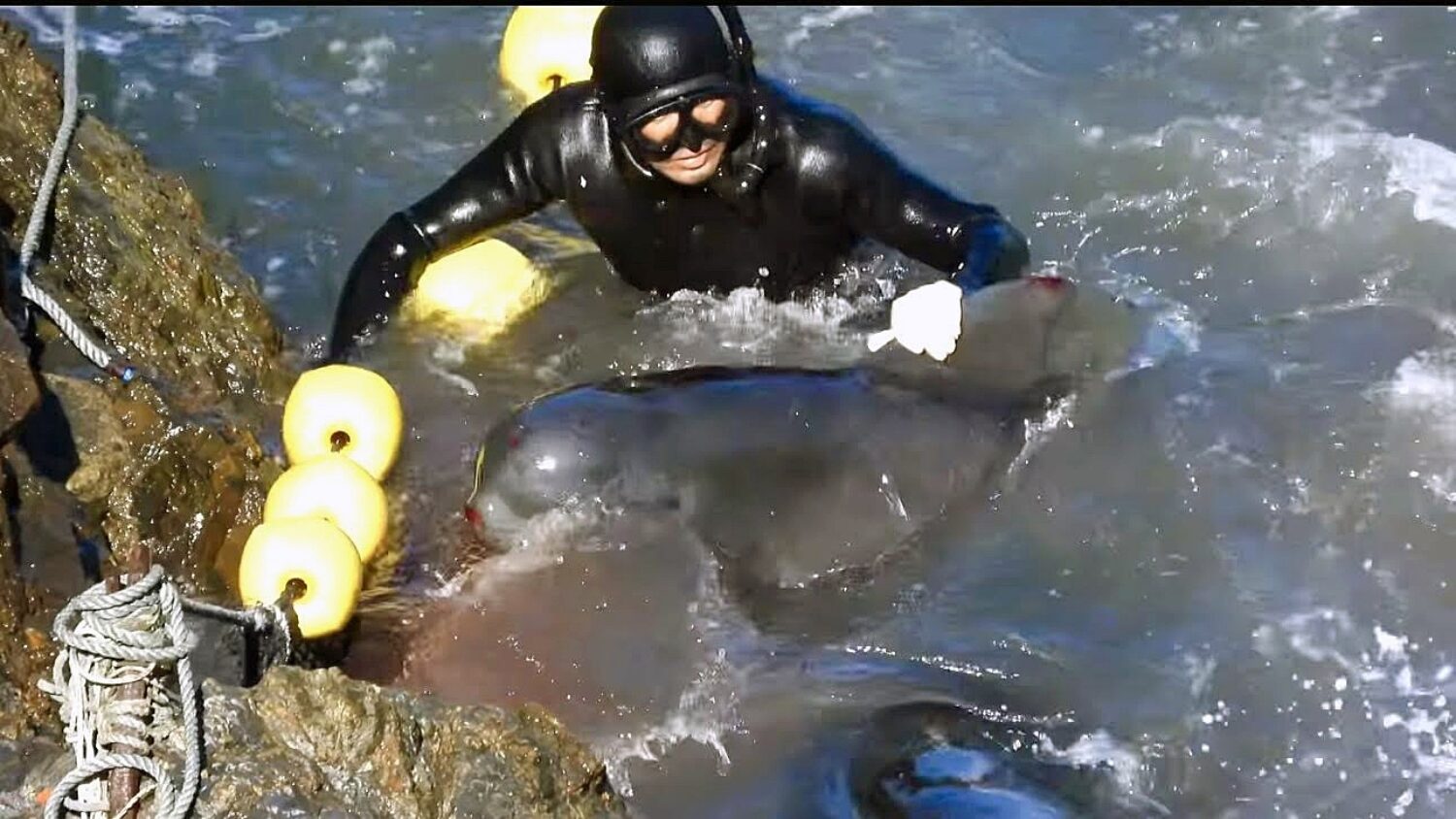
Bleeding Pilot Whale Grabbed by Diver. Photo Credit: Kunito Seko
Then the killing begins. Divers swim out and grab individual animals and drag them bodily under tarps, set up specifically to prevent activists like Kunito from photographing the bloody killing of the animals.
Once the pilot whales are beached on the sand underneath the tarps, the executioners go from whale to whale and push a large spike down behind the blowhole to sever the spinal cord. To prevent large amounts of blood from leaking out (a bad look in photographs), the hunters put wooden plugs into the wound to prevent bleeding.

Blood in the Cove. The Tarps Covering the Killing Beach are Visible Along the Bottom of the Photo. Photo Credit: Kunito Seko
The hunters continue the hunts, virtually every day, seeking out more dolphins to catch for aquariums or to be turned into very dangerous meat on the market.
Kunito Seko will be there to photograph the tragedy as part of our combined efforts to shine a spotlight on this cruelty.
The International Marine Mammal Project continues to actively oppose the dolphin hunts in Taiji, working to end the hunts for good.
****************************
The Taiji dolphin hunts are unacceptable, causing terrible pain and depletion of dolphin populations along the Japanese coast. The International Marine Mammal Project has been raising global opposition to the hunts, including IMMP’s extensive role in the Oscar-winning documentary “The Cove.” We have made significant inroads into the hunts, reducing dolphin killing by more than 60% (through our educational efforts in Japan on the dangers of mercury contamination in dolphin and whale meat) since launching our Save Japan Dolphins Campaign in 2004. But the hunts continue! Please consider a donation to help end the slaughter and exploitation of dolphins around the world.