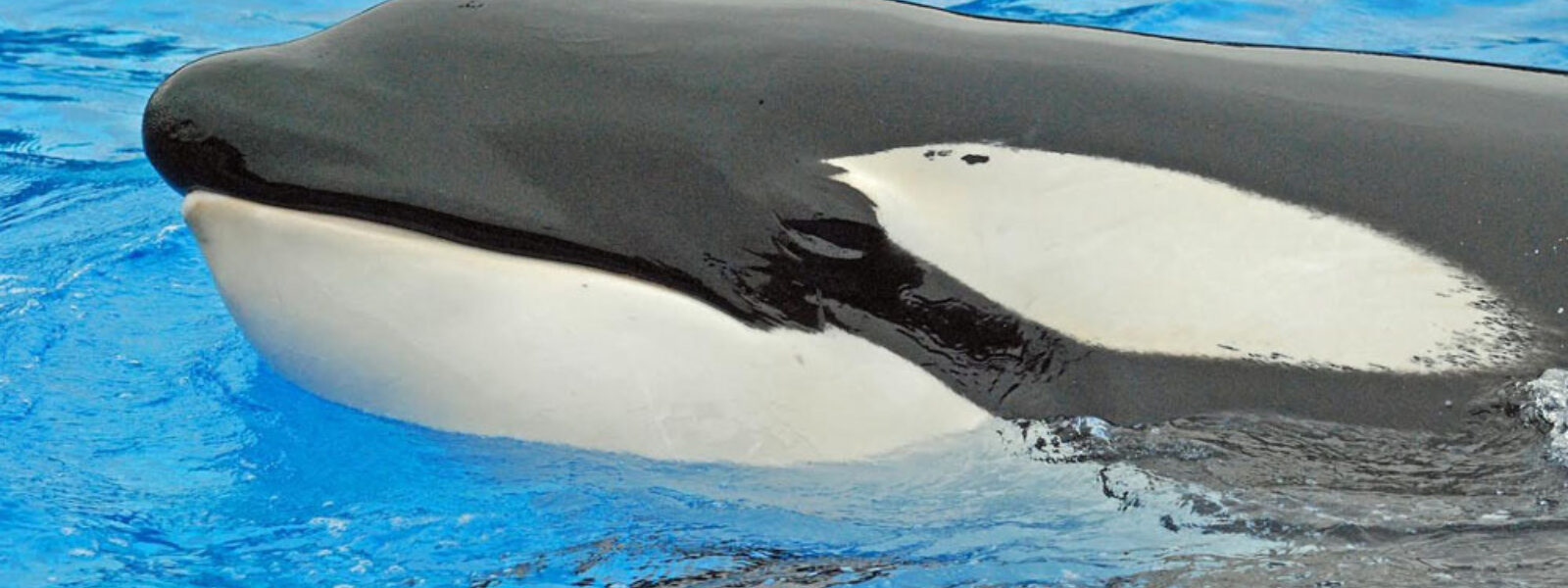
Premature Deaths Continue for Captive Whales
By Mark J. Palmer
There has been a spate of deaths of orcas and beluga whales around the world in marine parks recently.
In Marineland Antibes, France, another orca, Inouk, died on March 26th. The orca family at the park had been made up of four related orcas, but now two have died in just the past year.
A new French law is phasing out zoos and aquariums, and Marineland must remove the remaining orcas by 2026. While there is a proposal to move the whales to marine parks in Japan, the International Marine Mammal Project (IMMP) has joined French environmentalists in urging the French government to instead move the two surviving orcas, Wikie and Keijo (Wikie’s son), to a seaside sanctuary.
“As a result, the French government has stepped in to consider alternatives to sending the whales to Japan,” notes the Whale Sanctuary Project. “And over the last two months, the Whale Sanctuary Project has been in continuing discussions with the French Ministry of Ecology and Biodiversity as they assess the Nova Scotia sanctuary as a preferred option for the welfare of these orcas.” IMMP supports the work of the Whale Sanctuary Project and other efforts to establish seaside sanctuaries to retire dolphins and whales from performing daily in small concrete tanks.
Meanwhile, in March, two beluga whales kept at MarineLand in Niagara Falls, Canada, also died, bringing the total number of beluga deaths there to 17 since 2019. The park’s last orca, Kiska, died in March 2023.
It is unclear how many beluga whales are left alive at MarineLand Canada. The park is no longer open, but we don’t know where any of the beluga whales (not to mention many other animals at the park) will go. A report from last summer counted 37 beluga whales still in captivity at that time. Recently, MarineLand was purchased by new owners and is rumored to be re-opening in June for the summer.
In the United States, a SeaWorld Orlando orca, Katina, has been spotted in the medical pool at the park. It is not clear if she has recovered yet, although she was moved to another tank with other orcas. SeaWorld isn’t talking.
Generally speaking, orcas and beluga whales fare very poorly in captivity, being stressed and bored, having to perform the same tricks seven days a week for tourists, and dying premature deaths. The stress impacts their immune system, resulting in deaths from infections and diseases like pneumonia. Parks routinely give whales and dolphins in captivity an array of drugs: antibiotics, antidepressants, antacids, and drugs to speed up the reproductive cycle so they produce babies more often. (SeaWorld has discontinued breeding orcas in captivity, so the female orcas in those parks at least are free of the reproductive speed-up drugs.)
Captivity kills. There is no reason to continue confining whales and dolphins in small tanks for public amusement, while marine parks rake in millions of dollars annually from ticket sales.
What You Can Do:
Support the SWIMS Act, recently reintroduced into Congress, which will phase out captivity of four small whale species by prohibiting any new imports, as well as captive breeding. These four species (orcas, belugas, false killer and pilot whales) could not be moved from their present facility, except to a seaside sanctuary.
DON’T BUY A TICKET TO A PARK WITH CAPTIVE CETACEANS! Like any other exploitation, whales and dolphins are subjected to inhumane conditions to make money.
**********************************
Please donate to safeguard and retire captive dolphins and whales around the world. No more live captures of these social and intelligent animals should take place in the future. Those in captivity should be retired to seaside sanctuaries. Thank you for your contributions! They really help.