BREAKING NEWS: Agreement Reached to Launch Relocation of Captive Orca Whale Tokitae to a Seaside Sanctuary in Her Home Waters
Q & A Interview with David Phillips
By Mark J. Palmer
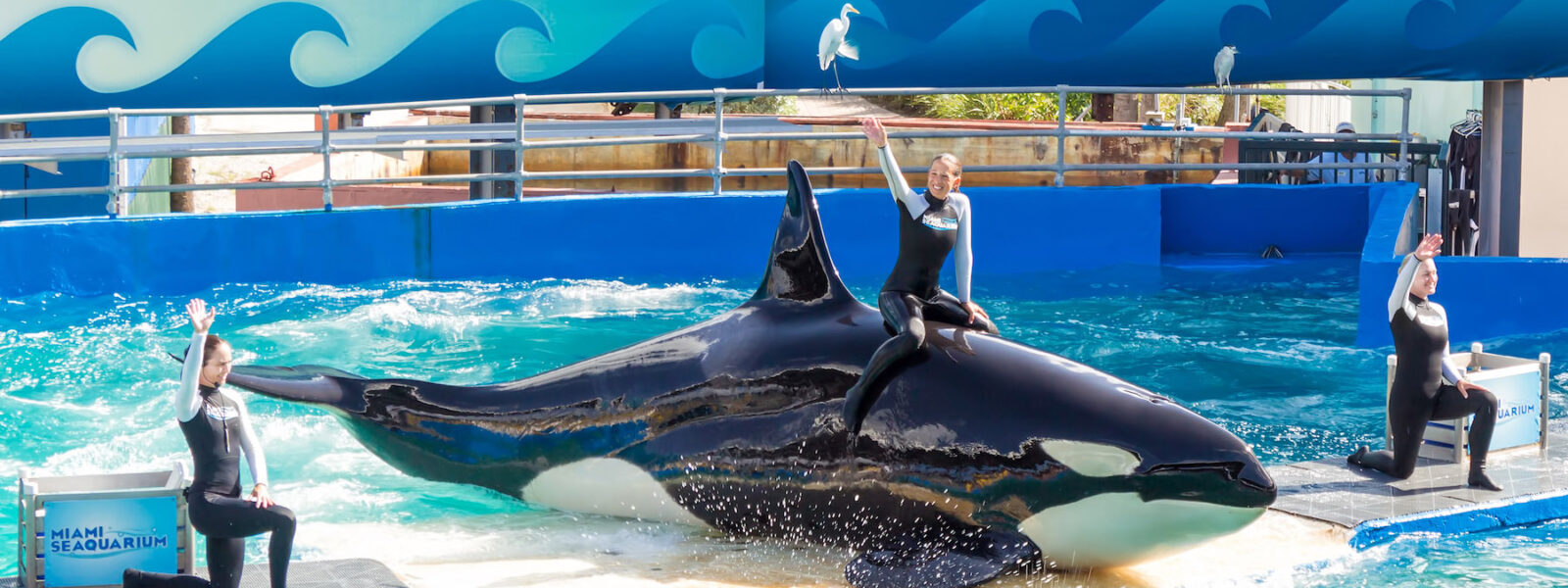
Today, it was announced that a joint agreement was reached between the Miami Seaquarium’s new owners and the nonprofit organization Friends of Toki, along with lead donor Jim Irsay, to initiate an effort to relocate the second oldest orca in captivity. Tokitae, the orca also known as Lolita and Sk’aliCh’elh-tenaut, will be moved from a concrete tank at the Miami Seaquarium to a seaside sanctuary in her home waters in the Pacific Northwest.
Miami-Dade County Mayor Daniella Levine Cava, who has pressed for sending Toki to her home waters, stated: “So many have hoped and prayed for this result for many, many years.”
Under the agreement, Friends of Toki will take responsibility for all veterinary and animal care of Toki, as well as oversee the search for relocation sites and the building and staffing of Toki’s retirement refuge in Washington state.
This decision represents a sea change from the Miami Seaquarium’s and captivity industry’s historic opposition to giving up valuable performing orcas like Toki for a retirement sanctuary.
“I know she wants to get to free waters,” said Jim Irsay, owner of the NFL’s Indianapolis Colts and a major funder of the effort. “I don’t care what anyone says. She’s lived this long to have this opportunity.”
The precedent was set when the owners of the Mexican-based aquarium Reino Adventura agreed to donate Keiko, the orca star of the hit movie Free Willy, to the Free Willy/Keiko Foundation, established by the International Marine Mammal Project (IMMP) of Earth Island Institute. The Foundation brought Keiko first to a rescue/rehab facility in Oregon, and then, after his recovery, back to his home waters of Iceland, where he lived for about five years in a seaside sanctuary with opportunities to swim with wild orcas. 2023 marks the 30th anniversary of the release of Free Willy in theaters.
Friends of Toki now has a historic opportunity to give Toki a better life and demonstrate how captive orcas can thrive in seaside sanctuaries and, in some cases, be released to the wild.
There is substantial work ahead: Daily care and veterinary treatment for Toki in Miami, working with US National Marine Fisheries Service and other government agencies to obtain the permits for the move and sanctuary, and of course construction and operation of the seaside sanctuary. Toki’s health will necessarily dictate the direction and success of retirement efforts.
Q and A Interview with David Phillips
Below is my interview with David Phillips, answering questions about the breaking news. David is founder of the Free Willy/Keiko Foundation, a member of the Board of Directors of the Whale Sanctuary Project, and Director of IMMP at Earth Island Institute.
1. What is the significance of this announcement for Tokitae?
This is an incredible opportunity to end the cruel situation of holding Toki in a tiny and dilapidated concrete tank. The fact that she has survived there for nearly 50 years is miraculous. This initiative provides the last chance for her to get out of there and have a better life. These opportunities don’t come around very often.
2. What about for other captive orcas and other captive whales and dolphins?
The truth is that every captive orca, beluga, and dolphin in the world would have a better life in a seaside sanctuary. And some have the potential to be freed back to the wild.
Getting Toki into a sanctuary in her home waters would show that. And the more that people see these efforts succeed, the more they will be convinced that the holding of whales and dolphins in captive entertainment facilities must end.
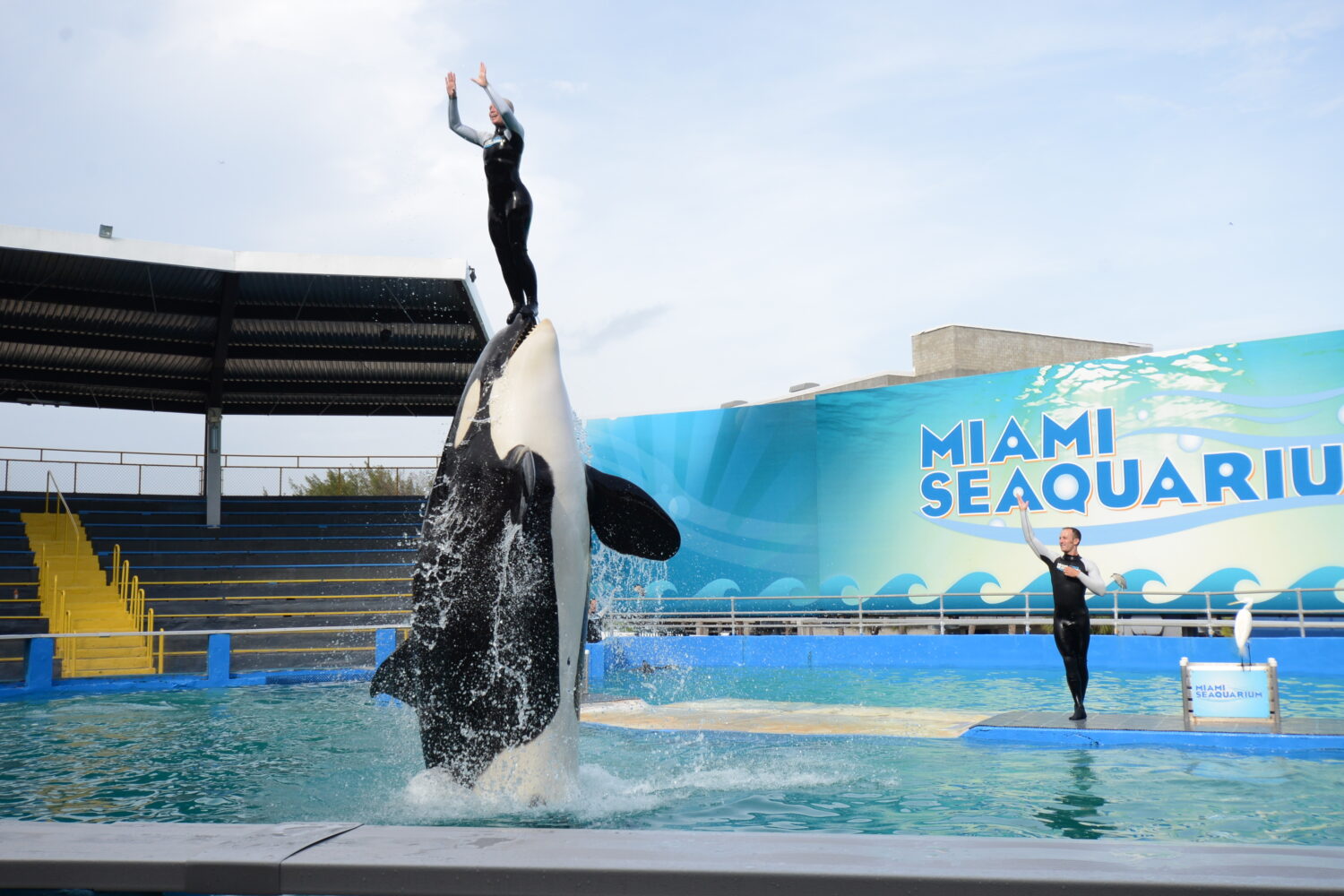
Toki (Lolita) at the Miami Seaquarium during a performance. Tokitae has been retired from such performances. Photo Credit: Dr. Ingrid Visser, Orca Research Trust
3. How does the effort with Tokitae compare with the Keiko rescue and release?
Well, both of these orcas desperately needed to be rescued from the smallest concrete tanks. Both Keiko and Tokitae had serious health issues, and every day they remained in these facilities their risk of death increased.
Moving Toki to a sanctuary in her native waters in the Pacific Northwest is probably a bit less challenging that than Keiko’s sojourn to Iceland. But any orca relocation to a sanctuary is complicated. It is hard, but very doable.
Similarly with Keiko, there’s never a guarantee of success. Toki is 56 years old, but I think the rewards of her having a chance to retire to her home waters way outweigh the risks.
This effort shows what an important role the Keiko release played in paving the way for other whales to get out of captivity facilities. Jim Irsay, one of the benefactors of the new effort, cited what an important message this would send about how we treat whales. He also cited how important and right it was that the Keiko release took place.
4. If Tokitae is retired to a seaside sanctuary, what about the other orcas still left in captivity?
I think the walls are closing in on the orca captivity industry. The last captive orca in Canada, Kiska, just died this month, and Canadian law prohibits any new facilities with captive whales. After Keiko’s relocation, there are no longer any captive orcas in Mexico.
So, if this new effort gets Toki out of Miami Seaquarium, the last holdout in North America will be SeaWorld’s three parks.
SeaWorld needs to wake up and see the writing on the wall, instead of perpetuating its phony claim that orcas thrive in their parks. Even SeaWorld can no longer import, export, or breed orcas, but they refuse any plan for retiring any whales. Instead, they are just squeezing every last dollar from performing whales until they die out.
In a minute, SeaWorld could get with the plan and retire the whales in their tanks. They have so far refused and won’t do so without massive public pressure.
5. What can organizations and individuals do to help?
Well, this is a big undertaking and is going to need help. The Whale Sanctuary Project, of which I’m a board member, will certainly be assisting. Its Executive Director Charles Vinick, who spoke so well at the press conference, is a key part of the Friends of Toki group. I think many organizations will get behind this. Certainly, the Free Willy/Keiko Foundation and IMMP at Earth Island Institute will help.
Some big benefactors have stepped forward, but there will also be ways for individuals to contribute through the Friends of Toki and the Whale Sanctuary Project.