Charting a New Era: The High Seas Treaty and Global Ocean Governance
By Ángel Herrera Ulloa, PhD
Dr. Angel Herrera is the Director of the International Marine Mammal Project’s (IMMP’s) Dolphin Safe (DS) Tuna Monitoring Program in Latin America. As a representative of Earth Island Institute since 1993, his DS monitoring work spans countries including Argentina, Brazil, Colombia, Costa Rica, Ecuador, El Salvador, Guatemala, Mexico, Panamá, Peru, and Uruguay. He has authored more than 15 scientific articles and co-authored two books.
The vast expanse of ocean lying beyond the maritime boundaries of any nation, known as “Areas Beyond National Jurisdiction” (ABNJ), presents a monumental challenge for global governance. Law enforcement in these regions is inherently complex, as resources are shared, creating a classic tragedy of the commons in which the absence of cooperation leads to overexploitation.
On December 24, 2017, the United Nations General Assembly adopted by consensus Resolution 72/249, convening an intergovernmental conference to undertake formal negotiations for a new international legally binding instrument (ILBI or treaty) under the UN Convention on the Law of the Sea (UNCLOS). This initiative, co‑sponsored by 141 governments, sent a resounding message of support for the urgent need to protect this neglected half of our planet.
On March 4, 2023, following nearly two decades of discussion and negotiation, the world’s governments reached an agreement on a new treaty to safeguard marine life in the High Seas (essentially the ABNJ). The High Seas Treaty addresses critical governance gaps, establishing clearer mechanisms to conserve biodiversity in areas beyond national jurisdiction.
In September 2025, the Treaty reached ratification by sixty countries, thereby triggering its entry into force. It became binding international law on January 17th, 2026, marking a new era in ocean conservation. The High Seas Alliance has called upon all United Nations member states to continue ratifying the Agreement and to prepare for its effective implementation. Along the Pacific coast, the Treaty has already been ratified by the majority of nations with significant fishing fleets, including China. However, several key states remain absent, notably Canada, Australia, Russia, South Korea and the United States, which has also refused to join the earlier Law of the Sea Treaty (UNCLOS).
UNCLOS, often referred to as the “constitution of the ocean,” establishes the legal framework for the world’s seas, including the delimitation of 200‑nautical‑mile Exclusive Economic Zones (EEZs) for coastal nations. Its broad provisions are largely premised on a regime of freedom, yet UNCLOS lacks specific rules for many activities on the High Seas, which fall outside the jurisdiction of any state.
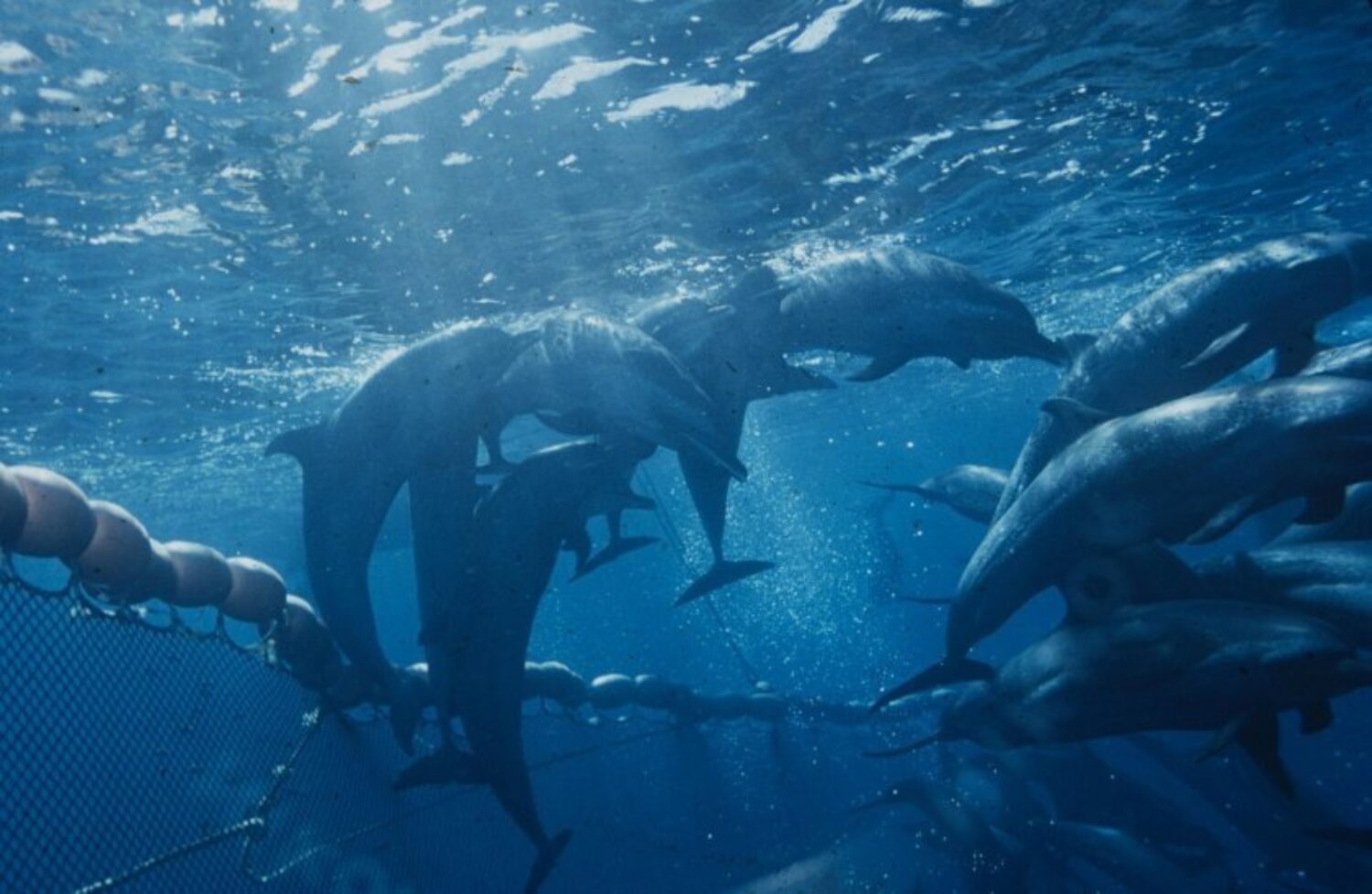
Dolphins in tuna net. High Seas fishing can be better regulated with the new Treaty. Photo Credit: National Marine Fisheries Service
The BBNJ Treaty complements UNCLOS by providing a legal foundation and process for the creation of area‑based management tools and marine protected areas in the High Seas. It establishes a comprehensive framework in four key areas:
- Regulation of the harvesting of marine genetic resources and equitable sharing of economic benefits.
- Protection of ocean habitats through “area‑based management tools,” including designated shipping routes, exclusion zones for certain industries, and fully protected marine reserves.
- Mandatory environmental impact assessments (EIAs) for activities that may adversely affect High Seas ecosystems.
- Capacity‑building mechanisms, enabling developed countries to support developing nations’ participation through financial assistance and technology transfer.
The High Seas Treaty also represents the most significant global action against illegal, unreported, and unregulated (IUU) fishing. This industry frequently relies on bonded labor, destructive practices, and deceptive methods to secure profits at the expense of local fisheries, coastal states, and marine ecosystems. The effective use of appropriate technologies, combined with sound policy, international cooperation, and strong partnerships, offers a cost‑effective and scalable pathway to transform global fisheries. When harvested legally and sustainably, fish can continue to provide vital sources of animal protein for generations to come.
Marine mammals are subject to terrible havoc caused by high-seas comercial fishing. The High Seas Treaty, especially reigning in IUU fishing, is a path to reducing bycatch of whales, dolphins, sea turtles, sharks, and other marine species.
The absence of U.S. ratification remains a critical gap in the global effort to protect the High Seas. As one of the world’s largest maritime powers, the United States has both the responsibility and the capacity to lead. Ratification would not only strengthen enforcement against illegal, unreported, and unregulated fishing, but also provide vital scientific expertise, technological innovation, and financial support to ensure the Treaty’s success. U.S. participation would send a powerful signal of commitment to ocean governance, inspiring other nations to follow suit and accelerating the transition toward sustainable management of our shared blue commons.
**************************
The International Marine Mammal Project (IMMP) of Earth Island Institute is one of the foremost organizations working to protect whales, dolphins, and their ocean homes. Your donations go directly to protect whales and dolphins from fishing entanglement, ship strikes, whaling and dolphin hunts. Please consider a generous donation to help whales and dolphins. Thank you!