Hope and Urgency for the North Atlantic Right Whales
By Cindy Lowry, Maine Campaign Coordinator for North Atlantic Right Whales, International Marine Mammal Project
Analyses of NOAA data and the New England Aquarium’s right whale catalog show that with 22 calves identified so far this year, this is shaping up to be one of the most encouraging calving seasons of the past decade and the strongest in at least five years.
That hope comes with urgency: every one of these calves still faces serious risk from vessel strikes and fishing-gear entanglement, and survival depends on stronger protections now.
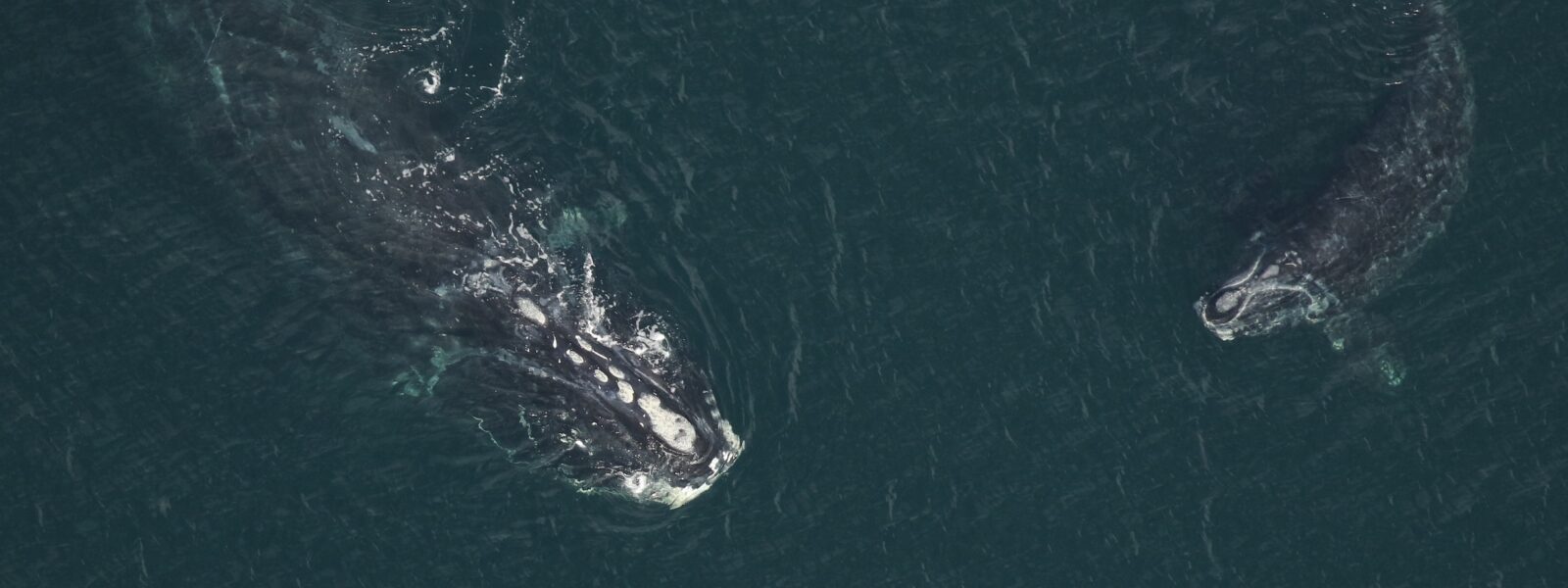
This January, these 22 North Atlantic right whale (NARW) calves are swimming with their mothers off the coast in the southeastern US. Every birth matters. With only about 380 right whales left and roughly 70 females able to have calves, each new baby is more than a data point – they are a new life that helps this critically endangered species survive.
Each whale in the population is photographed and recorded in the Right Whale Catalog and, often, given a name. Catalog numbers let scientists track individuals over time and record important details like births, injuries, and movements. Names are usually based on a whale’s unique markings or a story linked to the whale.
Right whales typically give birth in shallow coastal waters from mid-November through mid-April. Scientists from the National Oceanic and Atmospheric Administration (NOAA) and partner organizations spot and photograph these mother–calf pairs from the air, recording their movements and features. This careful work allows researchers to track each whale as an individual.
Meet the 2026 North Atlantic Right Whale Mothers and Calves Pairs and Why it is Critical that Each Mother and Calf Survive!
Boomerang (#2503) and Her Fifth Calf
On January 1, 2026, survey teams spotted Boomerang (#2503) and her new calf about nine miles east of the St. Mary’s River entrance in Florida. This is her fifth known calf. She was named for the boomerang-shaped white scar on her fluke.
It’s rare for NARWs to make their way into the Gulf of Mexico, but Boomerang brought her 2006 calf there, winning him the name “Lone Star”. Sadly, he has not been seen since 2016 and is presumed dead. Seeing Boomerang with her newest calf reminds us how precious each new life is.
Juno (#1612) and a Long Maternal Journey
Juno (#1612) was photographed in late December with her ninth known calf, about nine miles east of Wassaw Island, Georgia. She is at least 40 years old and has lived through decades of ocean change. Of her eight previous calves, only a few are confirmed or presumed alive. One calf born in 2024 was injured by a vessel strike and died. Yet Juno is once again guiding a newborn back to New England.
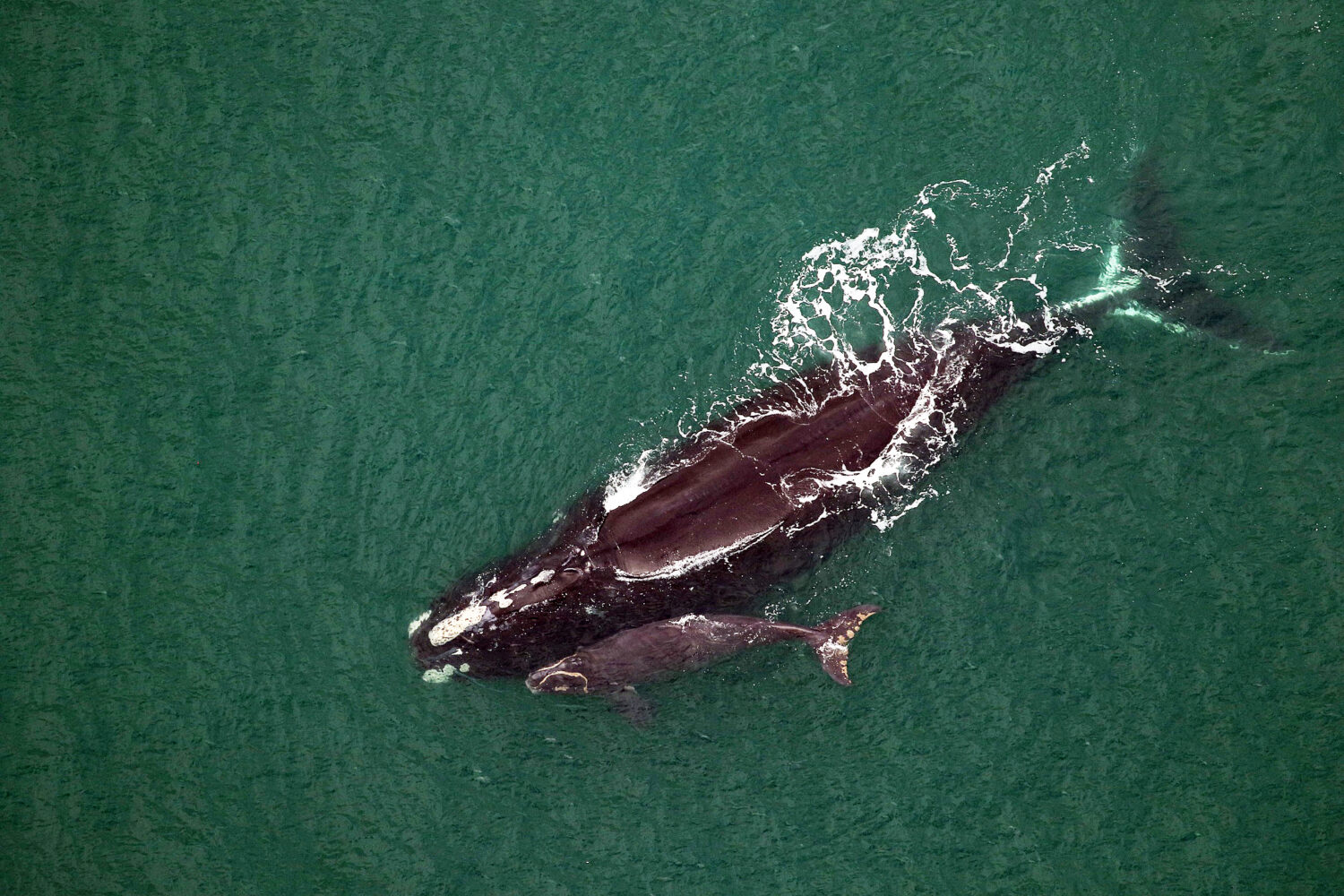
Right whale mother, dubbed Uca #3390, with her calf. Photo Credit: Clearwater Marine Aquarium Research Institute; NOAA Permit #26919
Callosity Back (#3760): A First Calf and a Unique Feature
One of the most interesting new moms is Callosity Back (#3760), seen on December 4, 2025, with her first known calf about 28 miles east of Pawley’s Island, South Carolina. She is the only documented right whale with a callosity on her back. Callosities are rough, raised patches of skin colonized by whale lice that create unique patterns, normally appearing only on right whales' heads, like fingerprints that help researchers identify individuals.
This calf is the first grandchild for Callosity Back’s mother, Derecha (#2360), marking an important milestone for their family line.
More Stories from the 2026 Season
Other mothers and calves observed this season include:
- Binary (#3010) and her fourth calf near Blackbeard Island, Georgia; Binary’s 2021 calf was last seen entangled in 2025.
- Mantis (#1620) and her eighth calf off Kiawah Island, South Carolina; her daughter Squilla also had a calf this season, making Mantis a grandmother.
Additionally, mothers Uca (#3390), Bermuda (#3780), Echo (#2642), Tripelago (#2614), Harmonia (#3101), Cascade (#3157), Squilla (#3720), Bocce (#3860), and Millipede (#3520) were all observed with new calves this season.
Learn more and see pictures here!
Why These Calves Matter
Twenty-two calves may not sound like a lot, but every new birth is a step toward recovery. NOAA says that 20 calves in a season is considered relatively productive. To stabilize the population, though, we would need roughly 50 calves per year for many years, a challenging goal when factoring in calf mortality and the number of females not reproducing in any given year
Females mature around age 10 and carry a calf for more than a year. A healthy interval between calves used to be three to four years, but now it is closer to seven to ten years. Stress from entanglements, vessel strikes, and changes in food availability all play a role in fewer births. Every new calf is therefore increasingly important.
Looking Forward
With so few right whales left, every calf counts. Each new life, from Boomerang’s fifth calf to first-time moms like Callosity Back, adds to the fragile population. Researchers will watch them closely, tracking how they grow and survive along our coast. These calves aren’t just numbers; they are the next generation of a species that needs every individual to thrive!
Twenty-two new calves represent mothers surviving long enough and in good enough condition to give birth. That’s real hope, and it’s exactly why protecting these whales now matters so much.
The calves are proof that conservation can work, but they will only count if they survive. It’s clear that without stronger protections from ship strikes and fishing gear, this moment of hope could be lost.
**********************************************
Cindy Lowry is heading up efforts by the International Marine Mammal Project to protect and help support efforts for the North Atlantic Right Whale. Your donations go to ensure our children will have right whales to see and marvel at in the future. We must help avoid ship strikes and slow vessels down. New gear that does not leave ropes hanging in the ocean for crab and lobster traps holds promise to end entanglement in fishing gear. We can make good progress to help right whales, but they need your help right now. Please donate to help right whales and other whales navigate to safety. Thank you!